Get the Popular Science daily newsletter💡
Breakthroughs, discoveries, and DIY tips sent six days a week.
By signing up, you confirm you are 16+, will receive newsletters and promotional content and agree to our Terms of Use and acknowledge the data practices in our Privacy Policy. You may unsubscribe at any time.
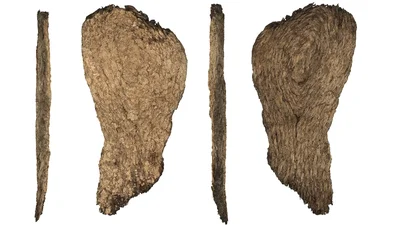
Eight grass-woven sandal remnants tossed into a trash heap over 2,000 years ago are new treasured finds for a team of archaeologists in Spain. Based on their exceptionally well-preserved conditions, researchers are now learning more about Iron Age life in the Iberian Peninsula at the cusp of the Roman Empire’s arrival into the region.
The footwear is documented in a recently published study in the journal Pyrenae, and come from excavations at Urium, an ancient mining settlement located in southwestern Spain about 55 miles west of Seville. Archaeologists found the shoes near a metallurgical workshop complex dating back to the mid-first century BCE. During its operations, the extensive site encompassed four work areas, 10 furnaces, and another 16 rooms with still-unknown purposes. The team didn’t locate the sandals in the workshop itself, but within adjacent courtyard ash deposits. Based on the additional scattered discardings like furnace leftovers and everyday items, these likely served as general trash heaps.
The sandal soles are made from a sturdy grass called esparto (Stipa tenacissima), with grooved textures and parallel fiber groupings that differentiate them from other textile plants like hemp and flax. Most of the esparto was used raw instead of softened through multiple soaking cycles, with artisans weaving them into flat, narrow braids that they then shaped into sole frames. A combination of thick cables and thinner strandwork was also carefully arranged depending on their usages. The heftier cords formed the weight-bearing parts of the footwear, while the more flexible twine made the joints and bindings. Each sole measured between 6.7 and 9.8 inches in length, with at least four of them clearly for the left foot.
These weren’t new sandals abandoned or lost by their owners. Instead, signs of heavy use coincide with where archaeologists found them. Most of them were missing their foot-securing cords by the time they landed in the trash, while damage to their forefoot sections showed longtime wear.
Their age ranges particularly surprised researchers, too. Radiocarbon dating traced one sole to the early Roman period (around 28–124 CE), while another example was constructed during the late Iron Age (360–205 BCE). A third sandal’s dating produced a broader time window, about 175–56 BCE. This implies Urium was repeatedly home to local workers over nearly 500 years. That said, the two oldest artifacts could have originated in earlier deposits that Roman residents later disturbed or discarded. Regardless, the style of esparto sandals were clearly worn for decades before the area was fully absorbed by the Romans in 19 BCE.
Plant-based footwear typically breaks down quickly, leaving little left for archaeologists to study. But thanks to the sandal soles residing amid the ashy furnace heaps for centuries, they remained comparatively stabilized. The organic preservation also preserved ropes and baskets made from similar materials found by researchers in the sediment.
Based on their state at the time of their disposal, it’s clear these esparto sandals weren’t casual accessories, ceremonial costume components, or luxury items. Instead, their worn-down state, broken straps, and muddy soles show the preferred footwear of laborers. It’s rare that remnants of such ancient people endure for millennia—and it’s even rarer for items crafted using such short-lived organic resources.
2025 PopSci Best of What’s New
The 50 most important innovations of the year