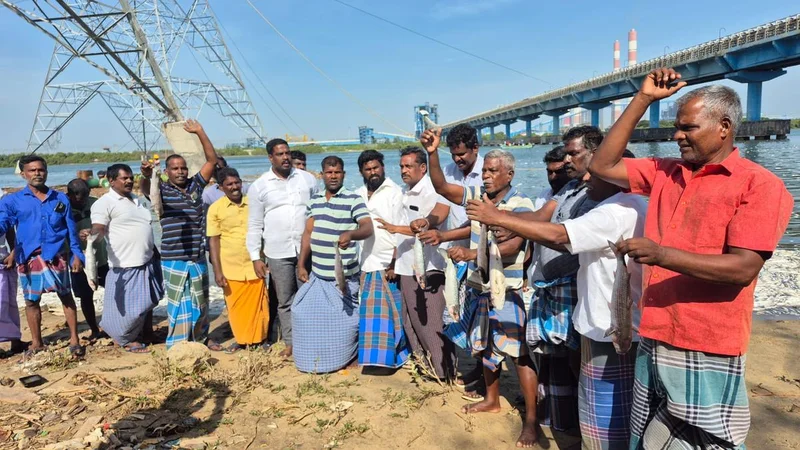
Ennore fisherfolk have resorted to a demonstration as large quantities of fish were found dead and floating in the Kosasthalaiyar river near the estuary in the early hours of Sunday (August 16, 2026).
Several species of fish and other aquatic life, including madavai, kizhangan, oodan, karuva and kelathi, besides prawns and crabs, were found dead in the river. The fish were seen floating across large stretches of the water. Scores have also accumulated along the banks and near mangroves.
Fisherfolk from Ennore said the incident was an unprecedented disaster in the area, as they had never witnessed fish dying and washing ashore on such a scale before. They said the fish deaths could be linked to the discharge of chemical waste into the river and have raised concerns over the impact on their livelihoods.
Fisherfolk from eight fishing villages have resorted to a road blockade on Thazhankuppam main road, alleging that no government officials had visited the affected area or met them following the mass fish deaths.
The incident comes amidst longstanding concerns over pollution in the Ennore estuary and the Kosasthalaiyar River. The area has been affected by industrial effluents, sewage, thermal discharges and fly ash from the concentration of industries and thermal power plants around the estuary.
The National Green Tribunal had constituted expert committees to examine the environmental damage caused by fly ash in the Ennore backwaters, including its impact on soil, water, flora, fauna and marine biology. A subsequent expert assessment recorded concerns over ash reaching the wetlands and river system and affecting the hydrology and ecology of the backwaters.
Separately, a study by researchers from the Central Marine Fisheries Research Institute published observations of fish mortality in Ennore associated with industrial effluents and domestic sewage. Earlier research had estimated that industrial establishments were releasing large quantities of effluents carrying heavy metals into the estuary.
Protesting fisherfolk have called for water and fish samples to be collected and analysed to determine whether a particular pollutant, a sudden change in water quality, oxygen depletion or another factor triggered the mass mortality.
Published - August 16, 2026 10:48 am IST