Tiny, beautiful species are going missing from restored forests and wetlands
When larger animals and plants return, minuscule algae, mosses and lichens may not
A regrown forest can look tall, lush and green. Restored wetlands can buzz with insects and flutter with birds. But scientists looking more closely are finding that some of their smallest inhabitants — including certain mosses, lichens, algae and fungi — are often still missing.
Restoring habitats such as forests and wetlands can save declining species of animals and plants and help their populations bounce back. But recent research shows they don't all return at the same rate. Some of the smallest, least noticeable inhabitants can remain rare or absent for decades — with potential consequences for other species.
Ellen Macdonald, a University of Alberta botanist, has spent her career studying forests — but not so much the trees. She focuses instead on the tiny flowers, mosses, liverworts and lichens that grow in their shade, among their roots or on the textured surfaces of their bark.
"There's way, way, way, way, way more species there than there is a tree species," said Macdonald.
To the average person, Macdonald said, a regrown forest a few decades after logging might look much like one that had never been cut, full of tall trees, birds and insects.
But Macdonald recalled walking through regrown coniferous boreal forests and sensing that something was not quite right, even if she could not immediately identify what.
"To really notice what was maybe missing, you'd have to be collecting data," she said.
Macdonald did just that, combining her own research with data from around the world to examine how long it takes plants and animals to return as boreal forests regrow after clearcutting.
The study, published recently in the journal Nature Sustainability, found that birch and aspen forests and their inhabitants appeared to recover within 25 years, while conifer forests took far longer. In conifer forests, understory plants — especially lichens, mosses and liverworts — took 85 years or more to return, and in some cases had not recovered during the century of available data.
'They may not come back easily'
The pattern is not unique to boreal forests. Scientists studying wetlands and other restored habitats have also found that places can look healthy while some of their less visible species remain absent.** **
Years ago, CBC News spoke with German botanist Michael Melkonian about research into how plants evolved to live on land. He described wetlands near his home in the village of Jexmühle, in southern Germany, that teemed with carnivorous plants, sphagnum mosses, frogs and dragonflies.
The bogs "superficially looked very nice," Melkonian said in a more recent interview. They had been restored and replanted decades after being drained for industrial activities such as logging, providing wildlife habitat and storing carbon to fight climate change.
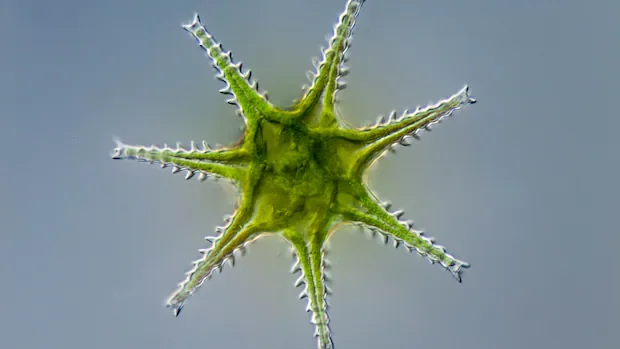
But beneath the water, Melkonian expected to find hundreds of species of the varied desmid algae he studies. Instead, there were only a handful.
"The diversity of algae was not there," he said.
Viktoria Wagner, an associate professor in the Department of Biological Sciences at the University of Alberta, describes this kind of decline as "a silent form of loss." Species do not necessarily go extinct entirely, she said, but disappear from many places where they once lived, reducing the number of species found at individual sites.
Wagner describes this as "dark diversity" and has found evidence of it among plants in habitats around the world. Algae are not technically plants, but are related.
Once species disappear from a particular place, Melkonian said, "they may not come back easily." Some may already be locally extinct.
Wagner said while restoring landscapes can be possible, "it's not easy, it's not always guaranteed that it works."
Missing species may slow recovery
Those losses can have consequences that are not immediately visible.
Despite their small size, Melkonian said, algae have an enormous effect on the availability of oxygen and food on the planet.
"It's thought that algae in general are responsible for half of global photosynthesis," he said.
Wagner said many species have important roles in ecosystems, and when diversity declines "this trickles down" and can negatively affect other species.
In boreal forests, Macdonald said, it's not surprising that many mosses, lichens and other understory plants take decades to recover after a clearcut. They depend on shade and old growth trees for habitat.
"That's all the stuff that's missing in a forest after harvesting and the things that take a really long time to recover," she said. "You know, you can't just get old big trees, except by waiting for trees to grow older."
Knowing these patterns could show people who manage landscapes like forests how to do it in a way that preserves more species. Macdonald said the research suggests conifer forests might be harvested more selectively or partially rather than clearcut.
An algal 'zoo'
Mekonian said habitats for algae are also under threat around the world, along with the species that live in them.
Many algae look like little more than a smudge of colour on snow or a spot of slime on a rock or in water — forms most people might not recognize as living things.
Melkonian painstakingly collects those specks from different habitats, spooning and pipetting them into vials.
The work is part of an effort to preserve them. Melkonian and his colleagues have collected and grow more than 5,000 strains — "an algal zoo, if you wish … that's a way maybe to ensure that we have a repository of these species as living organisms."
For Wagner, the widespread "silent loss" of species shows that preserving biodiversity requires more than protecting isolated pockets of habitat. It means maintaining and restoring enough habitat for species to persist across the landscape.
"Loss happens all the time and it's a continuous process and it needs active interventions."
This is part of a series of articles highlighting the work of scientists looking at disappearing groups of species you may not have thought much about. It's a chance to get to know them and how they impact our lives, and find out what can be done to keep them around.