The US Federal Communications Commission (FCC) is reportedly considering a
ban on Chinese optical transceivers, signalling that the US-China tech war is expanding beyond the focus on semiconductor chips to shadow even the smallest link in the chain of essential artificial intelligence (AI) hardware.
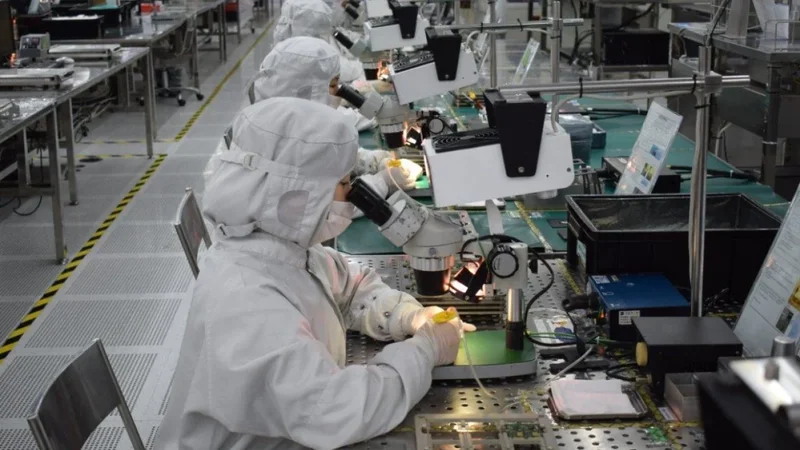
Optical transceivers are small devices that use fibre optic technology to send and receive data as light. The key application of these optical modules is the quick transmission of large amounts of information in huge AI data centres and cloud networks.
Reports suggest Washington’s concern regarding the use of Chinese optical modules is based on three major factors:
data theft, service disruption and long-term dependence. Because optical transceivers are physically embedded in the AI ecosystem, they could be used to install malware, for example.
The Trump administration is relying on preventive logic to avoid another
Huawei-like conundrum. Officials would prefer to eliminate any Chinese plumbing from their AI ecosystem before it gets too costly and risky to take action. Even so, the massive demand from US-based data centres and the constraints of alternative suppliers raise concerns about whether it might already be too late.
The United States could end up creating problems for itself by abruptly banning Chinese optical transceivers without alternatives in place. While avoiding long-term dependence on China, such a move would disrupt the functioning of data centres and cloud networks in the short term. US-based suppliers such as Coherent and Lumentum produce optical modules of comparable quality, but are unlikely to be able to match Chinese suppliers on scale.
Given the sensitivity of optical modules to temperature and dirt, they must be repaired or replaced frequently. Their compatibility with the rest of the hardware infrastructure is another factor that makes sudden substitution of these components unfeasible. As a result, major hyperscalers in the US such as Amazon and Microsoft would be likely to suffer from disrupted supplies of optical modules.