In early July, a Suzhou court ordered the Chinese tea chain Molly Tea to pay Louis Vuitton 10.3 million yuan (US$1.5 million) after ruling that its four-petal floral pattern infringed on the French luxury house’s registered trademarks.
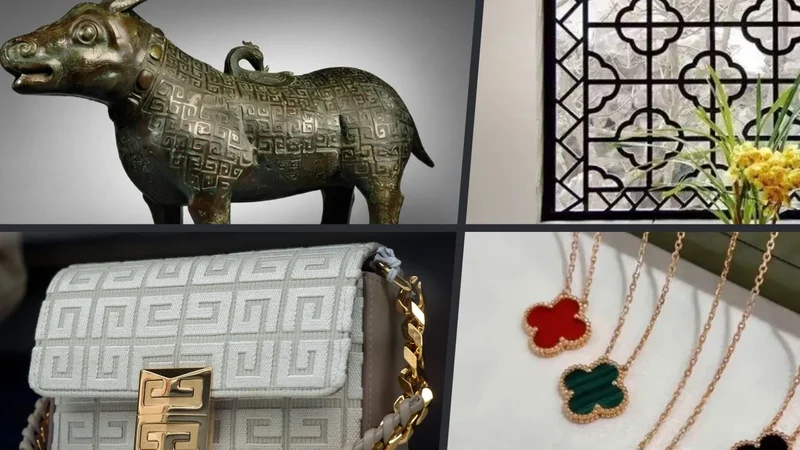
Many online users, angered by the eastern Chinese court’s ruling, shared images of similar motifs found in Tang dynasty (618–907) textiles, musical instruments, and Suzhou garden architecture, arguing that these precede Louis Vuitton’s founding in 1854 by centuries.
The dispute quickly evolved in mainland social media into a deeper and more unsettling question: can a luxury company “privatise” a visual language used by a civilisation for centuries – and how should China protect its cultural heritage?
Vintage Chinese blue and white porcelain vases serve as enduring symbols of the country’s rich design legacy, reflecting centuries of artistic excellence. Photo: Shutterstock
Wang Jia, an intellectual property lawyer at Sichuan Henghexin Law Firm, told the SCMP that trademark law does not grant Louis Vuitton a monopoly over every four-petalled floral motif.
“What the law protects is the mark’s function as an indicator of commercial origin – the system of brand recognition built through long-term use,” she explained.
Some online observers have argued that traditional Chinese motifs are treated as “freely available” under a global intellectual property framework, while Chinese creators risk legal action for using elements from their own culture.
Wang contended that this interpretation goes too far. Traditional motifs shaped through collective creativity are part of humanity’s shared artistic heritage, she stated, and elements in the public domain may be utilised by anyone.