In two weeks, Asobo Studio will deliver its most ambitious game yet. Resonance: A Plague Tale Legacy, finds the French studio taking a crack at a full-on modern action game made at a AA scale. It’s a surprising follow-up to its Game of the Year-nominated A Plague Tale: Requiem, which was a stealth game, but it looks to continue building on the studio’s cinematic strengths in a new genre.
Though it might feel like Asobo Studio is a bright upstart that broke out onto the scene with A Plague Tale: Innocence in 2019, the studio has a much longer history than you might expect. In fact, Asobo Studio is responsible for a lot of games you may have grown up with that had nothing to do with the black plague — but one did feature a lot of rats.
Founded in 2002 by developers crawling out of the collapse of Kalisto Entertainment, Asobo Studio didn’t exactly start out with prestige ambitions. Its debut game was Super Farm, a co-op game about male animals trying to save the farm’s only female, a busty hen, from a meat factory. It’s a bizarre relic of the era, and about as crass as you’d expect given the concept. Its stab at a more mature third-person shooter, Special Forces: Nemesis Strike, wasn’t much better. It launched to poor reviews and has been largely forgotten in the years since.
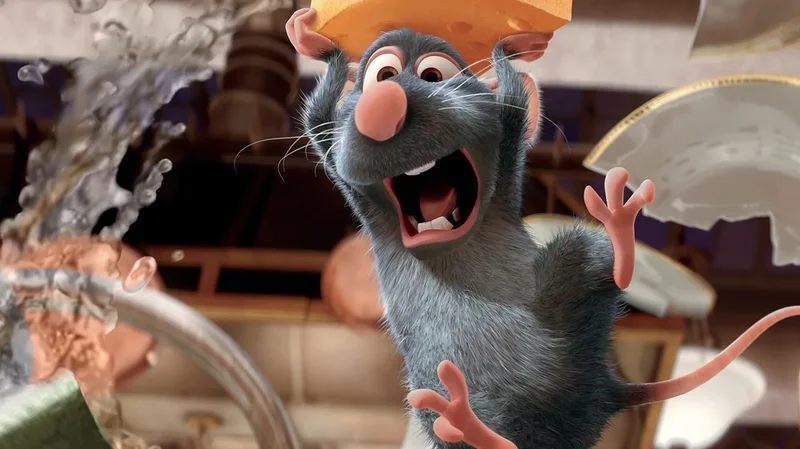
Rather than falling into disarray, Asobo Studio instead found success in the wild west era of licensed games. It developed games based on Sitting Ducks, The Mummy: The Animated Series, and Garfield: A Tale of Two Cities in the span of a few years. None of those games were critical hits, but they got the job done well enough to get Asobo Studio working on some bigger franchises. From 2007 to 2012, it became a go-to developer of movie tie-in Pixar games. It had a hand in co-developing games based on Ratatouille, WALL-E, Up, and Toy Story 3. (The latter will be rereleased later this year by Atari.)
Why do I know this? Because I recently bought a copy of Ratatouille at the Long Island Gaming Expo, which came packaged with an expired ticket to the movie. You can blame Videogamedunkey for putting it on my wishlist last year after posting a video about it, in which he marvels at its bizarrely gorgeous opening level. “Once people find out about Ratatouille, GTA 6 will not sell copies,” he says in the clip. I’m inclined to agree.
Believe it or not, you can actually see how Asobo Studio started finding its identity as a studio in a game like Ratatouille, in the same way that you can find the groundwork for The Last of Us in Jak and Daxter. For one, it’s a game where the studio is working in a particular cinematic framework. It has a proper Hollywood voice cast, with Patton Oswalt and Ian Holm reprising their film roles. The script isn’t Shakespeare, but it is performed well enough to feel consistent with the movie. The camera framing during cutscenes and environmental design isn’t entirely foreign either. What’s especially notable about it is its character animation. Remy is incredibly expressive for a rodent hero in a PS2-era game based on an animated movie. All things considered, it’s a high-effort production for what it is. It even won an Annie Award in 2007 for Best Animated Video Game.
Asobo Studio would take on a wide variety of projects before properly breaking through with A Plague Tale: Innocence in 2019. Some of those set the stage for its pivot from kid’s fare to mature, narrative-driven games. For instance, it assisted as a support studio on Remedy Entertainment’s Quantum Break, helping out with animation, lighting, FX, and more. Asobo further built up its versatile toolset working on games like Fuel, Recore, and The Crew 2.
You can easily connect the dots by looking at the studio’s history in sequence. It was no surprise that, by 2019, Asobo was able to deliver a strong adventure game of its own with cinematic storytelling and performances. You can see it as a culmination of the skills it had to hone making Pixar games. The long journey paid off in 2022 when A Plague Tale: Requiem was nominated in five categories at The Game Awards, including Game of the Year. (It didn’t win any of them, but to be fair, it lost to Elden Ring and God of War Ragnarok. Stiff competition!)
As unexpected as that journey is, it’s a reminder of an important role licensed games used to play in the industry. A studio could really hone its craft by making movie tie-ins that had the potential to sell millions, regardless of quality. Before becoming a go-to Call of Duty studio, Treyarch cut its teeth making games based on Sam Raimi’s Spider-Man trilogy and Minority Report. Today, Asobo Studio feels like one of the last remnants of an old era of the industry. There’s a missing pipeline now that licensed games have become mega-budget affairs, and it leaves up-and-coming studios with fewer opportunities to experiment and grow.
You can chew on all of that when you play Resonance: A Plague Tale Legacy on Aug.27. If you happen to see an immaculately animated rat swarm on screen at any point, just remember to thank Ratatouille for the nightmares.