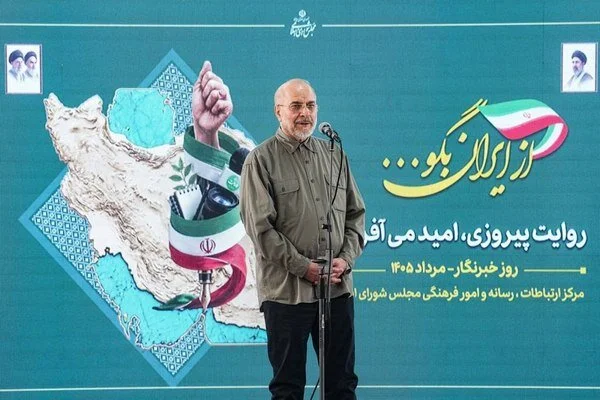
Iran achieved victories both on battlefield and in political negotiations in the war
TEHRAN- Iran’s Parliament Speaker Mohammad-Baqer Qalibaf has described the Islamabad Memorandum of Understanding (MoU) between Iran and the United States as a diplomatic achievement that, he saying if brought honor to the Iranian nation and consolidated the Islamic Republic’s victory on the diplomatic front.
Speaking to parliamentary journalists at a ceremony on Saturday evening, Qalibaf praised the Iranian people and the country’s Armed Forces for their steadfast resistance, saying Iran had not only inflicted a decisive defeat on the United States and Israel but had also thwarted the adversaries’ declared plans.
He said Iran’s success in both the military and diplomatic arenas was the outcome the “brave and sincere” resistance of the Iranian people against a war launched by the United States and Israel.
Qalibaf stressed that Iranians from different political, religious and ethnic backgrounds had rallied behind the country from the outset of the conflict to defend Iran’s territorial integrity and national interests.
The speaker also paid tribute to those who had lost their lives during the conflict and said the Iranian nation would remain indebted to the country’s fallen soldiers and civilians. He particularly honored the late Leader of the Islamic Revolution, Ayatollah Seyyed Ali Khamenei, whom he said had devoted his life to Iran, Islam and the Islamic Revolution.
Turning to the role of the media, Qalibaf praised Iranian journalists for their objective coverage during the 12-Day War and the Ramadan War. He argued, however, that state media faced a greater responsibility to document 'Iran’s victory,' explain its significance to the public and help foster a sense of national pride.
Qalibaf acknowledged that the scale and significance of Iran’s “great victory” had not yet been adequately communicated to the Iranian public.
History, he said, would ultimately assess Iran’s conduct and resistance, adding that the country’s experience should be properly documented so that Iranians, members of the resistance front and freedom-seekers around the world could understand the significance of the confrontation and take pride in its outcome.
His remarks cast the Islamabad MoU as the diplomatic culmination of a broader confrontation, linking negotiations with Washington to Iran’s military resilience and national unity. The comments also underscored Tehran’s effort to frame the agreement as an outcome of pressure on its adversaries rather than a concession to them.