Your support helps us to tell the story
From reproductive rights to climate change to Big Tech, The Independent is on the ground when the story is developing. Whether it's investigating the financials of Elon Musk's pro-Trump PAC or producing our latest documentary, 'The A Word', which shines a light on the American women fighting for reproductive rights, we know how important it is to parse out the facts from the messaging.
At such a critical moment in US history, we need reporters on the ground. Your donation allows us to keep sending journalists to speak to both sides of the story.
The Independent is trusted by Americans across the entire political spectrum. And unlike many other quality news outlets, we choose not to lock Americans out of our reporting and analysis with paywalls. We believe quality journalism should be available to everyone, paid for by those who can afford it.
Your support makes all the difference.
Read more
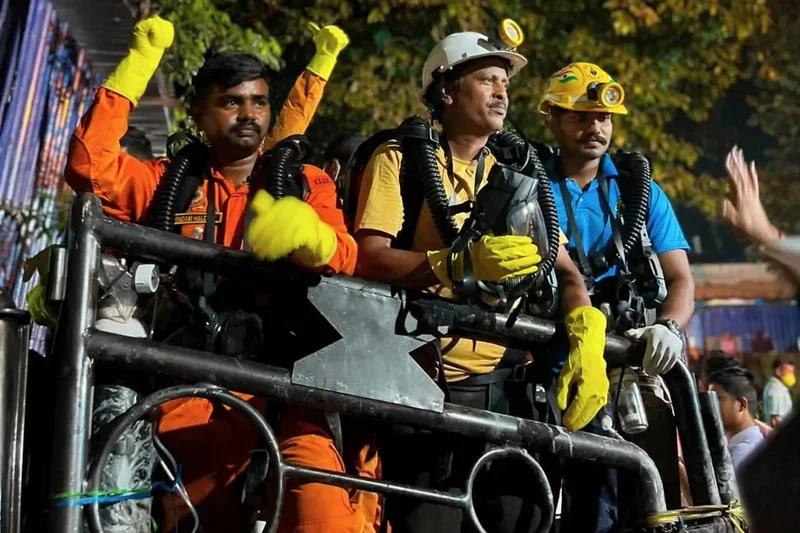
Authorities recovered the bodies of the remaining 13 workers trapped inside a collapsed hydropower tunnel in India, taking the death toll to 25 as authorities ended the rescue operations on Thursday.
Multiple agencies had made sustained and coordinated rescue efforts in the four days since a gas explosion ripped through the tunnel. Following the recovery of all the missing employees, teams carried out a final inspection of the tunnel, the state government of Sikkim said in a statement.
The blast occurred Monday at the 500-megawatt Teesta Hydroelectric Project about 40 kilometers (25 miles) south of the state capital Gangtok in the Himalayan state.
A buildup of methane gas triggered the explosion, trapping dozens of workers underground. Rescue efforts were hampered by the toxic gas inside, officials said.
The government said it formed a high-level committee to investigate the disaster and recommend safeguards against to prevent such accidents in the future.
Construction accidents are not uncommon in India, where rapid infrastructure growth often collides with fragile geology, construction lapses, extreme weather and safety standards.
The Teesta River basin, where the hydropower project is being built, lies in a seismically active region marked by young, fragile rock formations riddled with fractures and underground pockets that can trap ancient gases. Seismic activity and unpredictable underground conditions make tunnel projects especially risky in the region, according to experts.
A February explosion in a coal mine in neighboring Meghalaya state killed 18 workers. A tunnel section collapsed in 2023 in northern Uttarakhand state, trapping 41 workers for 17 days before they were rescued.