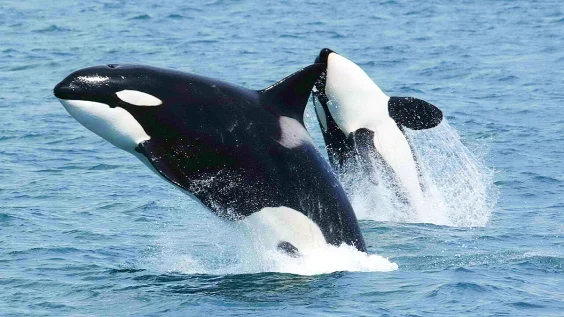
As spectacular (and somewhat gruesome) underwater sights go, this one is right up there: a pair of orcas teaming up to ram a sharp-tail sunfish so forcefully that it explodes into tiny pieces.
The only good news from the sunfish’s perspective is that it was already dead at the time.
It's behavior that's now been observed twice, as detailed in a study published in Frontiers in Ethology. On both occasions, one orca held the deceased sunfish in place, letting go just before another whale rammed into it.
What's prompting the behavior?
We know that orcas are smart predators with a variety of hunting techniques. These whales have previously been observed teaming up with dolphins to catch salmon. However, what's happening here remains something of a mystery.
“We think this may help younger orcas feed more easily, or it could also just be for fun. Orcas are known for playing with their food,” study author Kathryn Ayres explained in a statement.
Read more: “Scratch My Back and I’ll Scratch Yours”
Post-sunfish explosion, a juvenile orca was seen snacking on the smaller pieces, while the adults fed on what remained of the body without touching the fragments. It's possible that the ramming and disintegration releases nutrients for the feeding orcas, otherwise locked away in the skin and gelatinous layer covering the sunfish.
The sharp-tail sunfish is certainly a big target. It’s one of the heaviest fish in the ocean, weighing up to 4,400 pounds and measuring up to 9.8 feet.
These two matching events were spotted in the Gulf of California, a little over a year apart, though it’s not clear if the same whales were involved in both incidents.
More high-resolution footage should help determine how widespread this behavior is, and what the motivations might be behind it. “Collecting good identification photographs whenever possible is key,” Ayres said. “We’re still seeing new techniques of how orcas hunt and process their prey. They’re one of the most iconic marine predators in the world, yet they continue to surprise us.”
Enjoying Nautilus? Subscribe to our free newsletter.
Lead photo by Robert Pitman (NOAA)