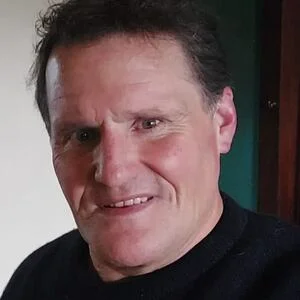
When Ted Charlton was wheeled into the Palmerston North emergency department in 2023, it was actually the seventh time he had died.
The 58-year-old has a rare temperature and thirst disorder, meaning if he gets too hot or too cold, his
When Ted Charlton was wheeled into the Palmerston North emergency department in 2023, it was actually the seventh time he had died.
The 58-year-old has a rare temperature and thirst disorder, meaning if he gets too hot or too cold, his body starts to shut down.
And living rurally, just outside of Dannevirke, time is usually of the essence.
“Within five minutes I can be in a catastrophic condition,” he told RNZ,“ Charlton said.
Each time, he was resuscitated. On one occasion, while swimming lengths at the local pool, a friend emerged from the water to find Ted floating face-down in the next lane.
Luckily, this friend was an ambulance officer, who “fished me out, read my bracelet, started on the routine and then they got the ambo”.
“A doctor who was going to work at the medical centre in Dannevirke happened to be driving past and saw an ambulance. He shot in and he took over – and he was a Navy doctor.”
Then there was the time he fell into a coma after driving over a patch of slippery road and careening into a river.
The car “turned into the Titanic”, he said. “Thank goodness for wind-down windows.”
He made it to the bank, but his body temperature dropped and he ended up in hospital again.
Even on a day-to-day basis, he said he had to pay close attention to what his body needed so it didn’t overheat or grow too cold.
“I just have to look at absolutely everything in the sense of what I’m wearing, my environment, and mitigate that from happening.”
His most recent brush with death had no discernible cause.
“I got up that Sunday morning and I just couldn’t get warm. And in the end, driving to the hospital, we drove in the car and it was 500m from the hospital that my wife looked over and saw me. And the heater was on full bore. I had two bomber jackets on. And she said I just started to collapse.”
He was dead for two minutes before being revived by hospital doctors.
The condition had likely affected him his whole life, but it hadn’t caused major problems in his younger years. He remembered feeling hot or cold, but he’d fix that by taking off a jumper like anyone else.
He was issued with a medic alert bracelet in 1992, and he credits it for a lot, saying it almost certainly sped up the provision of life-saving care when he was unable to speak for himself – especially with such a rare condition.
A medic alert bracelet costs less than $100.
“There’s so many people that they’ll go and insure their $80,000 BMW, but won’t spend a little bit more on themselves. It’s like you can replace the BMW, mate. You can’t replace you.”
Charlton took his health seriously, but he could appreciate a well-placed joke.
“Dad has a bit of a laugh about it because I love cats and he says, ‘You’ve got to be careful, you’ve only got two [lives] left’.”
It had certainly made him look at life differently – and given him an appreciation of how lucky he was.
“I look back at my life and I think, ‘well, I certainly had quite a few close scrapes that most people wouldn’t have come out of’,” he said.
Was he worried he was running out of lives and luck?
“Depends whether we’re cats or not, Kate.”