If effectively implemented, the National Peace Framework can become more than another government policy. It can provide the architecture for a new approach to national security — one in which government retains responsibility, communities acquire greater agency, institutions work from a common framework, and Nigeria progressively moves beyond managing insecurity towards preventing it.
Nigeria’s security challenges have changed considerably in scale, character and complexity. From terrorism and violent extremism to banditry, kidnapping, communal conflicts, separatist agitations, organised crime and emerging digital threats, insecurity has become a multidimensional challenge with profound consequences for national development.
The new thinking is that insecurity is not merely a military or law-enforcement problem; it is also a national development and human security challenge.
It is against this backdrop that the Office of the National Security Adviser (ONSA) is leading the development of the National Framework for Non-Kinetic Approaches to Addressing Insecurity in Nigeria, otherwise referred to as the National Peace Framework.
| | |
|---|
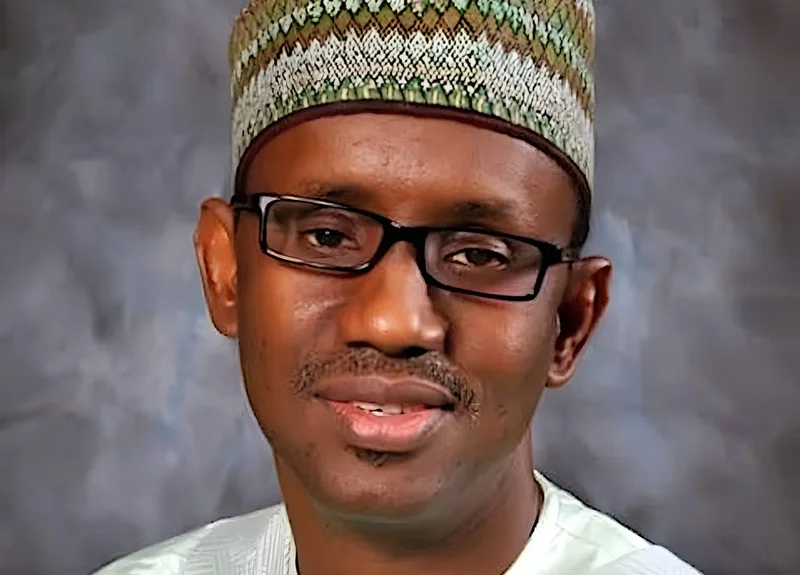
Inaugurating the Expert Review Team (ERT) established to refine the Framework on 5 August 2026, the National Security Adviser, Nuhu Ribadu, articulated its central premise: while kinetic operations remain necessary to confront immediate threats, experience has shown that “the use of force alone cannot deliver lasting peace.”
The Framework does not diminish the importance of Nigeria’s Armed Forces, Police, intelligence services and other security agencies. Rather, it seeks to consolidate their gains by addressing the conditions that allow violence to emerge, recur and spread. As the NSA stressed, sustainable security requires Nigeria to address the underlying drivers of conflict, strengthen institutions, rebuild trust between citizens and the state, and empower communities.
From Managing Conflict to Preventing It
The Framework notes that military operations can degrade armed groups, recover territory and restore order. But military force cannot, by itself, eliminate poverty, social exclusion, unresolved grievances, weak access to justice, community mistrust, trauma, environmental pressures or extremist ideology.
The National Peace Framework therefore represents an important evolution in Nigeria’s security thinking—from responding predominantly to manifestations of insecurity towards anticipating and addressing their underlying causes.
The NSA described the objective as strengthening Nigeria’s capacity to “anticipate, prevent and resolve insecurity through an inclusive non-kinetic peace architecture.”
The Framework’s guiding principle is that prevention is central to this non-kinetic approach because violent conflict rarely begins without warning. Communities often see the signs first. Traditional and religious leaders notice deteriorating relationships, women detect changes within families and communities, and young people experience shifting patterns of mobilisation. Yet these signals are frequently ignored or poorly coordinated until the opportunity for preventive intervention has passed.
Lami Chinade, Director, State Liaison, at ONSA and coordinator of the National Peace Framework development process, reinforced this point during the inauguration of the ERT, noting that the challenge is to identify and act on warning signs before they escalate into violence.
A National Architecture, Not Another Initiative
As Chinade rightly observed, Nigeria does not suffer from an absence of peacebuilding initiatives. Federal and state institutions, development partners, civil society organisations and communities already implement numerous programmes addressing different aspects of peace and security.
The challenge is often fragmentation.
The NSA made it clear that the Framework “is not starting from a blank page.” He acknowledged the existing work of national and subnational actors. The task, therefore, is not to duplicate or displace these efforts, but to harmonise them within a coherent national architecture.
Chinade similarly identified fragmentation as a major weakness in existing peacebuilding interventions, with initiatives sometimes operating in parallel, duplicating efforts or working at cross purposes. The Framework is intended to provide the missing mechanism for harmonisation.
ONSA’s strategic coordination and convening role therefore provides an institutional platform for bringing these efforts together while allowing implementing institutions to retain their respective mandates.
A Whole-of-Government, Whole-of-Society Approach
The Framework recognises that government cannot build peace alone.
Its strategic pillars encompass governance and institutional accountability; education, civic engagement and counter-narratives; transitional justice and access to justice; livelihoods and social protection; community-based peacebuilding; deradicalisation, demobilisation, rehabilitation and reintegration; trauma and psychosocial support; early warning and early response; gender, youth and vulnerable groups; climate and environmental governance; digital space, media and technology; public-private partnerships; and intra- and inter-religious tolerance and harmony.
As the NSA explained, the goal is to bring relevant stakeholders together under “a shared national vision for peace.” This includes federal, state and local authorities, security agencies, traditional and religious institutions, women, youth, civil society, academia, the private sector, development partners and affected communities.
The approach, he added, also aligns with President Bola Ahmed Tinubu’s Renewed Hope Agenda, particularly its emphasis on inclusive governance, economic recovery and long-term prosperity.
Putting Communities at the Centre
A major proposition of the Framework is that communities must move from being passive recipients of security interventions to active partners in conflict prevention.
Communities frequently possess information that formal institutions do not. Their networks constitute an invaluable early warning resource and can support mediation, reconciliation and the peaceful resolution of disputes.
The Framework is a policy that “places communities at the centre of prevention whilst keeping government firmly at the centre of responsibility.”
This distinction is important. A whole-of-society approach does not transfer government’s responsibility for security to citizens. It recognises that government performs that responsibility more effectively when it works in tandem with communities.
Community ownership is equally important for rehabilitation and reintegration. Former combatants cannot be successfully reintegrated into communities that have not been adequately engaged. Nor can sustainable peace ignore victims. Justice, healing, accountability and reconciliation must therefore remain central to a credible peace architecture.
Trust, Information and Strategic Communication
At the heart of virtually every pillar is one critical ingredient: trust.
The NSA identified rebuilding trust between citizens and the state as essential to sustainable security. Communities that trust public institutions are more likely to share intelligence, report threats, participate in early warning and reject extremist narratives. Where trust collapses, misinformation flourishes and hostile actors gain opportunities to exploit grievances.
This has become particularly important in today’s information environment. A local disagreement can be reframed through ethnic, religious or political narratives and amplified nationally within hours.
Chinade captured the challenge succinctly: “Information now travels faster than our response mechanisms.” She consequently argued that information integrity, strategic communication and narrative management must be treated as “core security assets, not peripheral concerns.”
Strategic communication must therefore become integral to Nigeria’s non-kinetic security architecture. Government must communicate proactively, counter misinformation quickly, listen to communities, strengthen media and information literacy and work through credible community voices.
From Policy to Action
The ultimate test of the National Peace Framework will not be the quality of the document but the effectiveness of its implementation.
The NSA made this clear in his charge to the Expert Review Team: “The final document must not be merely academic. It must be realistic, implementable and capable of guiding concrete action.”
The Framework is expected to define responsibilities, coordination mechanisms, implementation timelines and measurable outcomes. The Expert Review Team’s responsibility goes beyond improving the current draft; it is expected to produce a practical implementation model capable of guiding action at federal, state and community levels.
Broad ownership is equally important. Women, youth, traditional and religious institutions, civil society, persons with disabilities and affected communities will help shape the Framework rather than encounter it only after completion. As the Director, State Liaison, put it: “We are not asking anyone to implement a policy they did not help shape.”
Building the Peace We Seek
Clearly, there can be no purely military solution to insecurity. Equally, non-kinetic approaches cannot succeed without effective security institutions, justice and the rule of law.
The challenge is integration.
Kinetic operations must create the space for peace. Governance must strengthen legitimacy. Development must expand opportunity. Justice must address grievances. Dialogue must rebuild relationships. Strategic communication must strengthen trust. And communities must become partners in prevention.
The National Peace Framework offers Nigeria an opportunity to move from fragmented interventions towards coordinated national action and from responding to conflict towards preventing it.
Military operations can secure territory. Development can create opportunity. Justice can restore confidence. Strategic communication can build trust. But lasting peace will come when these instruments work together.
If effectively implemented, the National Peace Framework can become more than another government policy. It can provide the architecture for a new approach to national security — one in which government retains responsibility, communities acquire greater agency, institutions work from a common framework, and Nigeria progressively moves beyond managing insecurity towards preventing it.
Chido Onumah is Special Adviser to the National Security Adviser on Strategic Communication and Civil Society Liaison.