Niger Signs US$1.9bn Refinery It Cannot Yet Fund
NIGER · ENERGY
What the Niger refinery deal actually covers
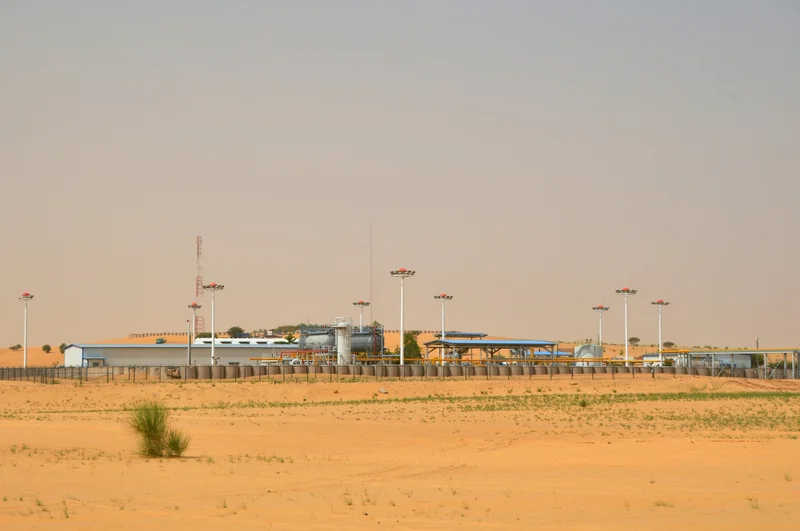
The document signed in Niamey on Saturday is a concession, not a construction start. Niger’s state news agency put the value at 1,077,244,710,000 CFA francs, about US$1.9bn, for a 100,000-barrel-a-day refinery and petrochemical complex in the Dosso region, about 140 kilometres south of Niamey.
Foreign Minister Bakary Yaou Sangaré, who chaired the negotiating committee, announced the terms to the state broadcaster. The structure is a build-operate-transfer concession under Niger’s public-private partnership law.
The arithmetic of the sixteen-year term is straightforward. Three years to build, thirteen to operate, then the asset passes to the state.
Two dates that matter more than the headline number
Buried in the convention are the only deadlines that will tell anyone whether this is real. The partner has four months to mobilise financing and deliver detailed engineering, and twelve months to reach financial close.
A monitoring committee is meant to track both. Until the first of those dates passes, nothing has been funded and nothing is under construction.
That distinction matters because this is the second signing of the same project. An initial memorandum of understanding was signed on 25 October 2024 with then interim Prime Minister General Salifou Mody.
The scope changed during that review from a modular plant to a conventional refinery, and the feasibility study was redone. In June, Petroleum Minister Hamadou Tini made continuation conditional on sufficient financial guarantees.
The counterparty is harder to pin down than the price
Reporting the deal has been complicated by a disagreement about who the partner is. Niger’s own news agency, quoting the minister at Saturday’s ceremony, described Zimar Group as a company under Nigerien law and High Tech as an American company, with Benjamin Day Marc signing as chief executive of both.
Coverage of the October 2024 signature, including reporting relayed from Niamey, called Zimar Canadian. International coverage of Saturday’s event, which traces back through Bloomberg to the state broadcaster, has used the Canadian description.
It is worth being plain about the sourcing. The entire 15 August event rests on Nigerien state media, with every subsequent report a relay of the same text; no independent wire has confirmed it.
Why Niger wants this badly
Niger currently refines almost nothing. The SORAZ plant at Ollelewa in the Zinder region runs at 20,000 barrels per day and is majority-owned by China National Petroleum Corporation.
Everything else goes out as crude. The 1,950-kilometre pipeline from the Agadem basin to the Sèmè terminal in Benin, built by CNPC, exports 90,000 barrels a day out of national production of about 110,000.
A 100,000-barrel refinery at Dosso would absorb more than the entire export stream, on paper keeping most of that volume inside the country. The multi-billion-dollar project would give a landlocked state something to sell its neighbours other than unprocessed oil.
The resource base is often misquoted. CNPC’s exploration lifted the Agadem in-place estimate to about one billion barrels, and Niger’s own agency puts national proven reserves at 853 million.
Algeria is quietly taking a role France used to have
The refinery announcement did not arrive alone. On 14 August, Algeria’s Sonatrach and Niger’s Sonidep loaded their first jointly marketed cargo of Nigerien Meleck crude at Sèmè in Benin, according to Algérie Presse Service.
The day before, on 13 August, Niger’s Prime Minister Ali Mahamane Lamine Zeine and Algeria’s Prime Minister Sifi Ghrieb launched the Kafra Sud-Est 1 exploration well in the Agadez region, 85 kilometres from the Algerian border. It is the first Algerian-operated well on Nigerien soil, drilled by Sonatrach’s ENAFOR.
That is a notable substitution. Niger expelled French forces after the 2023 coup and has spent the period since looking for partners who ask fewer political questions. General Abdourahamane Tiani is President of the Republic. He was sworn in on 26 March 2025 for a five-year transition, and signed the ordinance creating the strategic committee for this project.
For readers who follow the same dynamic in Latin America, the pattern is familiar: a resource-rich state under diplomatic isolation since the 2023 coup trades long concessions for capital that will not lecture it. Whether the capital actually shows up is a separate question, and in this case the answer arrives in four months.
Frequently Asked Questions
Who is building Niger’s new refinery?
Niger’s state news agency names Zimar Group, described as a company under Nigerien law, together with High Tech, described as an American company. Both were signed for by the same executive, Benjamin Day Marc.
How big is the Dosso refinery project?
The complex is planned at 100,000 barrels per day, five times the capacity of Niger’s existing refinery at Ollelewa. The contract value is 1,077,244,710,000 CFA francs, about US$1.9bn. The exchange rate was 566.87 CFA francs to the US dollar on 17 August 2026.
When would the Niger refinery deal be financed?
The convention gives the partner four months to mobilise financing and deliver detailed engineering, and twelve months to reach financial close. A monitoring committee is meant to track both deadlines.
What happens to the refinery after it is built?
It is a build-operate-transfer arrangement running sixteen years in total: three years of construction and thirteen of operation, after which ownership passes to the Nigerien state.
This article was produced by The Rio Times’ automated newsroom system. How we use AI · Report an error
LatAm Markets: Live Signals → — real-time movers, turnover leaders and FX across Latin America.