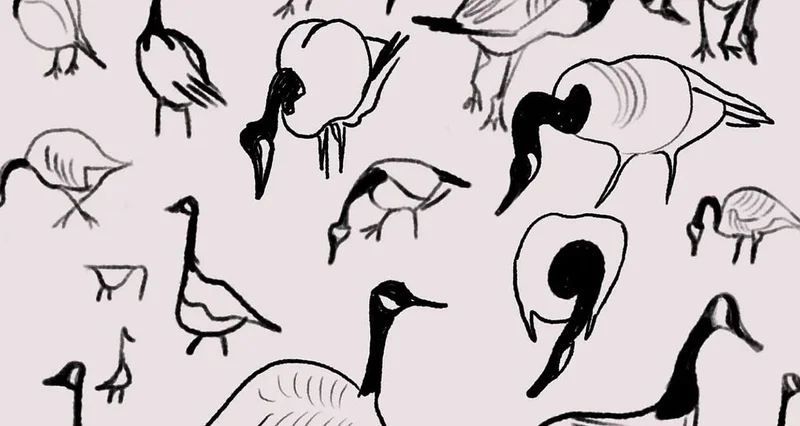
Weekly curated resources for designers — thinkers and makers.“Design leadership is currently suffering from a bad case of mechanical thinking. We talk endlessly about cross-functional alignment, product development and operations, and predicting roadmaps. But mechanical systems are brittle. They crack the second an executive stakeholder pivots strategy, a competitor drops a new AI feature out of nowhere, or a team loses a seasoned designer in a month.”Rethinking design leadership with swarms and flocks →By Darren YeoYou can ship a prototype in two days. Can you validate it as fast? →[Sponsored] AI collapsed build time and left user research looking slow. Optimal helps you validate at the same pace: test Figma or AI prototypes, live sites, and surveys in one workflow with AI-powered insights. Trusted by Amazon, Google, and Workday. Try it free.Editor picksThinking outside the box (literally) →How AI agents started escaping their sandboxes.By Andrea Filiberto LucasWe’re gorging on borrowed trust →And it’s going to cost us.By Dan MaccaroneThe loom that raised its hand →Judgment as a bottleneck.By Takuma KakehiThe UX Collective is an independent design publication that elevates unheard design voices and helps designers think more critically about their work.Beautiful UI for AI-native interfaces →Make me thinkWhy is everyone in Tech so sad? →“Among my Knowledge Worker peers, I am hearing this more and more often: people who want to pick up pottery, painting, crochet or other old-timey analog hobbies. In coffee shops and in the low-lit corners of bars, professionals are sharing dreams of “disappearing” or “living on a farm somewhere” or “going off the grid.””Middle management roles are also a trap →“That’s because the most important skills of an effective executive are the same exact skills that make an excellent line manager: developing domain expertise, driving execution (including setting pace), and translating both of those into an organizational culture that extends beyond you (in any of innumerable different ways). All of them are more easily practiced and mastered as a line manager than as a middle manager.”What’s the purpose of Information Architecture? →“I’d venture most people who’ve heard the phrase ‘information architecture’ have done so in the context of designing website navigation systems. That’s understandable: The web is a huge deal and IA was exactly what it needed early in its development. But IA has more to offer than its contributions to UX design. To understand why, consider its ultimate purpose. This is how I describe it: The purpose of information architecture is increasing agency by making systems more legible.”Little gems this weekFramer is killing the marketplace… or are they? →By Danny SapioGetting started is not getting it right →By Nicole Alexandra MichaelisThe next hack for our humanity, in the age of AI →By Hiroshi SatoTools and resourcesEveryone can design →Design’s dreaded phrase is coming back.By Kai WongDefining ethical design for machines →Translating principles into rules that people can agree upon.By Michael BuckleyHow models change what we notice →What a dollhouse full of death taught me about thinking.By Catherine ChuSupport the newsletterIf you find our content helpful, here’s how you can support us:Check out this week’s sponsor and support their work tooForward this email to a friend and invite them to subscribeSponsor an editionRethinking leadership, Judgment as bottleneck, Ethical UX for machines was originally published in UX Collective on Medium, where people are continuing the conversation by highlighting and responding to this story.
Rethinking leadership, Judgment as bottleneck, Ethical UX for machines