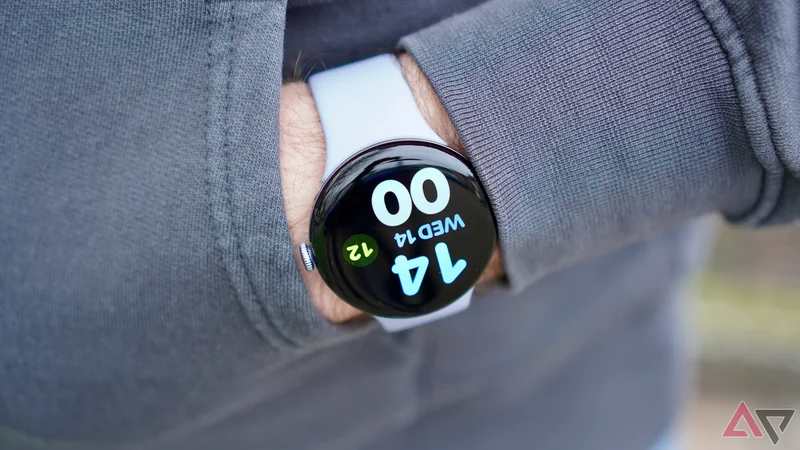
The Google Pixel Watch 5’s Health Guardian feature includes Blood Pressure Trends, where you’ll receive monthly data trend reports to, “spot persistent higher cardiovascular trends early,” and take action based on the indicators.
Google makes it very clear the Pixel Watch 5 isn’t measuring your blood pressure, but even with this caveat, it’s still an unusual feature, especially because it doesn’t have Federal Food & Drug Administration (FDA) clearance or approval.
What you may not know is, Google may have to thank competitor Whoop for pushing boundaries, and making this type of feature more widely available.
What happened with Whoop?
It all started in 2025
The Whoop fitness band has a Blood Pressure Insights feature, which is available for $359 per year Whoop Life subscribers. It requires calibration with a blood pressure cuff, and then delivers ongoing estimates of your blood pressure and range in the app.
In July 2025, the FDA sent a warning to Whoop saying the feature violated its policies because no clearance or approval had been gained. The FDA claimed the Blood Pressure Insights feature, “is intended for use in the diagnosis of disease or other conditions or in the cure, mitigation, treatment, or prevention of disease, or to affect the structure or any function of the body.”
The FDA takes devices that diagnose or manage important medical conditions seriously, and blood pressure devices usually have to be cleared to be legally sold. It was concerned about how Whoop was marketing the Blood Pressure Insights feature, writing, “Providing blood pressure estimation is not a low-risk function,” and confirming the, “FDA actively regulates devices intended to measure or estimate a user's blood pressure.”
What does Google’s Blood Pressure Trends feature do?
Not that different to Whoop's feature
The newly announced feature on the Pixel Watch 5 doesn’t show daily blood pressure numbers or estimates, or require calibration with a cuff. Instead, Google says: “Our devices passively measure your pulse and motion patterns throughout the month to estimate your blood pressure trends.”
Read the fine print and Google makes it clear what the feature can’t do. It states:
This product is not a prescreener for hypertension, does not provide real-time blood pressure readings for clinical purposes, and should not be relied upon for blood pressure management, medication adjustments or treatment plans.
It also adds:
Alerts are intended for general wellness and informational purposes only and not intended to diagnose, treat, cure, or prevent any medical condition, or substitute for professional medical advice.
Google is being very careful with its language, and for a very good reason. Whoop didn’t take its run-in with the FDA lightly, and fought for its Blood Pressure Trends feature. What happened next paved the way for not only Google’s new feature, but others too.
Whoop’s bold move
Perseverance pays off
Whoop countered the FDA’s warning by stating its Blood Pressure Insights feature was for wellness purposes and did not diagnose any medical condition. Whoop CEO Will Ahmed wrote on LinkedIn:
Whoop supports the FDA’s right to regulate medical devices. We spent years getting FDA clearance for our ECG feature that detects AFib. That’s a medical device. We follow the rules. Blood Pressure Insights, however, isn’t a medical device. And we won’t let regulatory overreach dictate how people access their own health data.
As the back-and-forth wrangling continued, the FDA released a crucial piece of guidance in January 2026 to “provide clarity” on its compliance policy for devices categorized as wellness products. In it, the FDA states:
The FDA may consider certain products that use non-invasive sensing (e.g. optical sensing) to estimate, infer, or output physiologic parameters (e.g. blood pressure, oxygen saturation, blood glucose, heart rate variability) to be general wellness products when such outputs are intended solely for wellness uses.
It also gives an example of a product that would not require FDA clearance or approval.
A wrist-worn wearable product intended to assess activity and recovery that outputs multiple biomarkers, among which are hours slept, sleep quality, pulse rate, and blood pressure. Sleep is measured via an accelerometer, while pulse rate and blood pressure are measured via a photoplethysmogram (PPG).
Following this, Whoop revised the language used around its Blood Pressure Insights feature, and in June 2026, the FDA ended its action against the company. A Whoop spokesperson told Fierce Med Tech:
[Whoop} had transparent and positive conversations with the FDA and proactively targeted modifications to Blood Pressure Insights and its labeling that further reinforce the feature’s wellness purpose.
The changes are purely visual and do not interfere with the feature benefits.
The FDA is beginning to recognize the benefits for consumers of responsible, low-risk wellness technologies that support their proactive health, and reinforces the distinction between wellness products and medical devices while supporting continued innovation in consumer health.
In an editorial on the current state of wearable tech, the New York Times called the situation:
A win not just for Whoop but for the wearable industry writ large.
Making Google’s feature possible?
Apple shows how it may not have been plain sailing otherwise
Whoop’s battle with the FDA, its eventual clarification about whether wellness-focused blood pressure estimation devices required clearance or not, and how the feature should be marketed, has almost certainly reduced the friction for Google to release the Blood Pressure Trends feature in the US.
While Whoop and the FDA battled, Apple released the Apple Watch Series 11 with its FDA-cleared hypertension risk monitoring feature, which passively monitors blood pressure using the smartwatch’s PPG sensor to alert the wearer of any potential issues. It does not provide actual blood pressure measurements.
It’s unclear whether Apple’s feature would still require FDA clearance today, under the new guidance, perhaps with a few changes to the way the feature is described, but the fact it went through the FDA process suggests Google may have needed to do the same for its similar feature at the time.
It has, in part, got Whoop to thank for this. Google will release Health Guardian on the Pixel Watch 5 and the Fitbit Air in September. It includes the Blood Pressure Trends and Insulin Resistance Trends features.