The Trump administration is restricting all legal immigration categories in an effort to reduce the flow of immigrants to America. The restrictions include freezes by U.S. Citizenship and Immigration Services and State Department officials refusing to process applications abroad. The policies affect U.S. citizens sponsoring spouses, children and other family members to join them in America, as well as employers seeking workers. Analysts note the U.S. economy requires more workers to grow, but the administration’s actions reduce the labor supply.
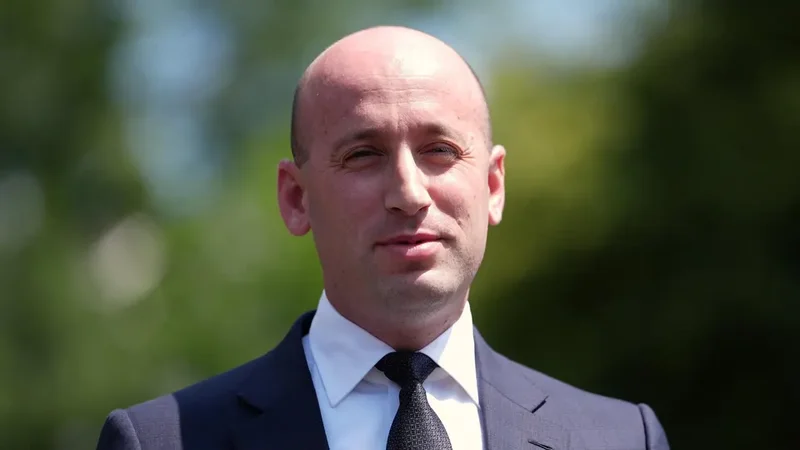
Led by White House Deputy Chief of Staff Stephen Miller, the chief architect of Donald Trump’s immigration agenda, the policies are having a significant impact. “The Trump administration’s policies will reduce legal immigration to the United States by an estimated 33% to 50%, or by 1.5 million to 2.4 million legal immigrants, by the end of Donald Trump’s four-year term,” according to a January 2026 National Foundation for American Policy analysis.
An earlier NFAP report factored in labor contraction due to other immigration policies, including on deportation and ending Temporary Protected Status, and concluded, “Due to fewer workers in the labor force, the Trump administration’s immigration policies would lead to a potential labor loss to the U.S. economy of approximately 19 million worker years by 2028 and 102 million worker years by 2035. The policies would reduce the projected cumulative goods and services produced in America by $1.9 trillion, or $5,612 per person, from 2025 to 2028, and by $12.1 trillion, or $34,369 per person, from 2025 to 2035.” The analysis found the policies would also reduce economic growth by approximately one-third and increase the federal debt.
Immigration Restrictions Cut Across Categories
The Trump administration’s policies affect all immigration categories. Trump officials have refused to process cases for approximately 55,000 Diversity Visas, a category the administration sought to eliminate during Donald Trump’s first term. Instead of trying again to change or abolish the category through legislation, officials have barred anyone from entering or adjusting status as a Diversity Visa winner. Then-DHS Secretary Kristi Noem justified suspending the category by citing a shooter at Brown University who gained permanent residence in the Diversity Visa lottery eight years earlier. The individual killed two people at Brown, an MIT professor and himself.
The Washington Post editorialized, “Taken together, the Trump policy seems to be: wait for something bad to happen, and then restrict as much immigration as possible.” Applicants enter the lottery from countries underrepresented in other immigration categories. Israel, Australia, Finland, France and Japan are among the places with citizens eligible for the FY 2026 Diversity Visa lottery. Despite lawsuits, it appears the administration will run out the clock and nullify the category. “Selectees who do not receive visas or status by September 30, 2026, will derive no further benefit from their DV-2026 registration,” according to the State Department.
The Trump administration also has stopped all refugees from entering the United States except white people from South Africa. Allowing only white people to become refugees is a development even Trump’s fiercest critics failed to predict before Trump’s second term. NFAP estimates that by freezing and then reducing annual refugee admission levels to well below the 125,000 ceiling established in the last year of the Biden administration, the Trump administration reduced projected legal immigration by about 470,000 over four years.
The most significant impact of a Dec. 16 proclamation will be on the individuals affected, employers that wish to hire them, U.S. citizens who want to sponsor close relatives for immigration and U.S. universities hoping to enroll these individuals as students. Under the proclamation, nationals of 39 countries cannot enter the United States, to varying degrees, on immigrant or temporary visas. The 39 countries include Nigeria, Africa’s most populous nation, Zimbabwe, Venezuela, Afghanistan and Haiti.
On January 14, 2026, the administration announced, “The State Department will pause immigrant visa processing from 75 countries whose migrants take welfare from the American people at unacceptable rates. The freeze will remain active until the U.S. can ensure that new immigrants will not extract wealth from the American people.”
There is overlap between the 75 countries on the “freeze” list and the 39 countries in the Dec. 16 proclamation, totaling 93 countries across the two lists. According to the NFAP analysis, 481,460 individuals from the 93 countries received permanent residence in FY 2023, including 206,550 as spouses, children or parents in the Immediate Relatives of U.S. Citizens category.
In June, a federal judge vacated the USCIS policy of holding and declining to adjudicate applications from many countries and categories, including asylum, in Dorcas International Institute of Rhode Island v. USCIS. In July, a federal district court also denied the Trump administration’s motion to stay the ruling.
Three class action lawsuits have upcoming motions or hearings challenging the policies. Red Eagle Law v. Edlow in the Northern District of California challenges the USCIS policy of holding and refusing to process applications for individuals from numerous countries. Curtis Morrison of Red Eagle Law notes in an interview that the Dorcas decision enjoins the USCIS holds, but the government has appealed that order. Judge Charles R. Breyer took the hearing off the calendar and will decide on the briefs, said Morrison. Medani et al. v Trump, also in the Northern District of California, challenges the Diversity Visa category suspension and holds. A hearing is set for August 27 with Judge Edward J. Davila. Syed et al. v Trump in the California Central District challenges the 75-country suspension. A hearing is set for September 21 with Judge John A. Kronstadt. Red Eagle Law is lead counsel on the three class actions.
The government failed to respond to Red Eagle Law’s motions for preliminary injunction and to certify the class by the August 10 deadline in Syed et al. v Trump. Judge Kronstadt wrote, “Consequently, on or before August 19, 2026, Defendants shall file any oppositions or notice of non-opposition to the Motions. If no oppositions are filed by that deadline, the Motions will be deemed unopposed.”
Using The Public Charge Rule To Restrict Immigration
In July 2026, Trump officials published a final rule on “public charge.” DHS rescinded the 2022 public charge ground of inadmissibility in favor of granting government officials greater freedom to deny individuals permanent residence in the United States. As a result, U.S. citizens will likely be blocked from sponsoring a spouse, child, parent or sibling based on speculation of future earnings or public benefits use. This will happen even though family-based immigrants experience rapid earnings growth and are typically ineligible for federal means-tested benefits for their first five years in the U.S. or longer. “Real earnings increased by 76% over 12 years for immigrants from countries where family sponsorship is the primary method of immigrating to the United States,” according to an NFAP study by economist Mark Regets.
“The public charge rule would provide even more discretion to officers to deny adjustment of status applications in light of the USCIS memo that indicates that adjustment of status requires extraordinary discretion,” according to an analysis by immigration attorneys Cyrus Mehta and Damira Zhanatova. “The Trump administration has been open about disfavoring immigration to the U.S., whether legal or illegal. The new public charge rule provides the Trump administration another powerful tool to restrict legal immigration to the U.S.”
In a new Board of Immigration Appeals decision, the Trump administration has stated that individuals will no longer be allowed to leave the country on advance parole and reenter the United States with lawful admission. This could prevent a DACA recipient from marrying a U.S. citizen and gaining permanent residence after leaving on advance parole and returning with a lawful entry, notes Charles Kuck of Kuck Baxter.
In an effort to meet arrest quotas, Immigration and Customs Enforcement is arresting people with pending applications, including individuals sponsored for permanent residence by their U.S. spouse. Miriam Jordan of the New York Times reported on a Russian-born woman with a green card application pending after applying for asylum and marrying an American citizen. ICE arrested her off a domestic flight and placed her in detention. “Trump 2.0 is actively choosing to persecute a U.S. citizen and his future-citizen spouse, while diverting law enforcement resources away from actual lawbreakers,” said Doug Rand, a former DHS official, in a statement.
Employer-sponsored immigrants are also facing new problems. A proposed rule may price many H-1B visa holders and employment-based immigrants out of the U.S. labor market by changing prevailing wage levels. A rule placed on the regulatory agenda to change labor certification could make it more difficult for employment-based immigrants to obtain permanent residence by expanding employer obligations for PERM or permanent labor certification.
Trump officials have significantly reduced legal immigration in 2026 and will continue to do so in 2027 and 2028. American citizens barred from living in the United States with close family members, including spouses, will bear the brunt of the policies, along with the economy. “What amazes me about Trump’s mass deportation agenda is how much of the focus and financial resources are really on eliminating legal immigration,” said Curtis Morrison of Red Eagle Law. “And they’re not embarrassed about that.”