Africa Intelligence Brief August 17, 2026: The Week Africa Was Measured
Executive Summary
Africa Intelligence Brief August 17: Zambia's count nears its end, South African unemployment hits 33.6%, and Congo's Ebola outbreak becomes its deadliest.
Rio Times · Africa Intelligence Brief August 17
Voters, statisticians, bond buyers and commodity traders all filed their verdicts within days of each other.
Zambia – An Answer Arriving Slowly
Sixty-two percent, and counting
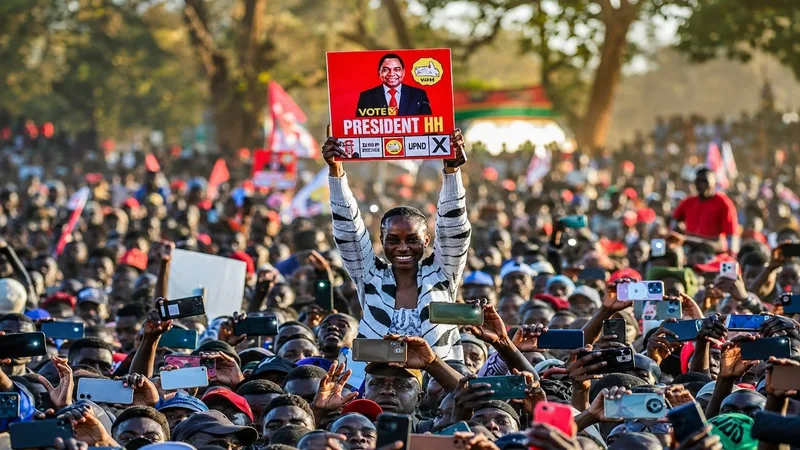
With 161 of 226 constituencies declared, President Hakainde Hichilema holds 2,057,986 votes against Brian Mundubile’s 1,190,920, a lead of 867,066. That is 62.3% of the 3,304,309 valid votes counted so far, up from about 59% late on Sunday. Zambia now has 226 constituencies, up from 156 in 2021 after delimitation.
A candidate needs more than half the vote to avoid a run-off. Rejected ballots number 89,789 across the declared constituencies.
The number underneath the win
Turnout in the declared constituencies is running near 58% so far, against 56.4% at the 135-constituency stage. The 2021 general election finished at 70.6%, though a partial count is not a final one.
A president winning more decisively from a smaller electorate is a particular kind of mandate. It is stronger on paper and thinner underneath.
South Africa – A Third of the Country
Thirty-three point six
Official unemployment rose to 33.6% in the second quarter from 32.7%, the highest since the second quarter of 2022, with the number of unemployed people up 345,000 to 8.481 million. Employment fell by 16,000 to 16.739 million.
Job losses were recorded in seven of the ten sectors the statistics agency tracks. Community and social services shed 57,000 positions, mining 26,000, and agriculture and manufacturing 15,000 each.
Nearly half of the young
Unemployment among people aged 15 to 34 rose 1.5 percentage points to 47.4%. The official rate has sat above 30% for most of the past six years and is among the highest in the world.
The national mood here is neither surprise nor protest but a kind of practised endurance. A country stops treating a number as a crisis once it has lived with it for years.
Nigeria – Selling More, Pumping Less
Eighty percent to one customer
Nigerian exports to China rose 80% to 2.3 billion dollars in the first half of 2026. Tax collection reached 27.1 trillion naira, about 19.9 billion dollars, over the first seven months of the year as digital systems expanded.
Those are the two numbers a finance ministry wants. They arrived in the same month as a less welcome one.
And four percent less oil
Oil production fell 4% in July to 1.505 million barrels a day. The central bank has meanwhile eased restrictions on banks’ access to its discount window and reinstated tenored repurchase operations.
A country diversifying its buyers while its main export declines is running two clocks at once. Which finishes first decides the decade.
DR Congo – A Bond and an Epidemic
One and a quarter billion dollars
The Democratic Republic of Congo raised 1.25 billion dollars in April in its first international bond, entering global financial markets for the first time. It is the largest cobalt producer on earth and a major supplier of copper.
Investors bought that paper in April, months before the outbreak reached its present scale. The two facts still describe one place.
Two thousand three hundred and twenty-five
The Ebola outbreak has now killed 2,325 people from 4,945 confirmed cases, according to the national public health institute. That passes the 2,299 deaths of the 2018–2020 Kivu epidemic, making this the deadliest outbreak in the country’s history. The toll has risen by more than 300 in a week, and the case fatality ratio has roughly doubled since June, to about 46%.
A growing share of deaths occur in communities before patients ever reach a treatment centre. A sovereign bond and an untreated epidemic are not contradictory, and that is the uncomfortable part.
West Africa – Cocoa Does the Talking
Nearly forty percent
Cocoa has climbed nearly 40% since May, to about 5,773 dollars a tonne, as weather threatens West African production — though it remains roughly a quarter below year-ago levels and far below the 2024 peak. Ivory Coast, the largest producer, cut the pace of its forward sales in June amid tight supply and weather risk.
A producer slowing sales into a rising market is making a judgement about next season. It is also the clearest exercise of pricing power the region has available.
And a continent buying rate stability
Egyptian inflation rose to 14.9% in July while Cairo opened a bid round for 14 oil and gas exploration blocks. Uganda’s central bank held its policy rate at 9.75% for an eighth straight meeting, with inflation described as contained.
Three different economies, three different instruments, one shared problem. None of them controls the price of what it sells.
What This Means From Latin America
Competitors and comparables
Congo’s April debut bond puts another commodity sovereign into the same investor allocation Latin American issuers compete for, and it priced while the country was managing an epidemic. That is a signal about how much political and health risk the market will currently absorb for cobalt exposure.
Cocoa up nearly 40% since May reaches Brazilian and Ecuadorean growers directly. West African supply anxiety is Latin American revenue.
And a warning about jobless growth
South Africa has held unemployment above 30% for most of six years while remaining an investable market with deep capital markets. Investability and employment have become separable in a way that should interest every commodity economy.
Zambia’s turnout tells a version of the same story in a different register. People who see no economic stake participate less, and that eventually reaches the political system.
Africa Intelligence Brief August 17: What We Are Watching
- Coming hours – The remaining 65 Zambian constituencies and the formal declaration.
- Coming days – Whether Zambia’s final turnout confirms the fall from 70.6% in 2021.
- Coming months – South African employment, after losses in seven of ten sectors.
- Coming months – Nigerian oil output, down 4% in July to 1.505 million barrels a day.
- Ongoing – The Congolese Ebola toll, now 2,325 deaths from 4,945 cases and the country’s deadliest.
- 2026/27 season – West African cocoa, up nearly 40% since May on weather risk.
More from the Rio Times Intelligence Desk on August 17: the Europe Intelligence Brief, the Asia Intelligence Brief and the USA & Canada Intelligence Brief. For how these stories developed, see the Africa Intelligence Brief for August 15 and the Africa Intelligence Brief for August 14.
The Africa Intelligence Brief August 17 returns tomorrow morning.
Frequently Asked Questions
Where does Zambia’s election count stand?
With 161 of 226 constituencies declared, President Hakainde Hichilema holds 2,057,986 votes against Brian Mundubile’s 1,190,920, a lead of 867,066, which is 62.3% of the valid votes counted so far. A candidate needs more than half the vote to avoid a run-off, and turnout in the declared constituencies is running near 58% so far, against a final 70.6% in 2021.
How bad is South African unemployment?
The official rate rose to 33.6% in the second quarter of 2026 from 32.7% in the first, the highest since the second quarter of 2022, with the number of unemployed people up 345,000 to 8.481 million while employment fell by 16,000 to 16.739 million. Job losses were recorded in seven of the ten sectors tracked by Statistics South Africa, and unemployment among those aged 15 to 34 rose 1.5 percentage points to 47.4%.
What is happening with Nigeria’s trade?
Exports to China rose 80% to 2.3 billion dollars in the first half of 2026, and tax collection reached about 19.9 billion dollars over the first seven months of the year. Against that, oil production fell 4% in July to 1.505 million barrels a day, while the central bank eased restrictions on banks’ access to its discount window and reinstated tenored repurchase operations.
How severe is the Congolese Ebola outbreak?
The outbreak has killed 2,325 people from 4,945 confirmed cases according to the national public health institute, passing the 2,299 deaths of the 2018–2020 Kivu epidemic to become the deadliest in the country’s history. The toll has risen by more than 300 in a week and the case fatality ratio is around 46%, with a growing share of deaths occurring in communities before patients reach a treatment centre. The country separately raised 1.25 billion dollars in April in its first international bond.
Sources: Zambia Monitor, Statistics South Africa, Al Jazeera, Africanews
This article was produced by The Rio Times’ automated newsroom system. How we use AI · Report an error
LatAm Markets: Live Signals → — real-time movers, turnover leaders and FX across Latin America.