Iran rules out talks on extension of Islamabad MoU
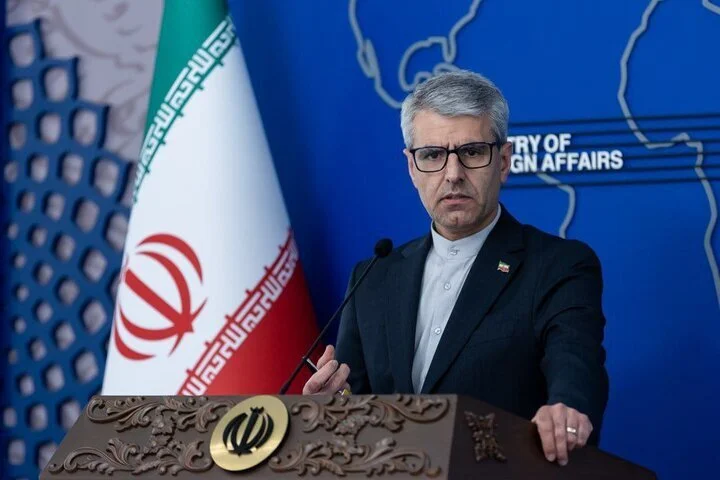
TEHRAN – In a weekly press briefing on Monday, Iranian Foreign Ministry spokesman Esmaeil Baqaei addressed multiple critical issues, firmly ruling out any negotiations on extending the 60 days stipulated in the Islamabad Memorandum of Understanding (MoU) while emphasizing that the United States has violated the agreement from its inception.
Baqaei also reiterated Iran's demand for Qatar to clarify the status of three missing fighter pilots, dismissed reports of backchannel talks between Washington and the Islamic Revolution Guards Corps (IRGC) as "fabricated," and asserted that regional states have concluded the United States is an unreliable security partner.
No extension of Islamabad MoU
Addressing the most pressing issue of the briefing, Baqaei categorically rejected any discussion on extending the 60-day timeframe referenced in the Islamabad memorandum. He clarified that the document itself contains no explicit clause establishing a 60-day deadline; rather, it envisioned a 60-day dialogue period covering sanctions removal and the nuclear file, with provisions for extension if no agreement materialized.
"Negotiations never began because the United States committed gross and widespread breaches of the memorandum just weeks after its signing on June 18," Baqaei stated. "Consequently, the 60-day issue is entirely irrelevant."
The spokesman emphasized that Iran formulates its policies based on national interests and strategic assessments, not under external pressure or artificial deadlines. "Iran is not a party that adjusts its policies under pressure and ultimatums," he asserted, stressing that the Islamic Republic has repeatedly demonstrated its refusal to succumb to coercive tactics.
Baqaei noted that Iran's Armed Forces remain in a state of full vigilance, closely monitoring all movements. He added that strengthening ties with regional neighbors remains an ongoing priority for Tehran's foreign policy.
US war objectives: A study in confusion
Responding to claims that Washington had shifted its priorities regarding Iran, Baqaei characterized the reported changes as evidence of persistent confusion within the US administration. He maintained that the war of aggression against Iran had no legitimate basis, serving only to advance the ambitions of "an occupying regime in the region."
Baqaei recalled that Washington initially justified military action by citing an imminent threat from Iran—a claim the Pentagon itself subsequently rejected. "They have trapped themselves in a quagmire," he observed. "To justify their failures, they are forced to change their objectives."
He noted that US concerns have now pivoted to the Strait of Hormuz, a waterway that was open before the aggression. "The best course for the United States is to extricate itself as soon as possible before becoming more deeply entangled," Baqaei advised. "Acknowledging a mistake could pave the way for a correct decision, though we doubt American officials possess such courage."
Regional states reject US as a reliable partner
Underscoring a 'significant strategic development,' Baqaei added: regional countries have concluded that the United States is an "unreliable and untrustworthy partner." He cited the two recent US-Israeli wars against Iran as a catalyst for this realization.
"The countries of the region have come to understand that US military presence has been a burden rather than a security factor," Baqaei stated. "This has prompted many to reconsider their reliance on outside powers and move toward greater self-reliance."
He noted that Iran had long invited regional states to strengthen mutual trust and develop indigenous security mechanisms. "These two factors—US unreliability and the demonstrated ineffectiveness of foreign military presence—have brought regional countries to the very conclusion we have advocated for years," he said.
Fate of missing Iranian pilots
Baqaei reiterated Iran's demand for Qatar to clarify the status of three Iranian fighter pilots who went missing during operations responding to US-Israeli attacks. He affirmed that the Islamic Republic would pursue their fate through all available bilateral, multilateral, and legal mechanisms. "As long as their status remains unclarified, they are presumed to have been captured alive," Baqaei stated.
He detailed the Foreign Ministry's early actions, noting that correspondence with the International Committee of the Red Cross and diplomatic contacts through Iranian and Qatari embassies were initiated from the very first days of the war.
Dismissal of backchannel talks reports
Baqaei firmly rejected media reports alleging secret backchannel negotiations between the United States and IRGC leadership through officials in Iraq's Kurdistan Region. He described the reports as "totally fabricated" and part of psychological warfare aimed at creating division among Iran's decision-making bodies.
"News of a secret meeting between Iran and the US in Erbil is entirely baseless," Baqaei declared. "Such reports reflect desperation and are designed to sow discord."
He emphasized that Iran's various institutions have demonstrated unprecedented cohesion and solidarity regarding war and peace issues over the past six months. "The negotiating team enjoys the trust of all system institutions, including defense sectors," Baqaei said, stressing that decision-making remains an institution-based process incorporating all relevant considerations.
Iran-Pakistan relations and mediation efforts
Addressing Pakistani Interior Minister Mohsin Raza Naqvi's recent Tehran visit, Baqaei dismissed speculation about "special messages" from Pakistani leaders.
Baqaei confirmed that Pakistan continues to seek a mediating role in Iran-US issues, given its involvement in shaping the Islamabad memorandum. However, he criticized repeated US breaches of commitments, noting that such actions have undermined mediation efforts.
The spokesman clarified that while European countries have expressed readiness to offer good offices, no new mediator has emerged in Iran-US relations. "The fundamental problem lies not in mediation but in Washington's approach, its miscalculations, and its insistence on failed policies," he stressed.
European human rights criticism rejected
Baqaei rejected recent European statements concerning human rights in Iran, asserting that European countries lack the moral standing to lecture Iran on the issue. He criticized European inaction regarding Palestine and their positions toward US-Israeli aggressions against Iran, characterizing such statements as reflecting double standards.
Addressing a dispute involving two French embassy staff members, Baqaei confirmed that their reported involvement in activities supporting Iranian civil society constituted a violation of diplomatic norms and the Vienna Convention. The French ambassador was summoned, and Iran formally protested. The two individuals subsequently left Iran and will not be permitted to return, according to Baqaei.