Tehran5:32 p.m. July 23
Latest
The price of oil hit $100 a barrel on Thursday for the first time since May, after Iran’s Houthi allies in Yemen claimed to have struck two Saudi tankers in the Red Sea, and the United States and Iran launched more attacks overnight.
The Houthis’ strikes were the first since the group announced a blockade on Saudi ships this week. President Trump said on social media on Thursday that he would hold Iran responsible for any further attacks in the Red Sea and threatened to widen the conflict to include the Houthis. .
The escalation threatened to create a second choke point for global shipping and open another front in the conflict. Iran has already largely closed the Strait of Hormuz in the Persian Gulf, throttling oil and gas supplies, and rattling energy markets. The price of Brent crude, the global oil benchmark, dipped after the two sides agreed a preliminary truce last month, but has inched back up again since the fighting resumed. Oil prices are now 40 percent higher than they were before the war started in February.
The Saudi authorities said there had been an attack on one ship, the Encelia, adding that the crew were safe, without specifying the origin of the attack. The Saudi government has not commented on the Houthi claim regarding the second ship.
Secretary of State Marco Rubio urged the Houthis to de-escalate on Thursday, suggesting that the militia had been “snookered” by Iran into joining the war.
Speaking at a conference in Manila, Mr. Rubio said that the United States would continue bombarding Iran until the country’s negotiators were serious about reaching a deal.
U.S. Central Command, which coordinates military operations in the Middle East, said it had launched a wave of strikes overnight to degrade Iran’s ability to threaten commercial shipping, targeting Iranian drone and missile storage sites and air defenses.
Iran’s Islamic Revolutionary Guards Corps said that it had launched attacks on U.S. military targets in Jordan and Kuwait, including a communications tower, accusing U.S. forces of attacking equivalent infrastructure in Iran.
Hours before the latest exchange of strikes, Mr. Trump threatened to attack a bridge or power plant “any time the Islamic republic of Iran shoots at a ship in the Strait of Hormuz,” and a week after he said the U.S. would reinstate a naval blockade of Iranian ports.
A cease-fire deal agreement reached last month by the two countries has unraveled in recent weeks, with the Strait of Hormuz becoming the focal point of the dispute.
Here’s what else we’re covering:
-
The return of dead soldiers:Before Mr. Trump attended the return of four Army soldiers killed in Iranian strikes, he told reporters that they supported the war before they died. He did not say how he knew their views. Most Americans, including Republicans, have become increasingly critical of the war.
-
Saudi nuclear deal:Mr. Trump said on Thursday that a broad nuclear deal the United States agreed with Saudi Arabia would hinge on the kingdom’s willingness to join the Abraham Accords, appearing to condition the agreement on Riyadh’s willingness to open diplomatic relations with Israel. Read more ›
The “flaring up” of the conflict and rise in energy prices has worsened the outlook for the European economy, Christine Lagarde, the president of the European Central Bank said on Thursday. Lagarde said at a news conference in Frankfurt that the Houthi attacks in the Red Sea were “alarming” and clearly aggravating energy prices.
She was speaking after policymakers chose to hold interest rates steady. Last month, the E.C.B. became the first major central bank to raise rates in response to the war.
Global oil prices hit $100 a barrel on Thursday for the first time since May as the widening war between the United States and Iran stifled the flow of energy in the Middle East.
The price rebound in Brent crude oil over the past few weeks reflects the market’s growing concern about the expanding conflict, which now extends from the Persian Gulf to the Red Sea. Both arteries are vital to the global energy trade.
The Houthi threat to prevent ships from traveling to and from Saudi Arabian ports on the Red Sea has complicated travel in an area that was serving as an alternative to the Strait of Hormuz, where Iran and the United States are jousting for control.
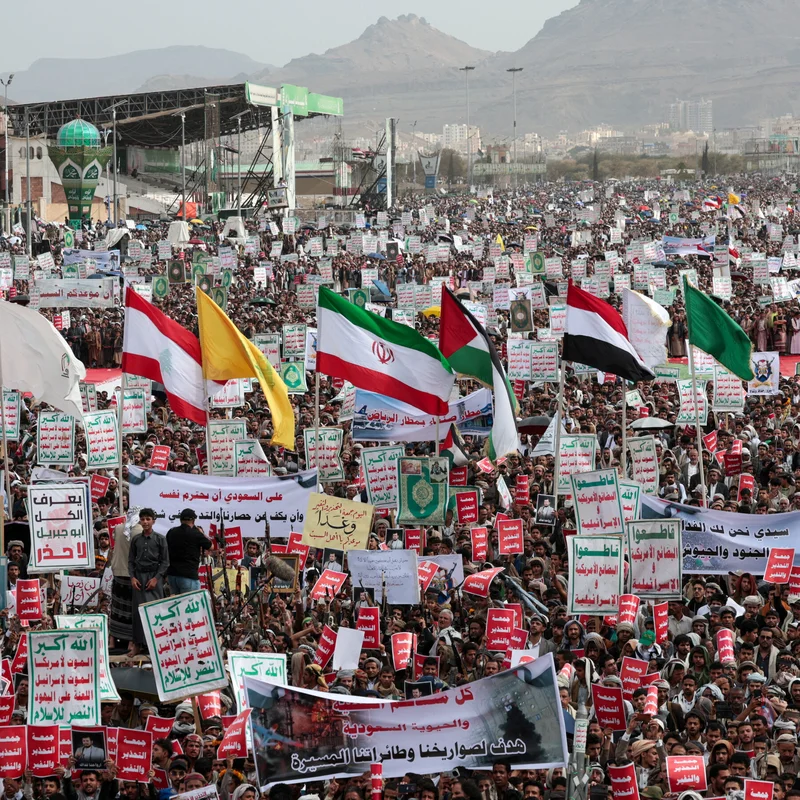
The Houthis, an Iran-backed group in Yemen, claimed on Wednesday that they had targeted two Saudi oil tankers with missiles and drones. If the Houthis manage to block Saudi Arabia from using the Red Sea, they would be cutting off about 4 percent of the world’s oil supply and leaving Saudi Arabia, one of the world’s biggest producers, with very little access to global markets.
“The conflict has entered a decidedly more dangerous phase,” analysts from RBC Capital Markets wrote on Wednesday. Even though oil prices have risen a lot in recent weeks, “we still see them as a lagging indicator of the extreme pressure building in the region,” they added, forecasting that a “full regional war” could send prices toward $150 a barrel.
Brent oil prices are now nearly 40 percent higher than on the eve of the war. (U.S. oil prices, at around $91 a barrel, are on a similar trajectory.) More expensive oil will push prices at the pump around the world even higher, unwelcome news for drivers already faced with stubbornly high gasoline and diesel prices.
The cost of those transportation fuels remained elevated even as oil prices eased in June, briefly falling below prewar levels. More oil was flowing through the Strait of Hormuz at that time, but fewer refineries were available to turn that crude into the fuels that power cars and airplanes.
That is partly because of the war with Iran, but also because Ukraine has inflicted significant damage on Russian refineries — so much so that Russia banned diesel exports in early July to preserve domestic supplies.
A gallon of regular gasoline in the United States cost 37 percent more on Thursday than it did prewar, at a national average of $4.09 per gallon, according to the AAA motor club. Diesel prices were 39 percent higher than they were when U.S.-Israeli strikes on Iran started in February.
The refineries that remain open are reaping huge rewards. In the United States, profit margins on turning oil into gasoline and diesel are near multiyear highs, according to data from commodities research firm Argus Media.
The threats to shipping in the Red Sea, paired with continued fighting between the United States and Iran around the Persian Gulf, are stoking concern about the outlook for oil supply, Fatih Birol, executive director of the International Energy Agency, said this week.
“A resolution to the ongoing conflict that includes a full and unconditional reopening of the Strait of Hormuz will be essential to avoid a further deterioration in global energy security,” Mr. Birol said.
U.S.
intensively
bombed Iran over
consecutive days.
Attacks
IRAN
targeted U.S.
military sites in
the region, as well
as commercial shipping.
jordan
IRAQ
kuwait
BAHRAIN
qatar
Red
Sea
u.a.e.
oman
YEMEN
Arabian
Sea
HOUTHIS
claimed attacks
on tankers.
U.S.
intensively
bombed Iran over
consecutive days.
Attacks
IRAN
targeted U.S.
military sites in
the region, as well
as commercial shipping.
IRAQ
jordan
kuwait
BAHRAIN
qatar
u.a.e.
egypt
SAUDI
ARABIA
oman
Red
Sea
Arabian
Sea
YEMEN
HOUTHIS
claimed attacks
on tankers.
SUDAN
President Trump warned on Thursday that the United States would hold Iran directly responsible for further Houthi attacks on shipping, threatening “major military punishment” against both Tehran and the Houthis if attacks on Saudi tankers in the Red Sea continued. Trump said on social media that the Houthis had “acted very responsibly” since a U.S. offensive against the group last year and throughout the war with Iran this year, but added that he was “very disappointed” by the renewed attacks.
Oman said on Thursday that it was coordinating with Saudi Arabia, Yemeni groups and the U.N. envoy to Yemen to resume diplomacy to de-escalate the growing conflict. Oman has mediated for years between Saudi Arabia and Yemen’s Iran-backed Houthi rebels.
The Omani comments were published a day after the Houthis, who declared a naval blockade on Saudi-linked shipping this week, claimed missile and drone strikes on two Saudi oil tankers in the Red Sea. The escalation has threatened to open a new front in the broader Iran war.
Secretary of State Marco Rubio said the main U.S. goal on Iran is to ensure it can never develop a nuclear weapon. “Our issue, and our concern, and our focus, is denuclearizing Iran,” he told reporters while in Manila. “They can never have a nuclear weapon.”
President Trump had said repeatedly that he had destroyed Iran’s nuclear program with the U.S. military attack on three Iranian nuclear sites in June 2025. Iran, however, has a stockpile of highly enriched uranium that is widely believed to be stored deep underground, and that it enriched further after Trump withdrew from an Obama-era nuclear deal in 2018.
Secretary of State Marco Rubio said on Thursday that the United States would continue to strike Iran until its leadership was serious about making a deal. “The problem with Iran is every time they make a deal, the people that are in charge there, they either break it or they want to change it,” Rubio told reporters during a visit to the Philippines.
“The price will continue to get higher every single night until they come to their senses,” Rubio added. “Maybe in a few days, they’ll be ready to make a deal once they realize that this is not a winning proposition for them.”
Strikes on tankers in the Red Sea on Thursday by the Iranian-backed Houthi militia group added to fears about shipping oil out of the Middle East, pushing up crude prices to $100 a barrel and threatening to destabilize the global energy market.
The Houthis claimed to have attacked two Saudi oil tankers in the Red Sea after threatening a blockade in the region. And Iran’s Islamic Revolutionary Guards Corps said one of three oil tankers trying to pass through a “mined route” south of the Strait of Hormuz caught fire after an explosion, prompting the other ships to turn back, according to a statement carried by Iran’s official state news agency.
Shipping traffic has slowed to a trickle since the Houthi threat. Only 15 ships passed through the Strait of Hormuz on Wednesday, according to Kpler, a maritime data firm. That was roughly in line with recent days, and well below prewar traffic levels of around 130 ships per day.
The United States said it had completed its 12th night of consecutive strikes intended to “degrade Iran’s ability to threaten civilian mariners and commercial vessels.”
Oil prices jump.
-
The price of Brent crude, the global benchmark for oil, briefly touched $100 a barrel, up more than 5 percent. The cost of crude is up nearly 40 percent since the start of the war.
-
West Texas Intermediate crude, the U.S. benchmark, climbed nearly 5 percent to around $91 a barrel.
- Several factors inform the trajectory of oil prices. Investors and analysts are monitoring how many ships are passing through the Strait of Hormuz, the narrow waterway between Iran and Oman. They will also pay close attention to the Houthis’ claim that the group followed through on its threat to blockade the Bab al-Mandab Strait at the southern end of the Red Sea, which Saudi Arabia has used as an alternative route to export oil.
- The conflict is widening at a vulnerable time for energy markets. Oil stockpiles are smaller than they were when U.S.-Israeli strikes on Iran began at the end of February, and Ukrainian attacks have severely damaged Russian refineries, tightening supplies of transportation fuels like diesel.
Oil rise lifts the dollar and interest rates.
- The rise in oil prices stirred inflationary worries, spreading into other markets. The yield on the 10-year Treasury note, which is sensitive to changes in long-term inflation expectations, rose to 4.7 percent, its highest level since President Trump returned to the White House. The yield on the 2-year Treasury bond, which is particularly sensitive to changes in interest rate expectations, has now risen almost 1 percentage point this year to 4.36 percent.
- The U.S. dollar also rose, up 0.3 percent against a basket of other currencies. Higher domestic interest rates tend to draw investment capital from around the world looking to profit from the higher return on offer. That in turn increases the demand for dollar, strengthening the currency.
Global stocks are mixed.
- The S&P 500 fell almost 1 percent on Thursday, weighed down by tensions in Iran as well as worries over high spending on artificial intelligence, after Alphabet revealed that it was planning to spend even more building out the nascent industry than analysts had previously forecast.
- In Europe, the Stoxx 600, an index tracking the region’s largest companies, fell 1.5 percent.
- Stocks in Asia, where countries import vast quantities of oil and gas, largely held steady. South Korea’s KOSPI index was up 4.4 percent. Hong Kong’s Hang Seng Index was up just over 1 percent.
Shipping traffic remains low.
- Six vessels reversed course in the Red Sea on Monday and Tuesday away from the Bab al-Mandab Strait, after the Houthis warned shipping companies to avoid Saudi ports, according to Kpler.
- The Houthis’ claim of attacks on ships in the Red Sea on Thursday followed a threat that the group made this week to blockade ships from Saudi ports. In recent months, Saudi Arabia diverted millions of barrels of oil per day via the Bab al-Mandab Strait to avoid the Strait of Hormuz. Some ships are now moving north toward the Suez Canal, according to Kpler, but that route to Asia is costlier and logistically more complex.
- Any reduction in oil flows from Saudi Arabia’s Yanbu port on the Red Sea could cause oil prices to rise significantly, Clarksons, a ship broker, said in a note.
Gasoline prices have risen.
- Gas prices in the United States rose 3 cents on Thursday, to $4.09 a gallon, according to the AAA motor club. The national average price at the pump has risen 37 percent since the war began.
- Gas prices usually trail crude oil increases or drops by a few days. Many of the world’s refineries are offline or producing less after sustaining damage — including in the Persian Gulf and Russia — straining fuel markets.
- The average price of diesel rose to $5.21
What they are saying: ‘A more hawkish path for central banks.’
- The jump in oil prices has renewed worries about stagflation, where economic growth slows and inflation rises. The market is anticipating higher inflation, analysts at Deutsche Bank noted, pricing in “a more hawkish path for central banks.”
- The European Central Bank held interest rates steady on Thursday, after raising them at its meeting in June. Investors’ attention is now turning to the Federal Reserve, which meets next week. Futures markets are implying a 36 percent chance of a rate increase when officials meet, the analysts wrote.
Jenny Gross, Shirin Hakim and Pranav Baskar contributed reporting.
The Iranian-backed Houthi militant group in Yemen claimed on Wednesday that it had targeted two Saudi oil tankers with missiles and drones in the Red Sea. It would be the first such attack since the group announced a blockade aimed at Saudi Arabia.
The Houthis said in a statement that the Encelia and the Layla were violating the blockade. The group claimed that the strikes had caused large fires to break out on both vessels. Saudi Arabia’s transportation authority confirmed an attack the Encelia in a statement published by state media, and said the ship’s crew was safe after a fire broke out. It did not specify the attack’s origin or mention the other tanker the Houthis claimed to have struck.
The Houthis, a rebel group that controls a significant part of Yemen, announced the naval blockade on Monday. The move threatened to open a new front in the war in the Middle East and to further disrupt global energy supplies already reduced by the fighting between the United States and Iran in and near the Strait of Hormuz.
Mohammed al-Basha, a U.S.-based risk adviser focused on Yemen, said the tanker strikes on Wednesday demonstrated that the Houthis were “racing up” the “escalation ladder.” He said the attacks could prompt a military response by Saudi Arabia, an Iranian adversary that has relied on Red Sea routes in recent months to export millions of barrels of oil.
Both the Layla and the Encelia are Saudi-flagged tankers according to public ship-tracking data. While the Layla was last tracked five days ago in the Red Sea, the Encelia was located there Thursday morning, the tracking data showed.
The Houthis also claimed that in addition to attacking the two oil tankers, they forced around “10 ships to retreat and return.”
That claim could not be independently verified, but at least six vessels did reverse course in the Red Sea on Monday and Tuesday after the militia warned shipping companies to avoid Saudi ports, according to Kpler, a maritime data firm. It was not clear if those ships were included in the Houthis’ count.
While the Saudis and the Houthis have been in a fragile stalemate since a cease-fire in 2022, tensions erupted last week when the Houthis accused Saudi Arabia of striking Yemen’s main international airport in Sanaa, the Yemeni capital, in a dispute over an Iranian plane that tried to land there. The Houthis retaliated by attacking the Abha airport in southern Saudi Arabia, the first direct Houthi strike on Saudi soil since early 2022.
The Houthis have weaponized their ability to disrupt shipping in the Red Sea before.
During the war in Gaza, which began in late 2023, the Houthis attacked commercial shipping in the Red Sea with drones, missiles and hijacking, trying to exert pressure on Israel and its allies. By some estimates, a Houthi blockade could affect more than 3 percent of the global oil market.
Ismaeel Naar contributed reporting.
President Trump on Wednesday witnessed the return of four young Army soldiers recently killed overseas, telling reporters beforehand that each had died supportive of the deadly war he was waging with Iran.
“All of them said very strongly, ‘We cannot let Iran have a nuclear weapon,’” Mr. Trump said as he traveled to Dover Air Force Base to attend the dignified transfer. “They won’t have a nuclear weapon. So we’re going to honor them.”
Later, Mr. Trump took one soldier’s grieving family to his political rally in Georgia.
The president did not say how he knew the fallen soldiers’ views, but he decided to speak for them at a perilous political moment. Americans, including Republicans, have grown increasingly critical of the war in Iran, and the killings of U.S. service members was a grim, high-profile reminder that the president had failed to end a war that he had promised would only amount to “a little excursion.”
The excursion has left at least 18 service members dead, a number that Mr. Trump has tried to both defend and diminish in recent days as the conflict grows bloodier.
In a social media post on Tuesday, he compared the number of troop deaths in the Iran war with death counts in other conflicts, including the Vietnam War and the single-day mission that ousted Nicolás Maduro, the Venezuelan president, last winter.
Mr. Trump has been proud to say that the Venezuela mission resulted in zero deaths, and he has repeatedly pointed out that conflicts in Vietnam, Afghanistan and Iraq resulted in thousands of them. But when he traveled to Delaware on Wednesday, Mr. Trump was met with a stark reminder of the cost of each casualty.
Flanked by Defense Secretary Pete Hegseth and other senior military officials, including Gen. Dan Caine, the chairman of the Joint Chiefs of Staff, Mr. Trump approached the back ramp of the C-17 transport plane that had carried the soldiers home. He and the others bowed their heads for a moment.
Then the men walked away from the plane, assembling themselves into a line nearby and looking straight ahead as soldiers began to carry each American flag-draped case from the plane. Several White House officials stood behind Mr. Trump, including Karoline Leavitt, the press secretary, who put her hand on her heart. Also standing nearby was Natalie Harp, the aide who drafts many of the president’s vitriolic social media posts and prints out flattering news articles for Mr. Trump’s review.
A woman wailed as the fourth case was loaded into a waiting transfer van. At several points, Mr. Trump tapped his right hand against his right thigh. When it was all over, the president climbed into an armored car that took him to his waiting plane.
The president is adamant that Americans support the Iran war.
“A poll just came out: Americans don’t want high gasoline prices, but they’re not against the war — that just came out loud and clear,” Mr. Trump said earlier on Wednesday before he traveled to the transfer. He did not specify the poll he was talking about.
In reality, pollsters for months have been tracking growing frustration over the war, including within the Republican Party. According to a Washington Post-Ipsos poll released last week, only 29 percent of Americans support the conflict. That poll also showed that most Americans do not believe their economic outlook will improve.
As he defended the war and praised the soldiers who had been killed in action, Mr. Trump also told reporters that attending dignified transfers was a difficult thing for him.
“It’s one of the hardest things to do as a president,” Mr. Trump said, adding, “It has to be done.”
The families of the service members who were killed have not talked about their support for the war.
Instead, Sgt. Michael Emmanuel Swinton, 30, who was killed while disposing of an Iranian drone in Iraq, was described as a jokester, according to his mother.
Pvt. Isabella Gonzales, who was 19 years old when she was killed by an Iranian missile at Muwaffaq Salti Air Base last week in Jordan, was simply described by her uncle as a “soldier.”
First Lt. Tyler James Feehan, 25, was also killed in that attack. He was described as a mentor to others.
“He believed deeply in the power of military service, especially what it builds in a person: discipline, leadership, character,” his family said in a statement. “Everyone who knew him loved him.”
The family is trying to raise money for a scholarship in Lieutenant Feehan’s name.
Sgt. Angel S. Rampersad, 28, who is also believed to have been killed during that attack, was called a “gentle giant” by her family.
Mr. Trump has released several seething statements promising retribution against Iran for their killings.
“Every time Iran kills an American Soldier they will pay for that killing many times over. This directive has been passed on to Secretary of War, Pete Hegseth, Chairman of the Joint Chiefs of Staff, Daniel Caine,” he wrote on social media on Monday.
On Tuesday, U.S. Central Command said on social media that the U.S. military had begun striking targets for the 11th straight day, an effort meant to hinder the Iranian military’s threats against commercial ships in the Strait of Hormuz.
As he prepared to leave Dover on Wednesday, Mr. Trump invited several members of Lieutenant Feehan’s family to travel with him aboard Air Force One. The president was on his way to a political rally in Georgia, and a White House official told reporters that he had decided to give them a lift to their home state.
By Wednesday afternoon, Mr. Trump had traded the difficulty of witnessing a dignified transfer for an environment where he felt more comfortable. As he took the stage at his rally in Georgia, Mr. Trump basked in applause and swayed to the music of Lee Greenwood’s “God Bless the USA.”
Lieutenant Feehan’s mother, father and uncle were seated in the audience as the president recounted the day, including the family’s awed reaction — “‘Wow!’” the president recalled — when he offered them a ride on his plane.
“This was a person who was going all the way,” Mr. Trump told the grieving family from the stage. “He would have been a general very quickly.”
Nearly a dozen U.S. troops were wounded severely enough by Iranian missile and drone attacks in Jordan and other countries this month that they were flown to a U.S. military hospital in Germany for treatment, a U.S. military official said on Wednesday.
The official spoke on the condition of anonymity to discuss operational matters. The Defense Department declined to comment.
Flight tracker websites have identified Air Force C-17 medevac flights from Jordan to Germany in recent days.
The seriously wounded service members are among the roughly 100 American troops that the Defense Department recently said were injured by Iranian attacks since early July.
Most of those service members have returned to duty, the Pentagon said. About 50 of the injuries were suffered in recent attacks on bases in Jordan where U.S. forces are stationed, U.S. officials said.
The Defense Department did not disclose the latest casualties in Jordan and elsewhere in the Middle East until The New York Times reported on injuries from four attacks last week, the last of which, on Friday, killed three soldiers and wounded several others.
A total of 18 U.S. service members have died in the war since it started on Feb. 28, and about 550 have been wounded so far in the conflict. At least 1,700 Iranian civilians have been killed in the war, according to the Human Rights Activists News Agency, a rights group focused on Iran.
In the days since a fragile truce collapsed this month, the Pentagon has provided little information about the American military strategy after nearly five months of war. The last major Pentagon briefing on the war was in early May.
In statements after airstrikes against Iranian military sites last week, U.S. Central Command said it was retaliating for Iran’s attacks against commercial ships transiting the Strait of Hormuz, never mentioning Iran’s strikes on bases in the region, including in Jordan.
Central Command is not required to release information about injured service members, especially when they quickly return to duty, a U.S. military official said.
Sean Parnell, the chief Pentagon spokesman, said that the military had not withheld or misrepresented U.S. casualties in the war. “Claims of concealment are fabrications meant to further distress the American people in the wake of three service members killed in action,” he said in a statement on Monday.
He later posted on social media that the “vast majority” of the nearly 100 casualties since July 7 involved “mild concussions,” and 96 percent of those service members have returned to duty.
Defense Secretary Pete Hegseth said in a social media post over the weekend that the deaths of the troops in Jordan “only stiffens our resolve.”