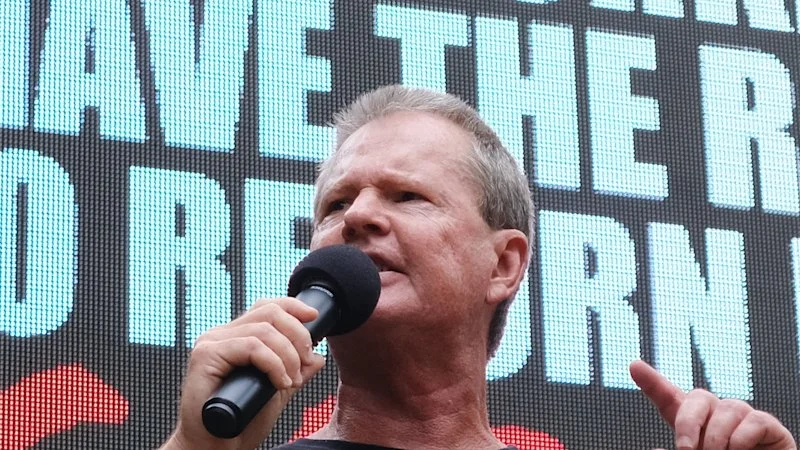
Former Queensland CFMEU leader Michael Ravbar wrote a legal threat to the state’s police commissioner about officers’ response to a workplace entry incident just days before the union was allowed to block a delivery to a major south-east road project.
Queensland’s inquiry into the CFMEU and construction sector has returned for another three-day hearing week, this time probing the Centenary Bridge upgrade and the state’s so-called best practice industry conditions policy dubbed the “CFMEU tax”.
Opening proceedings on Tuesday morning, counsel assisting the inquiry Eddy Gisonda KC tendered a letter from since-ousted Ravbar to then police commissioner Steve Gollschewski in early May 2024, accusing officers of unlawful or inappropriate conduct.
The letter, dated May 10, related to an incident in which CFMEU officials were denied entry to the Dutton Park Cross River Rail site one week earlier by project staff, and then moved on by police. Ravbar also attached CFMEU body-worn camera footage.
Under the heading “Unlawful police conduct”, Ravbar urged Gollschewski to watch the footage which he claimed showed police “breaching, or coming perilously close to breaching” the federal Fair Work Act and state Work Health Safety Act.
“The Union is currently considering its position in relation to the Potential Breaches,” Ravbar wrote.
“Specifically, the Union is assessing whether it is necessary to commence litigation regarding the Potential Breaches. Your response to this correspondence will have a significant bearing upon that assessment.”
Ravbar also accused police of ignoring its memorandum of understanding with the state’s workplace safety regulator, which required officers to notify the Office of Industrial Relations of any workplace entry matters and follow the OIR’s advice.
He called on Gollschewski to confirm police remained committed to the agreement, and would take steps in future to ensure “its officers will strictly comply with the MOU”.
Days later, on May 14, about 15 CFMEU representatives blockaded a truck carrying imported steel from accessing an entrance to the $353 million joint state-federal funded Centenary Bridge upgrade project.
Police attended, but rather than removing the protesters, directed the truck to leave to ease peak-hour traffic. The incident sparked a critical response from inquiry commissioner Stuart Wood AM KC during the last hearing block.
“The role of the police is to keep the peace, which means enforce the law, which means allow people free access and egress to the properties they control and not allow a group of blockaders to prevent free access,” Wood said.
The inquiry will this week hear from representatives from Centenary Bridge upgrade joint venture partners BMD and Georgiou, along with a Department of Transport and Main Roads official.