Venezuela · Business
Key Facts
—Second cargo volume. Approximately 1 million barrels of Merey 16 heavy crude.
—First cargo. 500,000 barrels shipped in June 2026.
—US authorization. Operates under OFAC General License 50A, issued February 18, 2026.
—Venezuelan partner. Joint operator with state-owned PDVSA in the Urdaneta Oeste field.
—Production share. Maurel \& Prom holds a 40% working interest, yielding roughly 9,000 barrels per day.
Maurel \& Prom, the Paris-based oil explorer, is loading a second cargo of roughly 1 million barrels of Venezuelan crude at the end of July 2026, a small logistical event that signals a tectonic shift in Washington’s sanctions architecture.
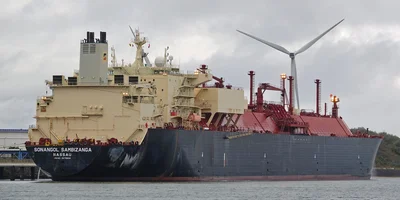
Tankers transport unrefined petroleum from production sites to refineries around the world.
One-stop reference
Company Intelligence
Every listed company in Latin America — financials, ownership and structure for 1,450+ companies across 26 exchanges, in one place.
RTAsk Rio TimesCost of living, safety, visas across Latin America›
A Quiet Tanker, a Loud Message
The vessel is scheduled to lift Merey 16 heavy crude from Venezuela’s TAECJAA terminal, following a smaller 500,000-barrel shipment the company completed in June.
For a mid-sized European producer, moving two cargoes in as many months would normally be routine business, but in the context of Venezuela’s long-isolated oil sector, it represents a dramatic reopening.
The Licence That Let Maurel \& Prom Back In
What makes this possible is a single document: General License 50A, issued by the U.S. Treasury’s Office of Foreign Assets Control (OFAC) on February 18, 2026.
GL 50A authorizes Maurel \& Prom to resume oil operations and financial transactions with PDVSA, Venezuela’s state oil company, without fear of American secondary sanctions.
How the Sanctions Framework on Venezuelan Crude Works
For years, U.S. sanctions walled off Venezuela’s oil industry from the global financial system, threatening penalties on any foreign firm that did business with PDVSA.
A general license is essentially a written permission slip from OFAC that carves out an exception, allowing specific companies or activities that would otherwise be illegal under the sanctions regime.
GL 50A is not a blanket repeal of Venezuela sanctions; it is a targeted, conditional authorization that lets named European operators lift crude, process payments, and repatriate profits for a defined period.
The license reflects a broader recalibration after U.S. forces detained and removed President Nicolás Maduro in January 2026, a geopolitical earthquake that prompted Washington to ease energy restrictions.
Who Gets a Seat at the Table
Maurel \& Prom is not alone. Spanish major Repsol and Italian giant ENI have also sought or received U.S. licenses to export Venezuelan oil, creating a selective club of European operators.
The company works through its 80%-owned unit M\&P Iberoamerica, which holds a 40% working interest in the Urdaneta Oeste field alongside PDVSA.
Gross production at the field sits around 22,500 barrels of oil per day, translating to roughly 9,000 barrels daily on Maurel \& Prom’s net share.
The destination of the second cargo remains undisclosed, though the crude type and the company’s European base point toward refineries across the Atlantic.
The Bigger Picture: Venezuela’s Oil Reopening
The Urdaneta Oeste field, located in western Venezuela, is one of the country’s mature oil assets that had seen years of underinvestment and production declines during the sanctions era.
Merey 16, the heavy crude grade being lifted, is a staple of Venezuela’s export basket and requires specialized refineries, typically found on the U.S. Gulf Coast or in Europe, to process it into fuels.
The relaxation of energy sanctions in February 2026 marked the most significant U.S. policy shift since restrictions were tightened in 2019, effectively ending a near-total embargo on Venezuelan crude exports.
Originally, a six-month easing of restrictions announced in October 2023 was conditional on progress toward fair elections and the release of political prisoners, but Maduro’s ousting in January 2026 effectively superseded those conditions.
What It Means for Expats and Investors
For foreign investors and expatriates watching Latin America, the resumption of Venezuelan crude flows signals that the country’s vast oil reserves—the world’s largest—are slowly becoming accessible again after years of paralysis.
However, the selective nature of the licenses means that only a handful of pre-approved European firms currently benefit, leaving the broader investment landscape in Venezuela highly restricted and politically sensitive.
The presence of established European operators like Repsol, ENI, and Maurel \& Prom suggests that energy-sector normalization is proceeding cautiously, with Washington retaining tight control over who can engage with PDVSA.
Expats in Venezuela should note that while the oil sector is showing tentative signs of life, the broader economic and security environment remains complex, and the political transition following Maduro’s removal is still unfolding.
Frequently Asked Questions
What is OFAC General License 50A?
It is a U.S. Treasury authorization issued in February 2026 that allows Maurel \& Prom to resume oil operations and transactions with Venezuela’s PDVSA without violating American sanctions. The license is targeted and conditional, applying only to specific activities for a defined period rather than lifting sanctions entirely.
Why did the U.S. ease sanctions on Venezuelan oil?
The policy shift followed the U.S. detention and removal of President Nicolás Maduro in January 2026, which prompted Washington to recalibrate its sanctions posture toward the energy sector. The easing allows select European firms to re-engage with PDVSA under strict oversight.
What type of crude is Maurel \& Prom lifting?
The company is exporting Merey 16, a heavy crude grade commonly produced in Venezuela and typically destined for refineries configured to process denser oil. Merey 16 is one of Venezuela’s benchmark export blends and requires specialized refining capacity.