Meet the migrant workers who volunteer to stop their ‘brothers’ from excessive gambling
Christine Tan and Ho Yoon Sim
AI generated
SINGAPORE - One evening in 2025, migrant worker Uddin Jashim decided to follow a friend who had been slipping out of their dormitory room every weekend.
The safety coordinator found himself at Marina Bay Sands (MBS)’ casino, where he watched his friend lose $2,500, equivalent to two months of his salary, in a single night.
The friend then borrowed $200 in cash from Uddin and asked him to book a taxi back to their dormitory after he gambled away that sum.
“We came back to our room around 4am. I slept, but he couldn’t,” Uddin, 32, recalled, adding that he did not gamble.
Out of concern, Uddin told his friend that he would tell his family if he continued gambling. Worried about causing them stress, his friend agreed to apply for self-exclusion.
The incident was a turning point for both men. Uddin has since helped six other migrant brothers stop gambling since he joined a programme to help his peers steer clear of gambling’s harms.
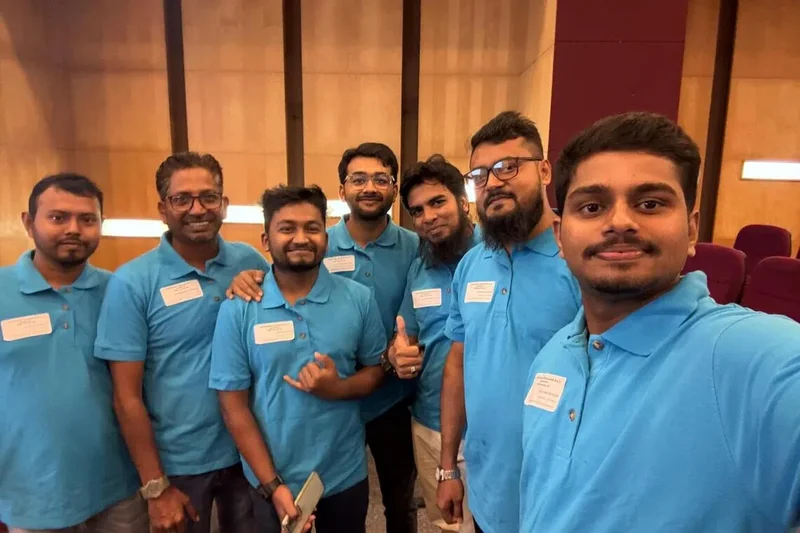
He is one of over 40 C.a.N Ambassadors in Singapore. They are migrant workers who volunteer to raise awareness about problematic gambling to their peers, identify early signs of harm and encourage them to apply for self-exclusion.
They have conducted 35 outreach sessions across dormitories since the programme began in 2022, as a joint initiative by the police’s Casino Crime Investigation Branch and the National Council on Problem Gambling (NCPG).
The programme is part of a broader effort to reach migrant workers about problem gambling. The NCPG began engaging this group in 2014.
Foreign workers’ exclusions from certain gambling activities have increased in recent years. About 24,000 foreigners were excluded from Singapore Pools’ online betting, and about 28,000 from jackpot machine rooms in 2024, a five-fold increase from about 4,100 and 5,100 respectively in 2022.
These exclusions may be made by migrant workers themselves, or employers with their consent. It effectively bars them from these gambling activities for at least a year.
But some workers may be seeking a way back in. Non-governmental organisation Migrant Workers’ Centre (MWC), which helps workers apply for self-exclusion, said it received more enquiries on how to remove these exclusions in 2026.
These workers hope to find leisure during their off days, accompany friends to gamble or simply want to try their luck again. Such enquiries peaked during the Chinese New Year season when migrant workers who do not return home have more free time, said NCPG.
Since March, MWC has worked with NCPG to help migrant workers understand the implications of removing their self-exclusion. Workers submit the applications through the relevant channels, and MWC does not review, process or approve them.
Miah Md Sakil, also a safety coordinator, said he joined the C.a.N ambassador programme in January, after seeing signs of gambling issues among migrant workers around him.
Some are distracted at work, while others avoid friends because they owe them money.
Sakil has since convinced 15 migrant brothers to apply for self-exclusion, One had been visiting the casino up to five times a month and lost a total of $12,000.
“This is maybe three months, four months salaries for the workers,” Sakil said. “It is really heartbreaking.”
Migrant workers typically use their salaries to repay agency loans, which can range from 10 to 15 lakhs, or about S$1,200 to $1,900, he said. The rest is often sent home to support their families.
“You will lose your dreams and hopes,” Sakil tells workers he speaks to.
Apart from talks in dormitories and worksites, NCPG chairman Sim Gim Guan said it takes “a more coordinated and sustained outreach approach” to raise awareness of the harms of problem gambling. It now works closely with the Ministry of Manpower, the police and MWC to spread the message.
They have placed banners at dormitories warning of gambling problems, produced self-exclusion guides in six languages, and conducted outreach at places frequented by migrant workers.
A Resorts World Sentosa spokesperson said it runs a programme providing resources on gambling risks and safeguards, with help from its Responsible Gambling Ambassadors. Patrons can speak to these ambassadors for advice and assistance on responsible gambling matters.
MBS said it was not able to provide comments or information for this story.
Over the past three years, MWC has helped more than 260 migrant workers apply for casino self-exclusion.
MWC director Michael Lim said: “We encourage workers to consider self-exclusion as a preventive measure, even if they do not currently face gambling-related challenges, if they feel it would help them avoid gambling.”
Similar preventive efforts are extended to foreign domestic workers through the Centre for Domestic Employees (CDE), which raises awareness about financial management, responsible decision-making and how to seek help.
CDE also supports workers through its helpline and channels, referring them to professional agencies where needed. Employers are engaged as well, as they are often the first to notice when something is amiss.