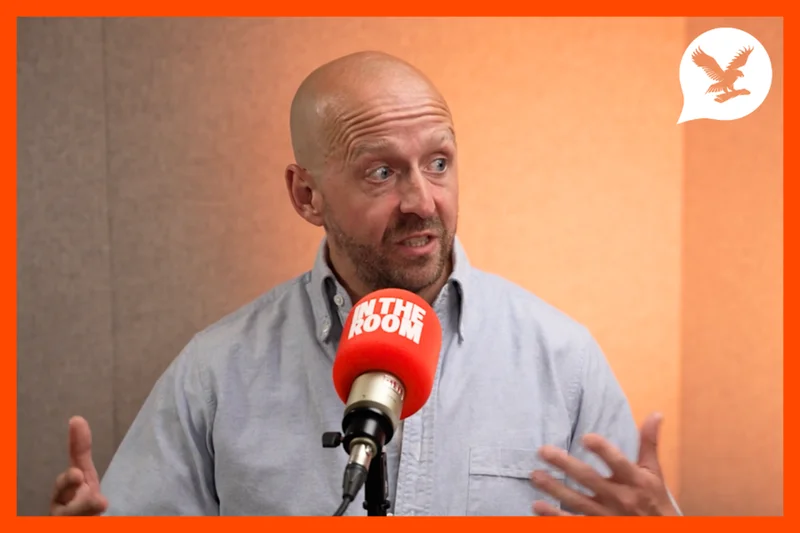
Lee Cain, the former No 10 director of communications, has revealed that attempts to cut the size of the government’s communications operation were blocked after an audit uncovered thousands more staff than previously thought.
Mr Cain, who served as Boris Johnson’s communications chief from July 2019 to December 2020, said he was initially told there were around 4,000 people working in government communications.
But after asking for an audit, he discovered the true figure was closer to 8,000 – and believes even that may have been an underestimate.
When he proposed reducing the workforce to make the operation more efficient, Mr Cain said he was told that not a single job could be cut.
“I was told there were four thousand people working in government comms, so asked for an audit, and then it was, ‘Oh, actually, there's eight thousand people,’” Mr Cain told The Independent’s In The Room podcast. “I still think that figure is probably an underball.
“When I said, ‘Let's look at how we can make this more efficient, more effective,’ what came back was: ‘We can’t lose a single person.’
“But we just found four thousand people we didn’t know existed three days ago, so it can’t be that critical.”
The UK government employs around 524,000 civil servants, with the 2025 Spending Review setting out plans to cut administration budgets by 11 per cent by 2028-29 and 16 per cent by 2029-30.
More than 8,500 civil servants are expected to leave government by April 2027 under existing exit schemes, at an estimated cost of £536m.
Mr Cain said attempts to discuss efficiency in Whitehall were often met with “hostility”, adding that he became a “lightning rod” for criticism because he was outspoken on the issue.
He contrasted the culture with the corporate world, where businesses have a clear incentive to become more efficient.
“In government, there is no upshot to be more efficient,” he said.
Mr Cain also reflected on his time inside No 10, saying some of the government’s worst days were the result of “self-inflicted wounds” – particularly during the Covid pandemic.
He recalled one discussion over whether pubs and clubs should be closed to curb the spread of the virus, with the Treasury warning that doing so would leave the government facing the cost of supporting affected businesses.
Instead, someone – who Mr Cain believes “might have been Boris” – suggested keeping venues open while telling the public not to visit them.
“Somebody said, ‘We should leave pubs and clubs open, but tell people not to go to them because it’s dangerous.’ It was such a bonkers thing to do.
“I remember saying, ‘This is the worst of all worlds. The pubs and clubs will still howl and demand a bailout. The R rate is still going to grow, so we’re not going to control the virus. This won’t last 24 hours.’
“It was so avoidable, like a slow-moving car crash. Particularly at the start of Covid, that happened quite a few times.”
Mr Cain recalled raising his concerns with the then prime minister, who responded by “squinting his eyes” and telling him: “Commissar, it’s a comms problem which I’m sure you can resolve.”
Looking ahead to Andy Burnham’s new premiership, Mr Cain praised the social-first approach adopted by his team but warned that the greater challenge would be developing a compelling political story for his government.
“With Starmer, there was a lot of talk about him having bad comms,” he said. “But your comms people won’t develop your story for you, and as a prime minister, you have to have a story. That’s what Starmer tried to do, but he’s a bit of a political vacuum.”
He said Mr Burnham would ultimately be judged on whether he could convince voters that his government was improving their living standards.
“Now, if you're Andy Burnham, the question is about cost of living. People are feeling poorer. They're incredibly unhappy.
“How do you tell a story about making this country better off and making everybody better off?”
New episodes of In The Room come out weekly. Listen to the latest on Apple Podcasts and Spotify, or watch on YouTube.