By her own account, the late actor Hayden Panettiere led a tragic life up until her death on Sunday at the age of 36.
Panettiere, best known for roles in Nashville, Heroes, and the Scream films, wrote in her recent memoir that she only knew of an existence in front of the camera; she had appeared in her first commercial at just 11 months old and had been in 50 more by the time she was 5. She landed a voice role in Pixar’s A Bug’s Life at the age of 9, broke out in Remember the Titans two years later, recorded singles for Disney Channel and landed parts in Kingdom Hearts games soon after, then cemented herself as a star in 2006’s Heroes. By then she was just 17.
In the years to come, she’d star in bigger shows like Nashville and fall victim to drugs, alcohol, and the pain of public scrutiny. She would eventually marry Ukrainian heavyweight Wladimir Klitschko, 14 years her senior, give birth to a daughter, then lose custody of her child amid struggles with postpartum depression. In interviews around the release of her memoir, she also detailed another relationship that ended in domestic violence abuse, and the profound effect her brother’s death in 2023 had on her familial relationships. But upon the release of her memoir, it sounded like self-reflection had led to her turning the corner; she was out confronting the tumultuous arc of her life as recently as May 2026, just months before she died.
It’s impossible to say, and perhaps a little gauche, to imagine how changes in Panettiere’s career could have prevented the all-too-early end of her life. But in this final moment, it’s hard to see her as someone who ever lived her own way, had the freedom to make her own choices, never having to cater to demands of “fans” or peering tabloid cameras. Seeing her back on screen in Scream 6 was a joy — a reminder of her forceful screen presence and a reason to think she was starting a new act on her own terms. She was a survivor, her memoir press tour made that clear, and she was lining up projects for the future. We don’t know exactly what happened yet, but we do know that 36 years working as a child actor led to this tragic moment.
Does Hollywood do enough for the young people it inducts into its business? I wonder today, upon hearing of Panettiere’s death, and wondered in June when we learned child actor Daveigh Chase, voice of Lilo and star of The Ring, had battled drugs since the age of 13 and died at the age of 35 due to complications with AIDS. I thought about it when Michelle Trachtenberg passed away in 2025 and when her co-stars detailed personal struggles in the months after. And while I’m thankful many of the young actors were around to detail their traumatic experiences on set with Nickelodeon creative mogul Dan Schneider, it’s the same boat. The business of entertainment routinely eats up the young. These are just a few of the many, many cases.
The solution is not obvious to me. There are countless child actors who have spiraled out of fame and fortune into drugs, financial woes, fast-lane romances that seemed to blow up their young adulthoods, and others who have succumbed to graver circumstances. There are also brilliant child actors who have gone on to become our greatest thespians (Jodie Foster and Leonardo DiCaprio come to mind) and the most audacious cinematic risk-takers (give it up to Twilight for both Kristen Stewart and Robert Pattinson). What would Steven Spielberg's filmography look like without the incredible children he discovered over the last 50 years? He's as much a master of casting non-irritating kid actors as he is framing and lighting.
But the news of Panettiere, continually stuck in the black hole of fame, tells me there’s an urgent need to do something to save child actors, and it's more than just on-set tutoring and financial support. The producers of Slumdog Millionaire took tremendous heat at the time for plucking unknown kids from India to co-star and blow up their profiles. Even after setting them up with trusts and education after filming, reports suggest none of the children seemed to be able to come down to complete normalcy. This happens closer to Hollywood too; if you’re lucky, you’re the kid from Hook who goes on to graduate from Yale Law, but you might also become Zachary Ty Bryan from Home Improvement, who in the year 2026 is headed to jail over excessive arrests and DUI charges.
There will always be stories to tell where kids are integral to the plot, whether that’s a hard-hitting ensemble film about life in the 20th-century or a movie about a dinosaurs chasing a family around a neighborhood that was accidentally beamed through a wormhole to a prehistoric era. We want to see “reality” on screen and young people are part of that reality. As Anna Paquin demonstrated in 1993’s The Piano, sometimes they can give one of the best dang performances of the entire year. Prodigies exist in all art forms and, in a way, showcasing those abilities is a cultural prerogative — our kids learn best from seeing kids on screen. But at what cost?
Hollywood studios have taken extreme circumstances to take care of another set of costars on set, and I wonder if there’s something to it. Basically, fewer and fewer live animals are being used on movie and TV sets. The industry’s lifelong animal handlers have been hammered by this pivot over the last 70 years, replacing dogs with digital avatars for the pups’ safety, but PETA approves. If a CG horse looks pretty good, the upside is significantly better than killing multiple horses over the production of your HBO show. Very few people will argue with that logic in the modern age.
Admittedly, the idea of replacing our young actors with CG clones seems incredibly farfetched and even a little dangerous. The advent of generative AI means there’s an emerging clique of tech wizards begging us to take the pixels-and-poses actor “Tilly Norwood” seriously. (Thankfully, for now no one with an ounce of taste is taking them seriously.) I see no reason why we would replace adult actors who can make their own choices, on screen and off, with digital doubles. I see many reasons why we'd want to use similar technology to help child actors. Limited union-set hours can reduce the drain of a day of work but can’t replace literal childhood in any way. Creatives enacting their visions and making their days has resulted in horror stories, some of which only surface later in life. (Note to self: Check back on the girl from Lee Cronin's The Mummy in a few years) Also: Must children endure step-and-repeats and red carpet interviews? Did 10-year-old Ariana Greenblatt need to be out there doing press for A Bad Moms Christmas in 2017? Let alone star in A Bad Moms Christmas?
Creating the kid versions of Tilly Norwood could have horrible repercussions in the wrong hands — I don’t need or want to extrapolate on that idea, but we can all imagine. But society has solved the problem of animal cruelty in the entertainment industry better than it has child cruelty in the entertainment industry, which may just be an inherent sin when it comes to casting kids in movies and TV shows. As long as we want to tell these stories, there will be a demand. For 100 years, those in charge have looked the other way at a cost.
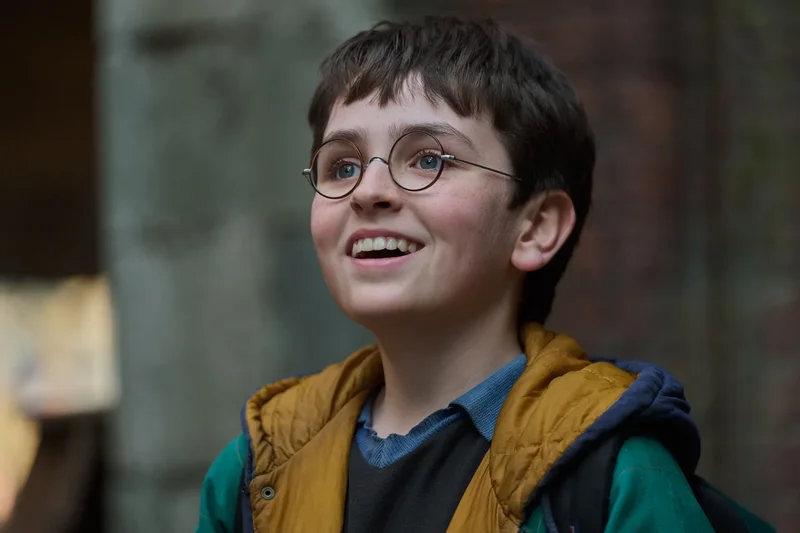
This December, three new kids, ages 11-12 based on reports, will step up to the stage to portray Harry Potter, Ron Weasley, and Hermione Granger in HBO’s upcoming Philosopher's Stone series. Between the controversy around anything associated with J.K. Rowling's name and the need for these kids to fill out seven seasons of this television show to do the saga justice, this just seems like the worst job anyone could have on the planet, let alone as a bunch of kid actors. Dream roles should not sound like prison sentences.
The HBO Kids might be fine when they wrap the series in 203X, but “fine” is relative. Daniel Radcliffe looked unscathed after his decade-plus stint as Harry Potter (see: any of his work on stage and his cheeky turn on NBC’s Reggie Dinkins) yet in interviews, then and now, he comes off like a survivor. He told Larry King around the release of Deathly Hallows - Part 2 that he “didn't have normal teenage years but equally I don't really know what normal means.” On BBC Radio in 2020, he admitted that the movies drove him to alcoholism. "It was panic and not knowing what to do next, and not being comfortable enough in who I was to remain sober."
None of this is revelatory — it’s just kinda how things are in Hollywood. The Disney-Nickelodeon kid actor pipeline is pumping out Descendants faster than ever. The children of Real Housewives shows now have their own Real Housewives-esque shows about being the children of Real Housewives. And as we know, the vortex extends well beyond the formal industry: The YouTube creator economy, a recurring “dream job” space for young people, has already started breaking down in this way. Kids who grew up on stream collapse into an even more isolated version of the celebrity downward spiral.
Maybe we don’t need to replace all screen kids with picturesque versions of Gollum from Lord of the Rings, but I don’t see an easier way to undo the momentum of the Child Fame Industrial Complex. Studios, creators, and parents would need to swear it all off.
I’ve been rocked by Panettiere’s death. It is tremendously sad. And it feels part of a larger problem that an industry can always sweep under a rug whenever there’s a significant loss. Yes, “ban child actors and replace them with CG” is a ridiculous pitch, but for now, it’s also my desperate plea to avoid anyone else getting hurt.