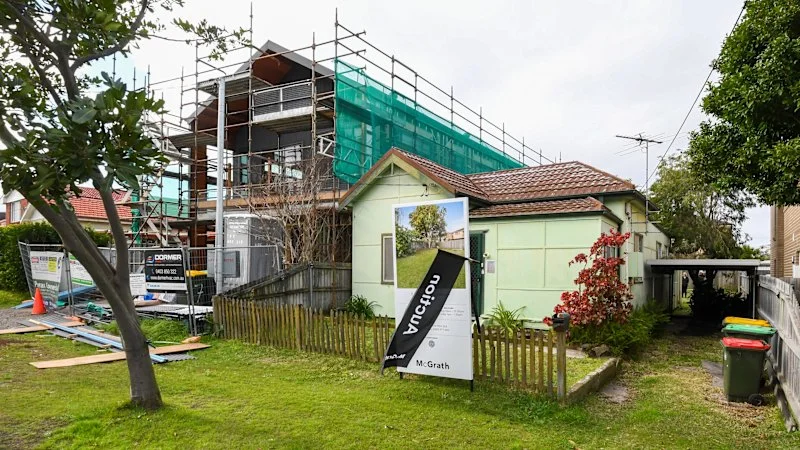
If you are considering a knock-down rebuild of your own home, don’t do anything until after July 1, 2027. That is right – as a result of Labor’s poorly drafted new taxation legislation, you should halt any activity of this kind until then.
Central to this issue is the forced calculation of a CGT event as at July 1, 2027 thanks to the switchover to the new rules. On top of this, the main residence CGT exemption must apply to a dwelling – the land only comes along for the ride.
If there is no dwelling on your land at July 1 next year, there is no main residence exemption for any of the capital gain made on the property up to that date.
Even if you have lived in the existing home for 30 years, if your rebuild process means there will be no dwelling on the land at July 1, that 30 years of main residence exemption is lost.
This has not been a problem in the past as the legislation allowed you to cover the vacant land with your main residence during construction, providing you moved into the new home ASAP after completion and live there for three months before the CGT event.
This new interpretation is unfair for those who started this process before budget night, but who still won’t be finished in time. You may be able to avoid the trap by moving onto the land in a caravan.
The bottom line is the budget changes put a whole new spin on small development tax strategies. Seek advice.
If you are considering building a duplex, then wait until after July 1, 2027 for one of the few windfalls for home owners in this legislation.
Normally, you would only be able to run your main-residence exemption through to just one of the units. The other unit’s cost base would go back to the original cost of its share of the property, 30 years ago.
Now with this CGT event happening at July 1, as long as you delay the project until after that date, the capital gain up to then will be fully covered by your main-residence exemption, no tax.
After July 1, the law specifies that you start with a cost base of the market value at that date. If later, you then split the property, that is the figure you split. Any future CGT calculation will look only at the post-2027 gain.
Note, if you knock down the house to build and sell, then CGT won’t apply, the tax will be calculated as normal business income, but if the old property continues as your home for some time after 2027, you will be entitled to treat some of the gain-on-capital account before and after 2027 so your reset to market value as at July 1, 2027 will be locked in. It is worth being cautious here – don’t even start making inquiries.
Once you get comfortably past July 1, constructing a duplex to sell it is no longer such a bad thing. Though there are many other considerations. If the post-2027 capital gain or profit is your only income that year, it may now be tax advantageous to argue you are in business.
This will avoid the 30 per cent minimum tax rate. For your average tax rate to equal 30 per cent, your income would need to be over $227,000. Capital gains may now be taxed higher than business profits.
The bottom line is the budget changes put a whole new spin on small development tax strategies. Seek advice.
Julia Hartman founded BAN TACS Accountants more than 30 years ago and is still passionate about all things tax.
- Advice given in this article is general in nature and is not intended to influence readers’ decisions about investing or financial products. They should always seek their own professional advice that takes into account their own personal circumstances before making any financial decisions.