Sign in. It’s quick, free and it’s up to you.
An account is an optional way to support the work we do. Find out more.
TECHNOLOGY HAS CHANGED almost every aspect of our lives. The way we communicate, shop, work, travel, consume entertainment and manage our finances has been transformed by the small rectangle in our pocket that runs so much of our lives. It is almost impossible not to engage with technology on a daily basis in some form or another.
Healthcare, particularly in Ireland, has been slower to make the tech transition, but the tide is turning. For generations, our relationship with the health service has been largely physical. We went to the GP, attended a hospital appointment, waited for a letter, picked up a prescription or made a phone call. Increasingly, technology is becoming part of how we interact with our health service, from managing appointments to accessing our own health information at home.
The HSE is in the process of a major digital transformation through its Digital for Care programme, with the ambition of creating a more connected health service where information can be shared more effectively between healthcare professionals, while giving patients greater access to their own health information.
The National Shared Care Record, for example, is being developed to allow authorised healthcare staff to access important patient information across different healthcare settings. The Community Care Record is designed to bring referrals, appointments and caseload information together for community services, while virtual wards are allowing some patients to receive hospital care in their own homes, supported by technology. But perhaps the most visible part of this digital healthcare transformation is sitting in our own pockets via the HSE Health App.
The HSE Health App is billed as a digital front door to the health service. What began as a way of accessing things such as appointments and health cards has expanded to include waiting-list information, GP referrals, medication prescriptions and personal health information.
Digital transformation in healthcare is not simply about replacing a letter with an email or putting an appointment on a phone with a text message reminder. It should aim to make the health service easier to navigate while giving people greater access to, and control over, their own health information. It seems we are already getting used to having the health service in our pockets, with more than 250,000 people having already downloaded the HSE Health App and over 450,000 appointments displayed through it.
Now, the HSE Health app is beginning to move beyond just helping us navigate the health system, and is starting to look like something much bigger. The app’s latest feature is encouraging us to take a more active role in how we look after our physical and mental health. The newly launched Get Active Programme is a free 10-week programme designed to help people become more physically active through a combination of walking, strength exercises and different educational topics.
This is of particular interest to me. As a physiotherapist, I spend much of my working week talking to people about the importance of movement and strength exercises. Also, as someone in my 40s, I am becoming increasingly aware that my body requires a little more attention than it once did. So, I decided to sign up to the programme and try it myself. I wanted to see what this new digital approach to health self-management actually feels like.
We are used to technology telling us how many steps we have taken, how well we have slept or how active we have been. But what happens when technology becomes part of public health? The shift is a welcome one, moving beyond managing one’s health and towards supporting people with healthcare prevention and building healthier behaviours.
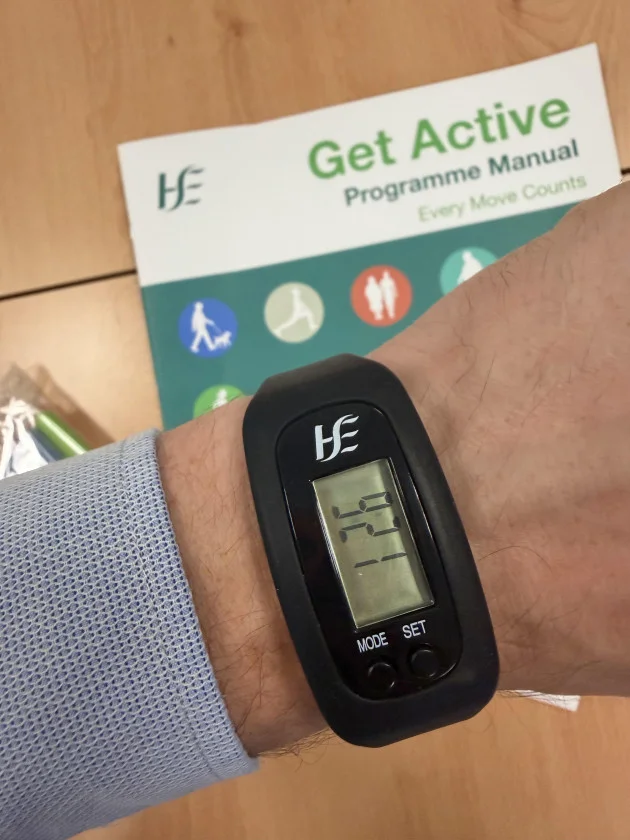
The Get Active Programme is free. It is a 10-week programme with an interactive dashboard and manual for those that prefer old-fashioned paper-based tracking. People who sign up receive a Get Active pack containing a basic physical step-counter (pedometer), resistance exercise bands and a programme manual that includes exercises and tips.
Getting started with the Get Active Programme is relatively straightforward, but there are a couple of steps to complete before you get to the pack. First, you need to download the app, and in order to use it you need to input your verified MyGovID details. This is an important part of the process because the app contains your personal health information. It can be tricky at first, but don’t give up!
My programme pack arrived via courier in record time. I was so impressed by how quick this was after signing up via the app. Right away, I had a new watch/step counter and three good quality resistance bands of different strengths. Everything I needed to get started.
The programme manual is straightforward and easy to follow. It helps you choose a walking plan to suit your level. Orange walking plan for those who are physically active 0-1 days per week, starting with three walks of 10 minutes. Blue walking plan for those physically active 2-3 days per week, advising to kick off with three 20 minute walks in week 1. Each week has a two-page spread covering your weekly aims, walking goals, strength exercises and a short educational topic for that week. It has a checklist to tick off as your progress through your to-do list. For those that prefer old school, paper based tangible resources, the manual is concise and easy to follow.
I was delighted to see the step counter was also a wristwatch. The only real bugbear for me is that the watch display is slightly awkward to read. That said, it is free. A free watch/step counter is a pretty great place to start.
The app is also refreshingly easy to navigate. Your weekly progress is clearly displayed alongside your activities for that week.
The Every Move Counts Campaign was launched jointly by the HSE and the Department of Health in 2024. The campaign promotes the message that movement matters, encouraging people to build activity into their daily lives. This aligned with Ireland’s updated National Physical Activity and Sedentary Behaviour Guidelines published in March 2024.
The new Get Active Programme takes that message a step further, turning it into a tangible, practical 10-week guided programme of walking, strength exercises and education. The fantastic thing about the Get Active Programme is that it is free. When the initial 10 weeks is complete, you also have access to information and support for up to 12 months via the app.
Ireland isn’t alone in exploring population health digital options to support physical activity. The NHS in the UK launched their Couch to 5k app in 2016 and the NHS Active 10 app in 2017. Almost 10 years later, the HSE are catching up by introducing a similar approach. Like many of the HSE’s initiatives, they seem to follow examples introduced by the NHS.
What is notable about the HSE approach is the attempt to bring a structured 10-week exercise programme into the same national digital health platform that people are already using for appointments and personal health information. However, the 10-year time lag raises a broader question. Why do we often seem to be playing catch up?
Access the programme through the HSE Health App available on the App Store and Google Play. For more information, see the HSE website. If you or someone you know is not reaching their recommended physical activity, this might be the programme for you.
Stephen O’Rourke is a Clinical Specialist Musculoskeletal Physiotherapist at the Mater University Hospital, Dublin, with a specialist focus on spinal care and low back pain. He is also a guest lecturer at the Royal College of Surgeons in Ireland and is a health contributor to TheJournal.ie.
To embed this post, copy the code below on your site