Ethiopian TPS Termination: Judge Lets Trump End Deportation Protections
Ethiopia · POLITICS
What the Boston ruling changes for Ethiopian TPS holders
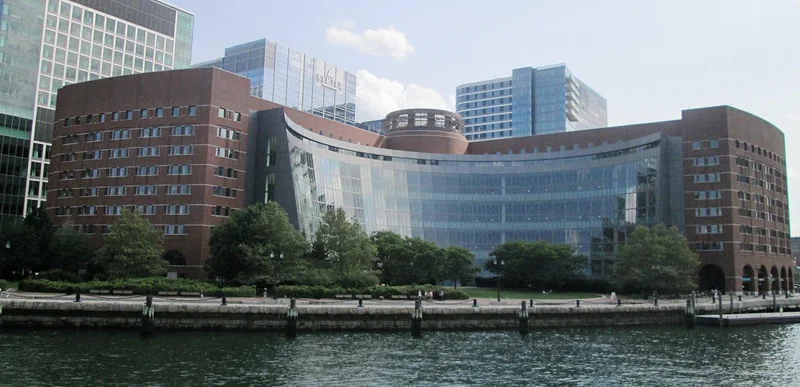
US District Judge Brian E. Murphy, sitting in Boston, lifted the stay that had been blocking the Department of Homeland Security (DHS) from ending Temporary Protected Status for Ethiopian nationals. Reuters and Al Jazeera both reported that more than 5,000 Ethiopians hold the status, which had allowed them to live and work legally in the United States. Judge Murphy was nominated by President Joe Biden and confirmed by the Senate in December 2024.
DHS General Counsel James Percival wrote that Judge Murphy had just lifted the stay and that all TPS terminations were now in effect. Work permits had been extended by court order only as far as 19 August 2026. After the ruling, US Citizenship and Immigration Services (USCIS) brought that forward and treated employment authorisation as ending on 18 August 2026, according to immigration law firm Fragomen.
Losing TPS is not the same as being deported. It removes the shield that stopped the government from starting removal cases. Ethiopians who have no other legal basis to stay, such as a pending asylum claim, a student visa or a green-card application, now become removable and can be placed in immigration court proceedings, which take time and allow a defence. Homeland Security Secretary Markwayne Mullin was blunt about the intent: Temporary Protected Status is just that, TEMPORARY, he wrote, warning that anyone whose status has been cancelled should leave immediately or be swiftly deported.
How Ethiopian TPS was created and then dismantled
Ethiopia received its first ever TPS designation on 12 December 2022, announced by DHS in October that year, citing armed conflict, mass displacement, drought and food shortages. In April 2024, then-Secretary Alejandro Mayorkas extended and redesignated the country for 18 months, covering 13 June 2024 to 12 December 2025. DHS said at the time that roughly 2,300 people already held the status and that an estimated 12,800 more Ethiopians would become eligible to apply.
On 12 December 2025, DHS Secretary Kristi Noem announced that Ethiopia no longer met the legal test for TPS. The Federal Register notice published on 15 December 2025 said the Secretary had reviewed conditions in the country and consulted other US agencies, and had concluded there was no longer an ongoing armed conflict posing a serious threat to Ethiopians who go home. The notice also argued that keeping the programme running was contrary to the US national interest, pointing to visa overstay rates and concerns about security and benefit fraud. It set 13 February 2026 as the termination date, the minimum 60-day wind-down allowed by law.
African Communities Together and individual Ethiopian TPS holders filed suit on 22 January 2026, arguing the termination was procedurally flawed and driven by bias against non-white immigrants. Judge Murphy paused the termination on 30 January 2026 and, after a hearing in March, postponed its effective date again on 8 April 2026. The First Circuit Court of Appeals summarily reversed that postponement on 29 July 2026, following the Supreme Court ruling in June.
The Supreme Court context behind the Ethiopian TPS termination
The Supreme Court decision of 25 June 2026 in Mullin v. Doe, which grew out of the Haiti and Syria TPS cases, was a 6-3 win for the Trump administration, with Justice Samuel Alito writing for the majority. The court held that Congress had barred judges from reviewing non-constitutional challenges to a Homeland Security Secretary decision to designate, extend or end TPS.
That decision unlocked the administration’s broader TPS agenda. Reuters reported that the Haiti and Syria terminations alone covered more than 350,000 Haitians and 6,100 Syrians. Judge Murphy’s latest order accepts that only constitutional claims, such as discrimination or equal protection, can still be heard.
The Ethiopian case now becomes a test of how quickly the administration can use that Supreme Court backing to reshape humanitarian immigration. Ethiopia’s group is small next to Haiti’s, but the legal reasoning is the same, and it is being applied country by country.
Money, remittances and the Horn of Africa read-through
Ethiopian TPS holders in the United States send money home to households and small businesses. With just over 5,000 people involved, the effect on Ethiopia’s national remittance inflows should be modest. For the individual families who rely on those transfers, however, the loss is immediate.
The work permit was what made TPS valuable day to day, and US employers must now re-check eligibility on Form I-9 for any staff who relied on a TPS-based document. Advocacy groups say the abrupt cut-off leaves workers with almost no notice and few alternatives.
The ruling also carries strategic weight. Ethiopia is a large, strategically located state in the Horn of Africa, relevant to Red Sea security and counter-terrorism. Mass deportations may strain diplomatic relations and complicate business networks at a time when Washington seeks to counter the influence of China, the Gulf states and Russia in Africa, a dynamic covered in our pillar on Africa: The New Scramble.
What the ruling signals about US immigration power
The lawsuit claims the Ethiopian TPS termination was motivated by bias against non-white immigrants. In their filings, the plaintiffs said ending the programme would leave them with impossible choices: staying in the United States without status and risking detention and removal, uprooting again for a third country, or returning to a country still suffering violent conflict. Judge Murphy had earlier found the plaintiffs were likely to show the decision was preordained and the reasons given for it pretextual. His latest order lets the termination proceed while that constitutional claim continues.
The Supreme Court’s June decision narrowed the authority of lower courts, reinforcing executive control over TPS and leaving only narrow constitutional limits. That is why Judge Murphy, who had twice blocked this termination, ended up clearing it: the appeals court had already reversed him once on the same point.
The Ethiopian TPS case is part of a wider shift of immigration power back to the executive branch. Supporters of the change argue that TPS was always meant to be temporary and had been rolled over for years; critics argue Washington is closing a humanitarian door while conditions on the ground have not improved.
What to watch next in the Ethiopian TPS case
The constitutional claims in African Communities Together v. Noem remain alive even as deportation protections end. Advocacy groups may seek emergency relief from higher courts, though the Supreme Court’s restrictive doctrine limits their options.
DHS has signalled that enforcement will proceed quickly. Employers with Ethiopian TPS workers must now re-verify employment eligibility, and immigration lawyers are urging those affected to check whether they qualify for any other status before enforcement reaches them.
For Ethiopia, the ruling adds pressure on an economy already facing conflict and humanitarian strain, and on a diaspora that has been in the news for other reasons, including US strikes in Yemen that killed Ethiopian migrants. Investors and diaspora networks will watch whether forced returns accelerate and how Addis Ababa responds to Washington.
Frequently Asked Questions
How many Ethiopians are affected by the TPS termination?
More than 5,000 Ethiopians held TPS, according to Reuters and Al Jazeera. DHS counted about 2,300 beneficiaries in April 2024, before a redesignation made an estimated 12,800 more people eligible to apply.
When does Ethiopian TPS employment authorisation end?
Court orders had extended work permits only to 19 August 2026. After Judge Murphy lifted the stay, USCIS treated employment authorisation for Ethiopian TPS holders as ending on 18 August 2026.
Can the Ethiopian TPS termination still be challenged in court?
Constitutional claims, such as discrimination, remain alive in the African Communities Together case, but the Supreme Court ruling in Mullin v. Doe of 25 June 2026 limits the ability of lower courts to block TPS terminations on non-constitutional grounds.
Sources
This article was produced by The Rio Times’ automated newsroom system. How we use AI · Report an error