In 1968, amid the rapid industrialization of Korea, a quiet tragedy unfolded in a small river village in North Gyeongsang Province.
The last known breeding pair of black storks in Korea vanished, driven out by habitat destruction and human encroachment. For nearly six decades, the majestic bird — a towering creature with iridescent black plumage, a stark white belly and a crimson beak — has existed on the peninsula only as a fleeting winter visitor, with fewer than 20 birds sighted nationwide each year.
Now, an ambitious international effort aims to restore the lost species to Korea's skies.
The National Institute of Ecology, a government research agency operating under Korea’s Ministry of Climate, Energy and Environment, said Wednesday that it launched a joint ecological restoration project with the Wildlife Science and Conservation Center of Mongolia. Under a comprehensive five-year bilateral agreement signed in Ulaanbaatar, wildlife scientists from both countries are preparing to import healthy wild black storks from Mongolia to establish a self-sustaining breeding population in Korea.
"Restoring the black stork is about far more than simply bringing back a single lost species," said Lee Chang-seok, president of the National Institute of Ecology. "It is a deeply meaningful endeavor to rehabilitate Northeast Asia’s broader, interconnected ecosystem through rigorous field science and international cooperation."
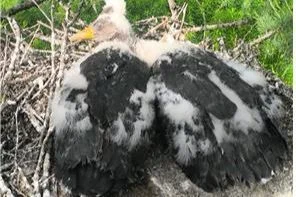
Between late June and late July of this year, joint research teams conducted extensive field explorations and high-resolution drone surveys across the remote wetlands and forests of Khentii Province in eastern Mongolia. Their preliminary findings provided immediate optimism for conservationists: field scientists successfully identified seven active nesting sites harboring 10 healthy chicks, confirming a stable and thriving wild population capable of supporting limited reintroduction efforts.
To ensure the ethical and ecologically sound translocation of the endangered birds, scientists are conducting a scientific framework known as a Non-Detriment Finding assessment. Regulated under the Convention on International Trade in Endangered Species of Wild Fauna and Flora (CITES), this rigorous evaluation confirms that collecting wild chicks will not harm the long-term survival of Mongolia’s native stork population.
Once CITES export permits and cross-border quarantine protocols are finalized later this year, researchers plan to transfer selected wild chicks to facilities in Korea in early 2027. These birds will form the initial foundation for captive breeding programs and eventual wild release. If successful, the project will mark a major milestone in regional biodiversity conservation, offering a rare second chance for a species that human development once drove away.
This article was published with the assistance of generative AI and edited by The Korea Times.