Julianne is new to Methven, a ski town with a decidedly provincial vibe about an hour from Christchurch.
She has not lived there for long but has noticed a topic on almost everyone's lips.
"I'm just trying to buy a house and a lot of the houses are going for an extremely higher price because they're going into Airbnbs rather than for the people that live here," she says.
Housing affordability is an issue many will grumble about quietly but few are willing to put their names or faces to the complaints.
Crossroads run through the heart of Methven, an apt metaphor for the problem striking at the heart of the community.
Average property values rose by almost 70 percent from 2018 to 2024, climbing from $380,000 to $640,000.
The latest census figures show more than 13 percent of the town's homes are unoccupied.
Ashburton District Council estimates 130 to 170 Airbnbs and other short-term lets are operating in Methven, which has fewer than 1000 homes, although the council admits the figures are just an estimate.
A cursory search on the Airbnb platform shows more than 200 options for a short-term stay in the town.
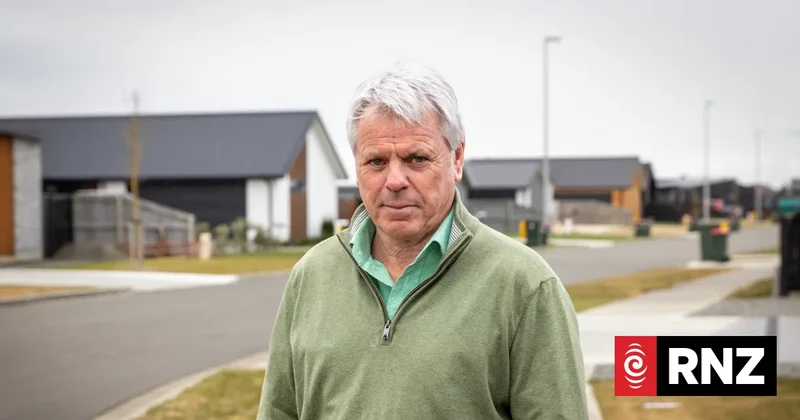
Methven home-owner Paul Dixey says his neighbourhood and the town's identity are changing for the worse.
"We're finding a lot of - not that I've got anything against people outside of Methven - but there are a lot of people outside of Methven taking advantage of the housing market here, procuring houses, not actually living here, but putting them up as accommodation houses, particularly Airbnbs," he says.
"We've got nothing against the small Airbnbs which the council allow in a 'residential c' environment, but we're against the big ones that are taking in 10 to 12, 15 people, which we believe are just really commercial entities. To a certain extent, they're invading the residential suburbs of Methven and that's putting pressure on the housing market."
The council's group manager compliance and development Ian Hyde says residential zoning rules are part of the reason staff can only estimate the number of short-term lets in Methven.
"Within residential zones short-term lets are permitted for up to a maximum of five guests per night and in rural zones 10 is allowed," he says.
"If within those rules, no neighbour's approval or registration with council is needed. Anything beyond those numbers is generally considered a discretionary activity and requires a land use consent."
If people offering short-term rentals stuck to those numbers and the council stuck to its zoning rules, Dixey believes there would be fewer problems.
"If you look at our little street here, Glennifer, I'm guessing there are probably 15, 20 houses in this wee street, probably four of them are Airbnbs," he says.
"There would be more if the permanent residents hadn't clamped down a bit.
"We've had one here that got resource consent to have 12 or more people and immediately the house across the road applied for the same. Luckily the neighbours either side of it objected and it didn't pass but according to council everyone in the street could apply and virtually the whole street could become Airbnb."
Signs of permanent suburban hotels
Dixey is not opposed to people letting their home out for a weekend while they are away but sees signs that homes are being used as a kind of permanent suburban hotel.
In the streets nearby about two dozen homes show up on Airbnb, with house rules hanging up through street-facing windows.
"Any houses here around that $800,000 to $900,000 - that seems to be the bracket that is selling the best here - a lot of those are being bought up as Airbnbs or accommodation houses," Dixey says.
"That obviously squeezes the people who are looking to buy a permanent house to live in."
Dixey says he has noticed a trend of people building commercial-type accommodation and retroactively applying for consent to allow the homes to be used that way.
He believes most of the owners live out of the town, with some using the homes during the ski season.
Most locals are reticent to talk about Airbnb and short-term letting, lest they cause upset in the tight-knit town, but those who will share a quick and quiet opinion with RNZ express concern an abundance of short-term lets is pushing up prices and squeezing renters out.
Avoiding 'a ghost town'
Methven Community Board chairperson Megan Fitzgerald says authorities have to strike a balance.
"Everyone is in agreement that we can't have a ghost town," she says.
"We need to have our residents here as part of our community but we also can't stifle that economic growth."
"You can see it kind of around town that there are a few more houses but also now you drive around town and when traditionally it would have been quiet and empty, actually now you're walking down streets with tourists, people that you can clearly tell are visiting our town for the weekend and that's awesome," Fitzgerald says.
"You go on to those booking websites and you try and find accommodation in Methven and it's often booked out and that means that there's people here in our town filling the gaps. It's not unoccupied."
With plenty of cash flowing into places like Arrowtown and Queenstown, Fitzgerald says that must not come at the cost of the community.
"You could have them spending money in the cafes but only two business owners that don't have a functioning school for the kids to go to," she says.
"A community is more than just money coming in and that's where I come back to the residents. The residents are the heart of the community but we also need money coming in so it's a balancing act. It's an equilibrium. It's finding that middle ground for the community."
Short-term letting also creates tension with traditional commercial accommodation businesses.
Motels, hotels counting cost
Methven Motels and Apartments owner Warren Nisbet says motels and hotels are at a disadvantage because of compliance and overhead costs.
"All these people that are sucking that money out of our community and it's mainly not locals, it's mainly from outsiders. They're taking advantage of it and they should be paying the compliance costs as we do," he says.
"Building warrant of fitness, the fire service come once a year, we have a monthly check of our fire alarms, and probably the Airbnbs haven't got a fire exit plan as such, which we've got to produce every year and upgrade it if necessary."
Seeing the positives
Mt Hutt Ski Area manager James McKenzie sees the positive side and believes initial fears about a glut of Airbnbs may have been overstated.
"I don't think it's shifted that much," he says.
"Methven's got a really special character. It's the sort of town where you walk along the street and you still stop to chat to people, people wave as they drive down the street. It's a very courteous, very small community.
"The likes of the hot pools manage capacity so that it's not overrun, there's a certain amount of capacity each day, it means that we're not overwhelming the town. Those who potentially had some concerns have certainly I've heard come back from that position to say 'actually, it's not what we thought it would be, it's actually being really well managed, we're not being overrun, we're not being overwhelmed'.
"The services in town are improving, the quality of the accommodation base, the housing stock is improving, it's still affordable, we've still got nice people walking around town. It hasn't become this sort of tourist mecca hub where we're just overwhelmed and finding that we haven't got the adequate infrastructure to deal with it.
"I think we're a long way from that point. I just get that sense that we won't really get there because there's still such a massive draw to Southern Lakes and Otago and the cities. That means the places like Methven will remain pretty special into the longer term."
Short-term lets have opened the town to more visitors with different budgets, McKenzie says.
"Methven is certainly a growing town and the old hotel model is hard to sustain, certainly in a place like Methven where you don't get that year-round continuity of business," he says.
"With people investing into town and buying Airbnbs there is now a bed base that people can come to and the quality accommodation has come up as a result of that increased bed base. It is easy for people to choose Methven as a destination now with the slightly older hotel accommodation still there, but now there's sort of another level of more premium accommodation in town, which is really good for us on the ski field and for the other activity providers in town."
Dixey wants an even playing field for commercial operators and says the council needs to step up and enforce its existing rules so the town can get back some balance.
Fitzgerald says she has sympathy for commercial operators and for people living in subdivisions where Airbnbs keep springing up.
She says the community board is working with the council to make sure it gets its policies right and while housing is causing some friction in town, so far tempers are in check.
"There are always going to be differing views. Someone said to me once, 'the best policy that you can create is one that no one loves but everyone can agree to'. I think that's really important to keep in mind, we're not going to find a silver bullet.
"We're not going to get rid of all the Airbnbs but we're not also going to become a town full of Airbnbs."