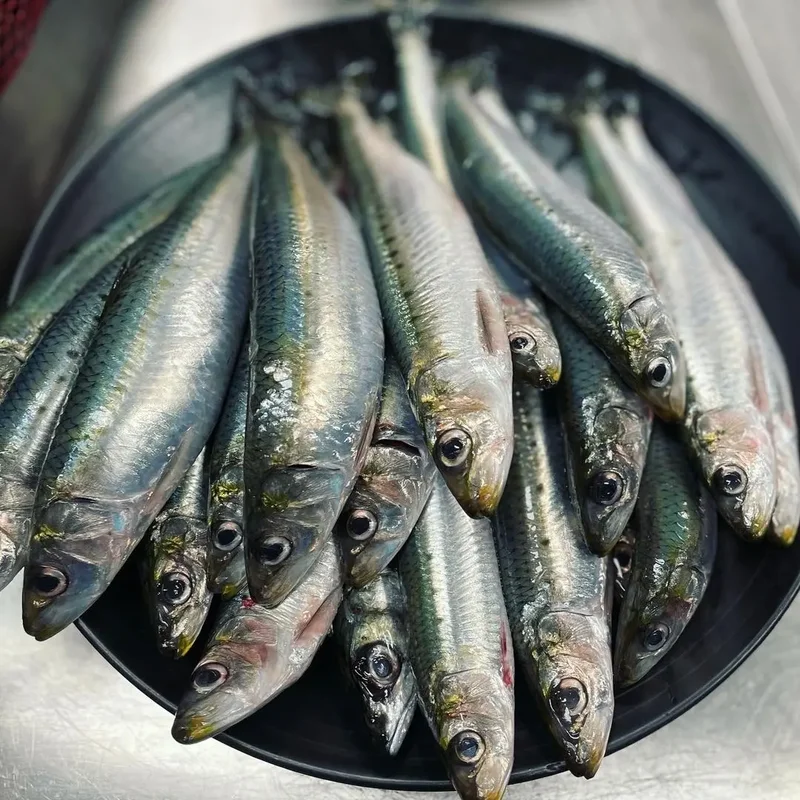
High levels of pilchard herpesvirus have been found in sardines involved in South Africa’s extensive mortality event, with the virus detected in all 15 fish in an initial detailed round of testing.
But scientists have yet to establish whether the virus is responsible for the deaths, with environmental conditions including unusually cold nearshore water and low oxygen also emerging as possible contributing factors.
Zolile Nqayi, a spokesperson for the department of forestry, fisheries and the environment, told the Mail & Guardian that 10 dead sardines collected about 25 nautical miles off Saldanha Bay on 31 July and five apparently healthy fish caught about eight nautical miles south of Elands Bay on 2 August all tested positive for PHV genetic material.
The dead fish showed consistently high PHV levels, while levels varied among the apparently healthy fish, Nqayi said.
The department has also processed about 50 additional samples. Preliminary results are available for roughly half of these and all indicate high PHV levels, although confirmatory testing is continuing.
Sequencing produced a 99.7% match to a PHV gene sequence from Australia.
The finding is significant because PHV has not previously been detected in South African sardines. According to the department’s frequently asked questions document, a 2016 study of sardines collected from different areas found no evidence of the virus at that time.
However, the detection of the virus does not yet prove that it caused the current mortality.
“Sequencing has confirmed the presence of PHV genetic material but this alone does not prove that the virus caused the deaths,” Nqayi said.
Pathological testing is under way to determine whether the fish had the characteristic gill inflammation and tissue damage associated with active PHV disease.
PHV was associated with two large-scale sardine mortality events in Australia and New Zealand during the 1990s. In Australia, the virus was associated with inflammation and thickening of the gills, interfering with oxygen uptake and causing respiratory distress and death.
Investigators are examining whether environmental conditions may have stressed the sardines or intensified the mortality.
Nqayi said investigations had identified enhanced upwelling, unusually cold nearshore water and low oxygen in St Helena Bay. Currents may also have dispersed affected fish.
A harmful algal bloom was present in Saldanha Bay but toxin screening and examination of stomach and gill samples have not found evidence that harmful algae were the primary cause.
Tests found none of the paralytic toxins associated with the Saldanha Bay bloom. Low levels of domoic acid and yessotoxin were detected, with the highest levels found in an apparently healthy comparison sample from St Helena Bay.
The department said the findings suggested the toxins tested for were unlikely to have been the primary cause of the deaths, although they did not entirely rule out harmful algae or environmental conditions as contributing stresses.
The geographical extent of the mortality is also becoming clearer.
Nqayi said reports of dead fish extended from approximately Doring Bay on the West Coast, around Cape Point and along the South Coast as far as Cape Infanta, with reports as far as 100km offshore.
Despite the scale of the reports, the department does not yet have a scientifically defensible estimate of how many sardines have died. It said it was too early to determine the impact on South Africa’s sardine stock.
The significance of the mortality would depend on the number of fish affected, the geographical extent and duration of the event, the age classes affected, the proportion of the population affected and whether deaths continued or subsided.
It cautioned that the presence of large numbers of dead sardines did not by itself mean that South Africa’s sardine stock was collapsing. Scientists needed to establish the extent and magnitude of the mortality and combine that with existing survey, catch and population data before determining the implications for stock status.
The October/November hydroacoustic survey would be particularly important, Nqayi said. It would provide the first post-event estimate of sardine biomass and distribution.
Scientists would use the March/April 2026 biomass estimate, the recent July recruitment estimate and information on growth, natural mortality and catches to model the biomass that would have been expected at the end of the year in the absence of the mortality event.
Comparing that expected figure with the October/November survey estimate could provide an indication of additional mortality, although sardine movement and survey uncertainty would have to be taken into account.
The end-of-year biomass estimate was a key input into future catch limits and other management measures, Nqayi said.
The findings could have implications for the fishing industry, particularly because South Africa's sardine total allowable catch (TAC) was increased in July.
The department said the decision was based on the scientific information available at the time, including revised survey-timing corrections, the conversion of existing sardine total allowable bycatches and the finalisation of a new sardine management plan.
The decision also took into account short-term availability and socioeconomic considerations.
The subsequent confirmation of PHV is new information that will have to be considered as part of scientific monitoring and management.
The department said the confirmation of PHV did not automatically mean the sardine fishery would be closed. It was also too early to say whether the TAC would be reduced. Any future adjustment would depend on the magnitude and duration of the mortality and its effect on the estimated sardine stock.
The mortality could also have implications beyond the fishing industry. Sardines are an important prey species for marine predators, including critically endangered African penguins and marine mammals.
The department said a substantial reduction in sardine availability could have ecological consequences, particularly for predators that depend heavily on small pelagic fish.
However, it was too early to determine whether the mortality will affect African penguin populations. There is no evidence that PHV affects people or other animals, while scientists were continuing to monitor other fish species.
The department said there was no basis to assume that PHV would cause an equivalent mortality event in anchovy.
The source of the virus also remained unknown.
The department said a previous South African study identified the importation of sardines from countries where PHV occurred as a potential biosecurity pathway. However, it said that it did not establish that imported sardines introduced PHV into South Africa. There was no basis for attributing the virus to any particular country, company, fishery or imported product.
The department advised the public not to collect or consume dead or dying sardines found on beaches or at sea. It said commercially purchased and canned sardines remained safe.