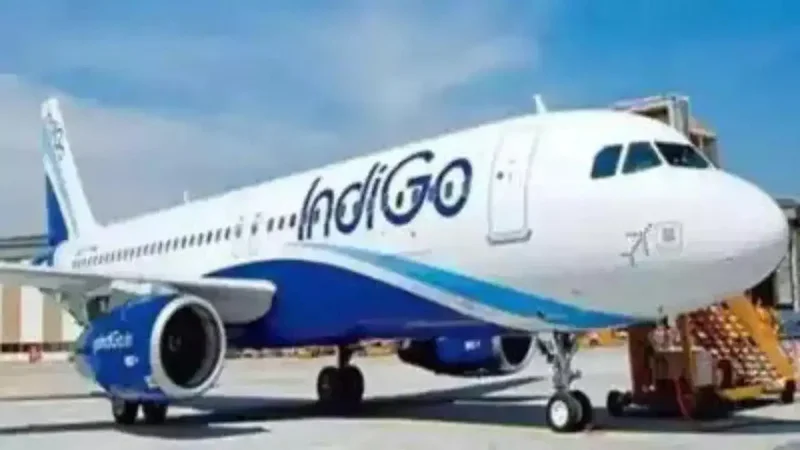
India's largest airline IndiGo has proposed a series of commitments, including setting up a crisis management group, creating a dedicated passenger grievance mechanism and temporarily handing over airport slots during major disruptions, in a bid to address anti-competitive concerns raised by the Competition Commission of India (CCI).
The commitments come as the airline faces a CCI investigation over alleged unfair business practices following the large-scale flight disruptions in December 2025 that affected more than three lakh passengers.
Under the Competition Commission of India's commitment regulations, the watchdog has invited public comments on IndiGo's proposals.
If the commitments are accepted after the consultation process, the ongoing anti-trust investigation can be closed without a final finding of wrongdoing.
The CCI has temporarily paused its investigation until the public consultation and assessment process is completed, according to news agency PTI.
What IndiGo has proposed
As part of its commitments, IndiGo has proposed constituting a Crisis Management Group (CMG) comprising senior executives to oversee responses during large-scale operational disruptions.
The airline has also offered to establish a 24x7 Customer Experience (CX) War Room to assist passengers affected by flight cancellations and delays.
Other proposals include:
- Strengthening passenger handling measures by onboarding additional vendors at airports to ensure the availability of meal boxes, drinking water and surface transport during disruptions.
- Booking affected passengers on alternative flights and processing automatic refunds within a defined timeline.
- Conducting structured reviews of disruption management mechanisms.
One of the most significant commitments is IndiGo's proposal to temporarily surrender its domestic landing and departure slots to airport authorities during large-scale disruptions.
"During large-scale disruptions, IndiGo will undertake measures for planning and executing network adjustment to ensure regularisation of operations post such disruptions. IndiGo shall release the associated domestic landing and departure slots to the relevant airport operators/authority for a limited period," the airline said in the notice issued by the CCI.
Explaining the rationale behind the proposal, IndiGo said, "The establishment of a formal CMG, structured disruption review mechanisms, and handover of slots to the airport authorities will ensure that any unforeseen large scale disruptions are managed in a timely and coordinated manner and there is no unintended reduction in market capacity."
Why CCI launched the probe
The CCI ordered a detailed investigation in February after concluding that IndiGo's cancellation of thousands of flights during the operational crisis in December 2025 could amount to abuse of its dominant market position.
The regulator noted that by cancelling a significant portion of its scheduled flights, IndiGo effectively withheld services from the market, creating "artificial scarcity" and limiting consumer access to air travel during a period of high demand.
"Such conduct by a dominant enterprise may be viewed as restricting the provision of services under Section 4(2)(b)(i) of the Act," the CCI said in its February order, referring to provisions dealing with abuse of dominant position.
IndiGo currently commands more than 66 per cent of India's domestic aviation market, making it the country's largest airline.
The December disruption prompted the Directorate General of Civil Aviation (DGCA) to cut IndiGo's winter schedule by 10 per cent until February 10. Between December 3 and 5, the airline cancelled 2,507 flights and delayed another 1,852, affecting more than three lakh passengers nationwide.
Pressure on the airline continues
The CCI proceedings come at a time when IndiGo is also grappling with rising operating costs.
The airline recently posted its second consecutive quarterly loss, citing soaring aviation fuel prices driven by the West Asia conflict and the impact of a weaker rupee, with fuel costs rising nearly 86 per cent during the June quarter.
IndiGo expects capacity in the July-September quarter to remain broadly unchanged from a year earlier as it focuses on cost optimisation amid volatile fuel markets.