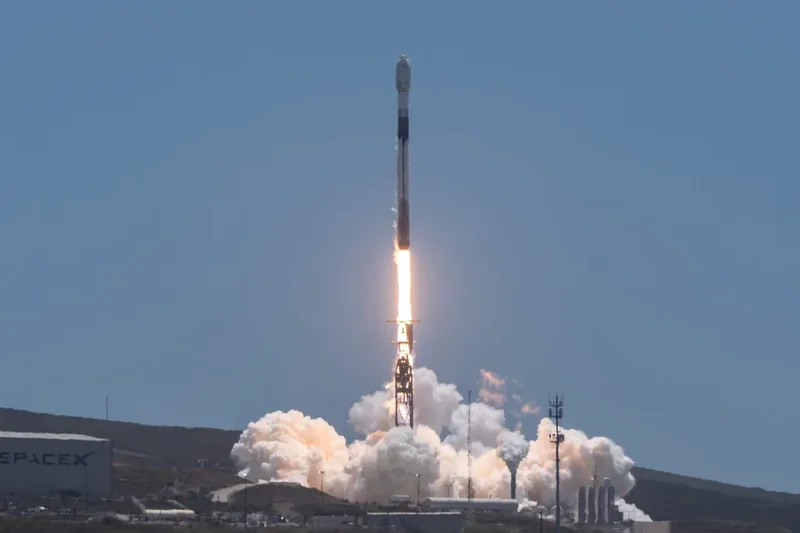
America’s space economy is scaling faster than its industrial base can support.
Commercial constellations are proliferating, national security architectures are becoming more distributed and resilient and civil missions are growing more ambitious. In 2025 alone, more than 3,700 objects were launched from the United States, nearly ten times the level seen in 2019. Yet the supply chain supporting this growth was built for a different market, one defined by lower production volumes and more predictable demand.
For decades, the industry operated around highly specialized, bespoke systems produced in relatively limited quantities. Today, the sector is transitioning toward industrial-scale production. Increasingly, the challenge is no longer whether companies can design advanced technologies. It is whether they can reliably build and deliver them at the speed and scale the market now demands.
PwC and the Aerospace Industries Association’s recent report, “Strengthening America’s Space Supply Chain: Built for Yesterday, Igniting Momentum for Tomorrow,” found that many parts of the current ecosystem remain structurally constrained at precisely the moment demand is accelerating. The industry has an opportunity and responsibility to strengthen the supply chain now, before today’s bottlenecks become tomorrow’s competitive constraint.
Bottlenecks are emerging across the industrial base
Manufacturers are already facing bottlenecks in specialized components including optical intersatellite links, propellant tanks and radiation-tolerant connectors. In some areas, the industry relies on as few as three major domestic suppliers.
The strain on the industrial base is already measurable. Over the past five years, aerospace manufacturing output grew 30%, while broader industry capacity utilization climbed to roughly 74%. Suppliers are relying more heavily on existing infrastructure rather than expanding capacity, extending lead times and reducing the ability to respond in a dynamic market.
Even when manufacturers can produce hardware on schedule, access to qualified facilities capable of certifying flight-ready systems often becomes the bottleneck delaying launch and mission timelines. These constraints are extending program schedules and driving up costs across both government and commercial missions.
These pressures are intensifying as the space sector competes with AI infrastructure expansion, defense modernization and energy investment for semiconductors, advanced electronics and manufacturing capacity. In markets where suppliers prioritize higher-volume commercial customers, space companies can quickly find themselves with longer queues and smaller allocations.
At the same time, suppliers remain cautious about making long-term investments because procurement timelines and funding profiles remain difficult to predict. Continuing resolutions have affected 46 of the last 49 federal fiscal years and despite a 56% jump from FY20 to FY21 and a 49% drop through FY24, federal space-product obligations have grown just 1% annually since 2016.
That uncertainty is especially difficult for smaller suppliers. Many are already operating with limited access to capital while also absorbing the cost of cybersecurity, certification and compliance requirements tied to government and national security programs. The result is a supply chain that appears productive on the surface but remains structurally fragile underneath.
The next phase of competition in space will not be determined solely by who develops the most advanced technologies. It will also depend on which nations and companies can scale production of those technologies most effectively.
Building resilience for the next phase of growth
Organizations that can strengthen supplier networks, accelerate qualification timelines and improve operational resilience will be better positioned to meet future mission demands.
That will require better coordination across the industrial base. One opportunity would be to build on existing collaboration between industry, suppliers and government entities, such as the US Space Force and NASA, by establishing a shared mechanism that better connects long-term program demand with a realistic view of industrial capacity. Demand signals could flow from government customers and prime contractors to suppliers, while information on workforce constraints, production capacity and long-lead dependencies could flow back up the supply chain to help inform planning and investment decisions. Given its visibility across both commercial and national security markets, the Department of Commerce could also play a valuable role in improving understanding of industrial capacity and emerging constraints.
Greater visibility would be particularly valuable for smaller and mid-tier suppliers producing specialized, long-lead or capital-intensive components, where uncertain program timing and low production volumes can make investments in facilities, tooling and workforce difficult to justify. More consistent long-term demand signals, clearer procurement outlooks and earlier communication across the supply chain could help suppliers invest with greater confidence.
The sector must also continue diversifying supplier networks and investing in enabling infrastructure, including testing facilities and workforce pipelines. Equally important, industry and government leaders should continue modernizing qualification and regulatory processes to support more scalable execution while re-examining mission assurance and security requirements.
The most resilient companies are already dual-sourcing their riskiest long-lead components by developing qualified backups to enhance supply chain resiliency. The components that draw five or more bids (reflecting widely available supply) see ~50% lower prices than those with two or fewer.
Just as important is how companies manage risk and incentives. Separating compliance obligations from worst-case interpretations of ITAR and other rules can keep sourcing decisions from defaulting reflexively to legacy parts. Use of incentives, such as the R&D tax credit, can cover prototyping, qualification and even test-facility construction, offsetting the cost of modernization.
The U.S. still holds deep technical expertise, a strong innovation ecosystem, leading commercial operators and a growing base of entrepreneurial companies. But those advantages will need to be actively sustained.
In the next 12 months, three priorities deserve focused attention: establishing more consistent demand signaling so suppliers can invest with confidence; expanding testing and qualification capacity as a shared national asset rather than a program-by-program afterthought; and modernizing compliance processes and regulations so that suppliers can grow the space industrial base.
History has repeatedly shown that industrial strength shapes strategic outcomes as much as technological innovation. The next phase of space competition will depend not only on what we can invent, but on what we can build at scale.
Doug Anderson is a PwC Operations & Supply Chain Services partner.
Steve Jordan Tomaszewski is vice president of Space Systems at the Aerospace Industries Association.
SpaceNews is committed to publishing our community’s diverse perspectives. Whether you’re an academic, executive, engineer or even just a concerned citizen of the cosmos, send your arguments and viewpoints to opinion (at) spacenews.com to be considered for publication online or in our next magazine. If you have something to submit, read some of our recent opinion articles and our submission guidelines to get a sense of what we’re looking for. The perspectives shared in these opinion articles are solely those of the authors and do not necessarily represent their employers or professional affiliations.