'Playing with fire': Israel's Syria strike tests Turkey after Mecca defence pact
Turkey has sought to downplay Tuesday’s Israeli strikes on the Abu al-Duhur military airbase in northern Syria, about 70km from the Turkish border, viewing them as an election stunt by Prime Minister Benjamin Netanyahu.
Netanyahu has recently portrayed Turkish President Recep Tayyip Erdogan and New York Mayor Zohran Mamdani as enemies of Israel in his election campaign materials.
However, the attack - which immediately followed the signing of the Mecca defence agreement between Turkey, Saudi Arabia and Pakistan - suggests that Israel may be seeking to undermine Ankara's credibility as an ally in Syria.
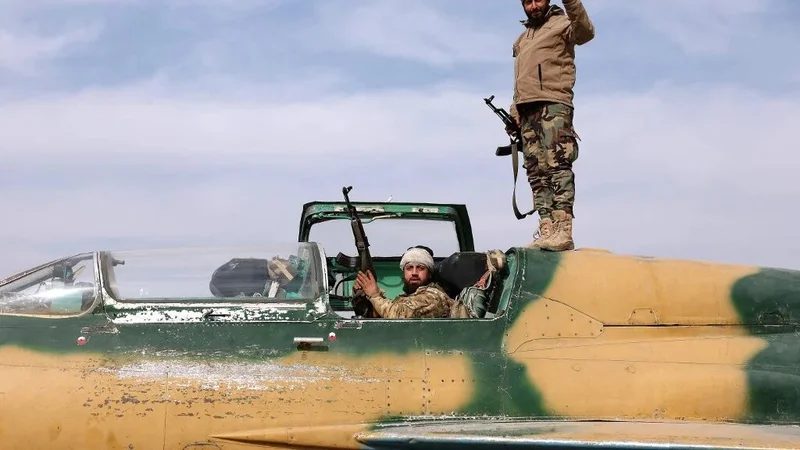
The Syrian government condemned the attack, saying eight strikes hit the runway of the defunct airbase early in the morning.
Anonymous Israeli officials initially offered contradictory explanations, first accusing Syrian President Ahmed al-Sharaa of backing proxy forces before the official rhetoric shifted.
The Israeli prime minister’s office said in a statement that Israel and Syria had agreed to maintain the security status quo, “which Syria was on the verge of breaching by permitting Turkish troops to deploy at an airbase near Aleppo”.
Reports alleged that the strikes occurred as Turkey was preparing to take control of the base and that they were carried out shortly after a Turkish official delegation had left the site.
However, Syrian officials told Middle East Eye that a Turkish technical team had been tasked with repairing the runway and control tower and that there was no military presence at the base.
“The last team tasked with reconstructing the base was there two days beforehand,” one official said.
The officials added that Turkey had been helping the Syrian army build bases across the country, without any specific plans directed at Israel. Ankara, they said, wants to rebuild a robust Syrian military capable of defending the country.
“Turkey doesn’t take over every base,” one official added.
A potential Turkish presence at Abu al-Duhur would not alter the aerial balance, as some Israeli officials have claimed, because the base is already very close to the Turkish border.
Turkish officials told MEE that Israel had not used the hotline established between the two countries last year to prevent military accidents, raising the risk of escalation.
Thomas Barrack, the US envoy to Turkey and Syria, told an Israeli outlet that the strikes “carried a real risk of rapid escalation into a direct military confrontation between Israel and Turkey as well as Syria”.
“Turkish forces were not aware that the Israeli aircraft were en route to that specific Syrian base, nor of their intended purpose, and therefore could potentially have been inclined to scramble their own jets in the belief that they themselves were under attack,” Barrack said on Wednesday.
'Playing with fire'
In numerical terms, the strike was entirely consistent with Israel’s broader campaign. Incident data compiled from Telegram reports and independently coded events from the Armed Conflict Location & Event Data Project (ACLED) include 1,722 verified and deduplicated records between January 2025 and 18 August 2026, showing that the campaign has not let up since the fall of the Bashar al-Assad government.
Turkish officials responded to Israel’s messaging through the Turkish presidency’s communications office, which said Netanyahu intended to continue his expansionist and destabilising regional policies “ahead of elections in Israel”.
In two separate interviews, Barrack said a new deconfliction mechanism involving Syria, Israel and Turkey needed to be activated.
However, Israel’s failure to use the existing military hotline suggests that it wanted to provoke Turkey rather than proceed cautiously.
“It is clear that they wanted to intimidate Ankara,” one Turkish official said on condition of anonymity. “They are playing with fire.”
A Turkish source familiar with the operational readiness of the Turkish armed forces said Ankara had radar capabilities that could monitor Israeli aerial activity as far away as Jordan and had not been caught off guard by the strikes. The source speculated that US officials may also have warned Turkey of the impending attack.
A message to Erdogan
Two Ankara insiders with ties to the Turkish government, speaking anonymously, said they believed that the strikes were intended not only as an election stunt but also to undermine the credibility of Turkish support for Syria.
“The Mecca Accords with Pakistan and Saudi Arabia, which Israel has presented as a new Sunni axis, put Netanyahu in a difficult position domestically,” one of the insiders said.
'It is a way of telling Erdogan that they won’t let him feel comfortable in Syria'
- Turkish insider
“So Israel is basically saying: We don’t care about the new security architecture being built by Turkey, and we will continue to strike wherever and whenever we want.”
The insider added that Israel was also testing the administration of US President Donald Trump, which has backed Sharaa's government. Trump welcomed the Mecca Accords earlier this week.
The second insider said Israel had now officially confirmed that it regarded Turkey’s presence in Syria as a threat.
“Israel may have elections, but Turkey also has elections in 2028. These tensions could deepen and lead to a repeat of the 2015 incident in which Ankara shot down a Russian fighter jet,” the insider warned.
He added that the attack could also have been an attempt to send a direct message to Erdogan.
Over the weekend, Erdogan revealed that he was planning to visit Damascus later this year - his first visit since the fall of Assad.
“It is a way of telling Erdogan that they won’t let him feel comfortable in Syria,” the insider said.