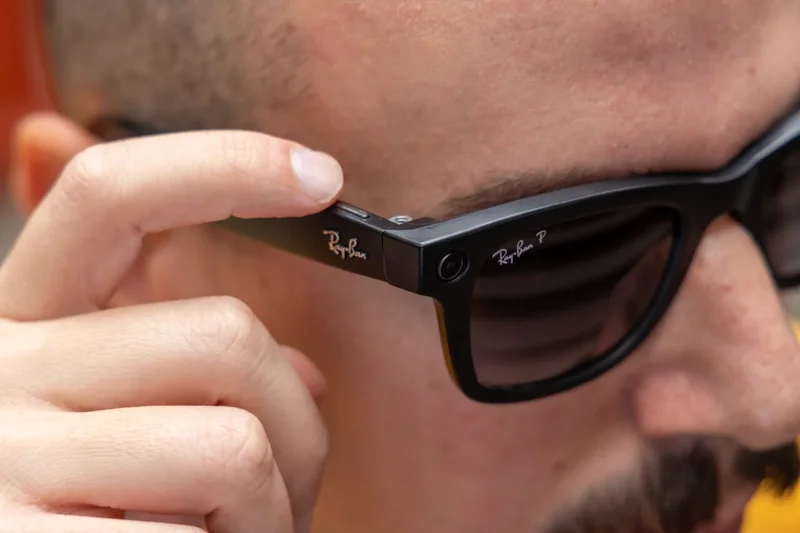
You can officially list Immigration and Customs Enforcement (ICE) as one of the growing number of organizations banning smart glasses.
According to the New York Times, ICE sent out a memo on Tuesday prohibiting the use of smart glasses by its employees; that means agents and those who work in its offices. The reason? ICE thinks they’re a potential privacy liability. Here’s what acting director David Venturella states in the memo, per the New York Times:
â… the use of Meta Glasses or similar devices could unintentionally capture, record or transmit sensitive information, potentially compromising privacy and legal protections.â
The words “unintentionally capture” feel pointed here. To me, this implies that ICE isn’t so much concerned with videos or pictures that its employees or agents might take on purpose but rather with information that the smart glasses could gobble up incidentally. History suggests that ICE’s concerns here are founded.
Earlier this year, whistleblowers who worked as contractors for Meta detailed issues over videos that were being used as a part of the company’s AI training program. The workers say they were asked to review intimate footage of people having sex, naked, using the bathroom, and more. Some of those videos, they say, appear to have been taken accidentally. Clearly, due to Meta’s terms of service, videos and pictures taken with Meta’s smart glasses aren’t as airtight as they might seem.
For context, DHS agents have already been spotted wearing smart glasses, Meta’s in particular, so the ban is not exactly proactive. Furthermore, there are reports that the Department of Homeland Security (DHS) is developing its own smart glasses that could be used to surveil the U.S. border. Those reports also suggest that there’s interest in marrying smart glasses with facial recognition so that they could automatically check a person’s face against a database.
That’s all to say that ICE’s decision to ban smart glasses isn’t philosophicalâsurveillance is something the organization engages with regularlyâbut clearly it has other concerns, and those concerns may not be with smart glasses as much as with the dubious policies with user data that surround them.