When I start setting up a new Pixel, I always pay attention to the onboarding process because it's one of the first experiences a regular user will have with the phone. That's how they discover the most essential features Google wants them to be aware of.
With the Pixel 11, one new step surprised me, positively. Among all the different settings, from SIM cards to Wi-Fi and account login, there was a new screen asking me to make a choice about Google Find Hub.
It's something we've been expecting to change for a long time. Here's why this is a major step for Google's location network and why it will be a positive change for finding lost phones and trackers everywhere.
What you will see when setting up a new Pixel 11
And how Google is helping you make the right decision
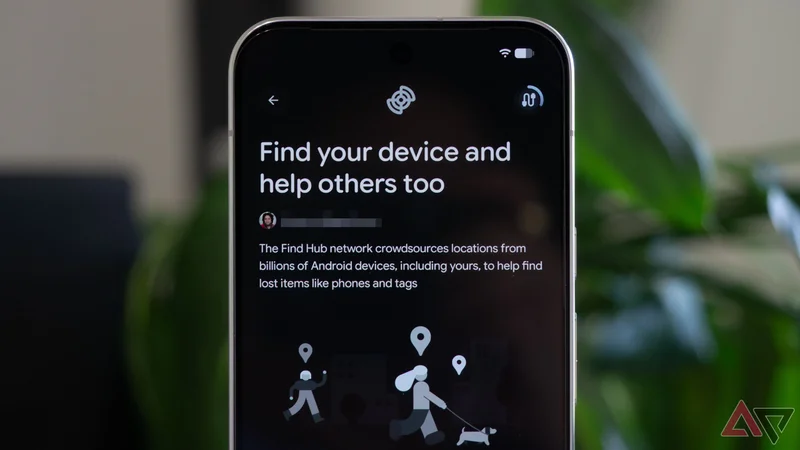
When you start setting up a new Pixel 11, 11 Pro, or 11 Pro XL — and probably other Android 17 phones in the future — one of the screens you'll have to make a decision on is a brand-new Google Find Hub explainer.
The screen does a good job of explaining exactly what you need to know about Find Hub, in a simple language. It says this is what helps you find lost phones and tags, and it's crowdsourced from billions of Android phones.
Then it asks you to make a choice. It clarifies that, by default, your phone only participates in the network in busy places when there are many devices nearby. But it also offers the more interesting and powerful option of switching to find your device in remote areas, too.
The language is very clear and easy to understand. That's what I like most about this screen. It doesn't complicate things or use confusing nerdy words that we've gotten used to, like "With network in all areas," which might drive people away.
I also appreciate that Google has kept as default the more centric option, but is still subtly nudging people to agree to the more open option. The fact that Switch is on the right, a place you usually associate with agreement or moving forward, UX-wise, is not lost on me.
This is what Find Hub needs to become more widespread
A good middle-ground between privacy and user approval
When Google's Find Hub first rolled out a couple of years ago, there were two main obstacles to its adoption (besides the very, very slow rollout).
One was that users had to agree to join the network in the first place. Google sent a notification to your phone, which wasn't very well worded, and I suspect a lot of them saw that notification and dismissed it for being too unclear or perhaps a bit suspicious.
The second was that even agreeing meant that you were enrolled, but only With network in busy places only by default. Users had to go into the settings and manually change it to With network everywhere, which very few people did.
Google did this to respect users' privacy and let them opt into the network and, crucially, opt into allowing it to work everywhere, including their homes or the less frequented places they go to. But that impeded the network's utility and reliability for a long time.
In 2024, I couldn't rely on Find Hub to locate any lost phone or tracker. Locations were barely updated once a day, at most... and I live near Paris, not in the middle of nowhere in a country where Android phones are rare to come by!
Today, in 2026, the network is very reliable because the feature is enabled when you set up a new Android phone. The default is still restricted to busy areas, but it works much better across Europe and West Asia because of how many Android phones are out there.
By adding this new onboarding screen when you set up an Android 17 phone like the Pixel 11, Google is giving users a nudge to opt for the more powerful setting, and thus giving its network a higher chance of working even in remote areas.
It's the right middle-ground between respecting people's privacy and explaining enough to them what's at stake to let them opt in or out of being part of the more precise network.
I expect Google Find Hub to get even better
With more people setting up more Android 17 phones over the next year and more, there will likely be even more phones participating in Google's lost-item finding network and helping crowdsource the location of phones, earbuds, watches, and trackers.
More people will likely switch to the all-area setting, too, which should solidify the network and make it even more reliable, especially in less popular areas or places where Android isn't as predominant.
This isn't the only exciting new feature coming to the Pixel 11 series. There are many new camera features, Gboard's impressive new Rambler, and so much more to discover. So keep your eyes on Android Police for more coverage.
-
Google Pixel 11-
**Brand**-
**SoC** - Google Tensor G6
-
**Display** - 6.3-inch Actua display
-
**RAM** - 12GB
-
**Storage** - 256 or 512GB
-
**Battery** - 4985 mAh
-
-
Google Pixel 11 Pro-
**Brand**-
**SoC** - Google Tensor G6
-
**Display** - 6.3-inch Super Actua display
-
**RAM** - 12 or 16GB
-
**Storage** - 256GB, 512GB, or 1TB
-
**Battery** - 4850 mAh
-
-
Google Pixel 11 Pro XL-
**Brand**-
**SoC** - Google Tensor G6
-
**Display** - 6.8-inch Super Actua display
-
**RAM** - 12 or 16GB
-
**Storage** - 256GB, 512GB, or 1TB
-
**Battery** - 5115 mAh
-
-