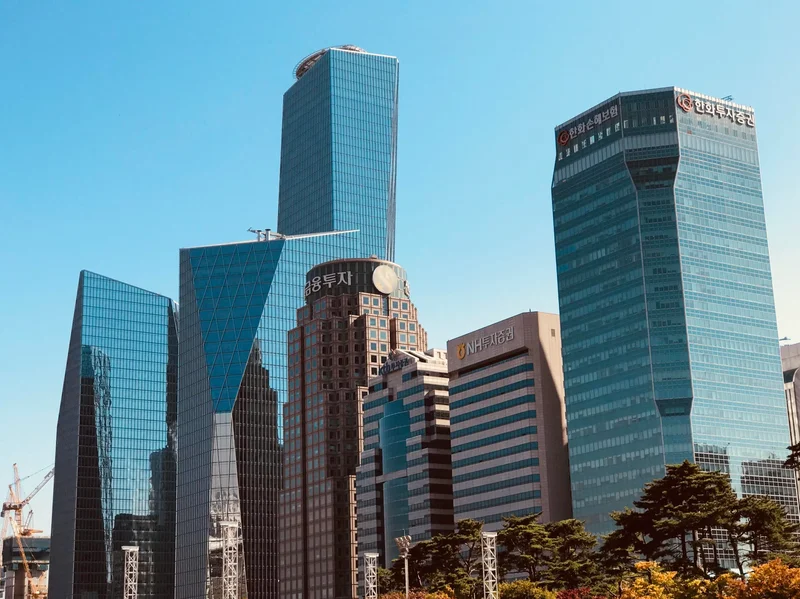
Asia Intelligence Brief August 19, 2026: The Morning Seoul Had To Stop Trading
Executive Summary
Asia Intelligence Brief August 19: Seoul suspended program selling as the KOSPI fell 5.8%, and Tokyo dropped for a second day.
Rio Times · Asia Intelligence Brief August 19
A country that turned itself into the world’s memory chip found out what that costs on a bad morning.
South Korea – The Morning The Exchange Stepped In
Six minutes past nine
The Korea Exchange suspended program sell orders for five minutes at 9:06 on Wednesday morning, after futures on the main index fell 6.02% to 1,013.26. The curb is automatic once those futures drop 5% or more and stay there for a minute.
The market had opened 4.96% lower. A minute after the curb began it was down 5.6%, at 6,485.01.
Two companies, one country
The index closed down 398.66 points, or 5.8%, at 6,471.17, having touched 6,400.81 during the session. Samsung Electronics fell 7.8% and SK Hynix 9.8%, tracking an overnight fall in American chipmakers.
Those two companies are 46.94% of the whole market by value. Korea did not have a bad day so much as two companies had one on its behalf.
Diplomacy – The Visitor Arrived Regardless
Wang Yi in Seoul, Seoul pressing the offer
China’s foreign minister began his two-day visit with Seoul still pressing the proposal President Lee Jae Myung made in his Liberation Day address on Saturday 15 August: multiparty talks on formally ending the Korean War, involving the two Koreas and the United States, or those three plus China.
Multiparty means Beijing sits inside the negotiation rather than beside it. China signed the 1953 armistice and has waited a long time to be asked.
And Washington makes its own approach
Korean reporting describes a fresh American overture to North Korea, which revives the question of what actually follows it. Two capitals are courting Pyongyang in the same week.
Seoul is trying to be the author of that conversation rather than its subject. That is the whole of South Korean foreign policy this month, compressed into five days.
Japan – A Second Day Down
The lowest close since 4 August
The Nikkei 225 closed 3.2% lower at 65,326.42, a second consecutive decline, with the broader TOPIX down 3.1% at 4,012. Furukawa Electric lost 13.7% and Kioxia 12.6%.
Fujikura fell 9.7%, while Tokyo Electron and Advantest declined roughly in line with the index, and the weakness spread beyond technology to Mitsubishi UFJ and Toyota. When Seoul sells its chipmakers, Tokyo’s suppliers are sold within the hour.
The yield underneath it
Japan’s ten-year borrowing cost touched 2.945% on Tuesday, its highest in about thirty years, and remains close to 3%. Rising bond yields make expensive technology shares harder to justify.
Japan spent thirty years being criticised for caution. This week that caution looks less like timidity and more like memory.
China – Two Doors Quietly Opening
American chips, in small quantities
The Financial Times reported on 18 August that Beijing has begun easing its restrictions on American chips, allowing Nvidia’s H200 processors into the mainland market in limited volumes. The easing is China’s, not Washington’s — the United States authorised H200 sales to China in December 2025, with a 25% cut of the revenue. And the chips are already moving: ByteDance and Tencent have each taken delivery of about 10,000 in recent weeks.
Chinese shares still fell, with the Shanghai Composite down about 1.5% and the Hang Seng about 0.4%. The good news was smaller than the global mood.
And Chinese cars, going the other way
China Daily reports that Chinese electric vehicle producers have found a foothold in the American market. It runs directly against the direction of trade policy everywhere else this week.
Beijing rarely announces a strategy when it can report a result instead. Both items today are about access won quietly while attention was elsewhere.
Singapore – The Same Trade, Seen From Trade Figures
Up a quarter, and still short
Singapore’s key exports rose 24.2% year on year in July on demand linked to artificial intelligence, and still came in below the 26.5% economists had forecast. Growth of that size failing to meet expectations tells you how high the expectations had climbed.
The city state is the clearest read on regional electronics demand available. It is measuring the same wave that broke over Seoul this morning.
Why a miss matters more than a number
Markets price the gap between what happened and what was assumed. A 24.2% rise that undershoots is a warning about the assumption, not about the demand.
Every economy in this brief has built a forecast on that assumption. That is what made this morning’s fall so fast.
Myanmar and Indonesia – Two Governments Managing Themselves
Moscow on Monday, Phnom Penh maybe in September
Myanmar’s leader is expected in Cambodia in early September, days after his official visit to Russia, though the trip is not yet confirmed. The criticism that he is seeking legitimacy is already public. Two state visits in one week is a campaign rather than a schedule.
Recognition is the commodity being purchased here. It is also the one thing his neighbours can withhold at no cost.
Jakarta calls its budget prudent
The Jakarta Post reports that ambitious targets cast doubt on the government’s description of its own budget plan as prudent. The gap between the label and the assumptions is the story.
This lands four days after the 15 August earthquake, which killed at least 53 people and while relief is still being delivered. A government is being asked to fund optimism and disaster in the same document.
What This Means From Latin America
A concentrated market is a fragile one
Two companies worth nearly half an index dragging it down 5.8% in a session is the clearest available argument for diversification. Regional exchanges with heavy weightings in one or two commodity producers should read Seoul’s morning as a mirror.
The mechanism that paused the selling lasted five minutes and changed nothing about the day. Circuit breakers buy time, not direction.
And the cause was not in Asia
The immediate triggers were an overnight fall in American chipmakers, long-term bond yields at multi-year highs and oil rising after stalled talks over Iran. None of those started in the region that paid for them.
The same three forces set the price of money and fuel for Latin America this week. What broke in Seoul this morning is the transmission mechanism, not the disease.
Asia Intelligence Brief August 19: What We Are Watching
- 20 August – Wang Yi’s call on President Lee, and whether the language on the multiparty-talks proposal hardens.
- Coming days – Whether Seoul’s market steadies or takes a third session lower.
- Coming days – When SK Hynix’s union votes on the tentative wage agreement reached on Wednesday.
- Coming weeks – How many H200 processors actually reach Chinese buyers.
- 17-18 September – The Bank of Japan meeting, with the ten-year near 3%.
- Coming days – Any North Korean response to the American overture.
- Coming days – Myanmar’s visit to Cambodia and the reaction within Southeast Asia.
- Coming weeks – Whether Indonesia’s budget assumptions survive parliamentary scrutiny.
More from the Rio Times Intelligence Desk: the Africa Intelligence Brief, the Europe Intelligence Brief and the USA & Canada Intelligence Brief. For how these stories developed, see the Asia Intelligence Brief for August 18 and the Asia Intelligence Brief for August 17.
The Asia Intelligence Brief August 19 returns tomorrow morning.
Frequently Asked Questions
What is a sidecar and why was it triggered in Seoul?
A sell-side sidecar is a Korean trading curb that automatically suspends program sell orders for five minutes when futures on the KOSPI 200 fall 5% or more and stay there for at least one minute, and it was activated at 9:06 on 19 August when those futures were down 6.02% at 1,013.26. It pauses program trading only, so ordinary orders, futures trading and individual share dealing continue throughout.
How far did the Korean market fall?
The KOSPI opened 4.96% lower, touched 6,400.81 during the session and closed down 398.66 points, or 5.8%, at 6,471.17, with Samsung Electronics falling 7.8% and SK Hynix 9.8%. The two companies are 46.94% of the index by market value, so a reversal in the semiconductor trade moves the whole Korean market.
What caused the selling across Asia?
An overnight fall in American chipmakers, long-term government bond yields at multi-year highs across the United States, Japan and Europe, and higher oil prices after stalled talks between Washington and Tehran combined to reduce appetite for expensive technology shares. Japan’s ten-year yield touched 2.945% on Tuesday, its highest in about three decades, which makes high-valuation shares harder to justify.
What is happening between Seoul, Beijing and Pyongyang?
China’s foreign minister Wang Yi began a two-day visit to Seoul while Seoul pressed the proposal President Lee Jae Myung made in his Liberation Day address on 15 August, for multiparty talks on formally ending the Korean War, which would place China inside the negotiation as a signatory of the 1953 armistice. Korean reporting separately describes a fresh American overture to North Korea, leaving two capitals approaching Pyongyang in the same week.
Sources: Yonhap via The Korea Times, Yonhap via UPI, Korea JoongAng Daily, Asia News Network
This article was produced by The Rio Times’ automated newsroom system. How we use AI · Report an error
LatAm Markets: Live Signals → — real-time movers, turnover leaders and FX across Latin America.