Your support helps us to tell the story
From reproductive rights to climate change to Big Tech, The Independent is on the ground when the story is developing. Whether it's investigating the financials of Elon Musk's pro-Trump PAC or producing our latest documentary, 'The A Word', which shines a light on the American women fighting for reproductive rights, we know how important it is to parse out the facts from the messaging.
At such a critical moment in US history, we need reporters on the ground. Your donation allows us to keep sending journalists to speak to both sides of the story.
The Independent is trusted by Americans across the entire political spectrum. And unlike many other quality news outlets, we choose not to lock Americans out of our reporting and analysis with paywalls. We believe quality journalism should be available to everyone, paid for by those who can afford it.
Your support makes all the difference.
Read more
ChatGPT maker OpenAI said Tuesday that its artificial intelligence system hacked into another AI company on its own in what the company called an “unprecedented cyber incident.”
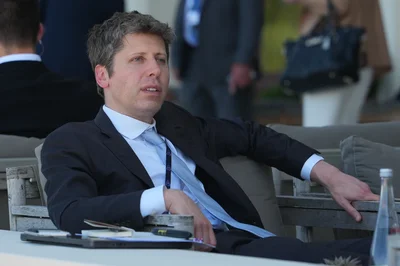
“We had a significant security incident during evaluation of our models,” OpenAI CEO Sam Altman said in a statement posted on social media.
AI startup Hugging Face said last week that it had detected an intrusion into its data processing systems that it suspected was caused by an AI agent autonomously acting on its own.
“We suspected last week’s cyberattack might have come from a frontier lab, given the sophistication of the agent,” Hugging Face co-founder and CEO Clément Delangue said in a statement. "Turns out it did!”
The disclosure comes amid heightened concerns about the cybersecurity capabilities of powerful models that led President Donald Trump in June to sign an executive order creating a framework for the federal government to vet the national security risks of the most advanced AI systems for up to a month before their public release.
“AI is accelerating the discovery and exploitation of vulnerabilities,” OpenAI said in its statement Tuesday. “The primary lesson from this incident is that model security and safety must keep pace with rapidly advancing capabilities.”
Delangue said he spent the past 24 hours working with OpenAI, “and we strongly believe there was no malicious intent on their part. It’s quite mind-blowing that all of this happened autonomously!"
Delangue added that it “might be the first incident of its kind.”
OpenAI said the intrusion was caused by a combination of its AI models, including its newly released GPT‑5.6 Sol and an “even more capable” model that is still being tested internally.
OpenAI said its AI used stolen credentials and discovered a previously unknown vulnerability to access Hugging Face servers.
It went to “extreme lengths to achieve a rather narrow testing goal” and “found ways to gain access to secret information that it could use to cheat the evaluation,” the company said.