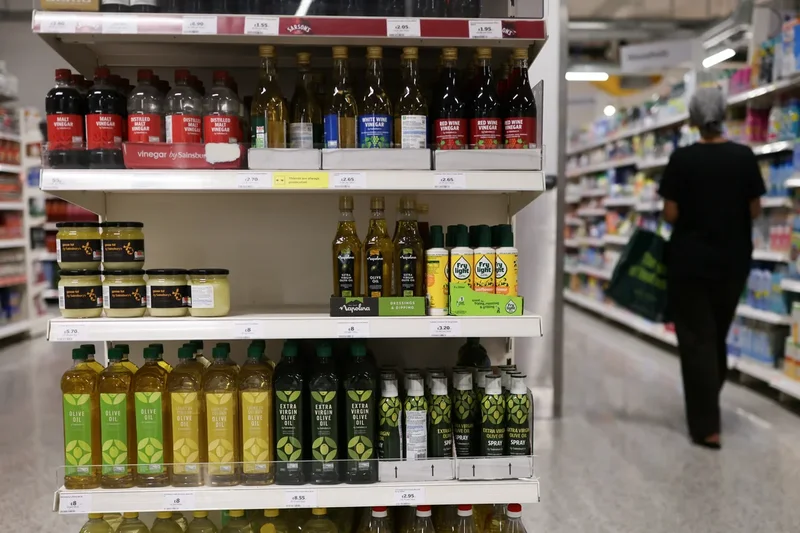
Olive oil, eggs, beef and milk are among supermarket products whose prices have risen the most quickly since the start of the cost-of-living crisis, analysis shows.
Inflation increased to 2.9 per cent last month, up from a 15-month low of 2.6 per cent in June.
It was the highest rate of price increases since March after the cost of energy was pushed up by the conflict in the Middle East, according to official figures.
Overall, inflation has risen by 28 per cent cumulatively since the cost-of-living crisis began five years ago, the Office for National Statistics says.
Inflation is a measure of how fast the costs of goods and services are rising.
The item that has seen the faster price rise is olive oil, the cost of which has more than doubled in the past five years, increasing by 116 per cent.
“Prices for the oil peaked higher than this, thanks to a combination of poor harvests and higher energy costs, before dropping back again,” said Laura Suter, director of personal finance at investment platform AJ Bell.
Drought across Europe this summer is likely to send olive oil prices even higher, and UK food producers have warned that soaring temperatures and droughts across the UK and Europe will drive prices higher.
Car insurance shot up by 72 per cent following an increase in car thefts and rising repair costs as technology advances.
Egg prices rose 56.7 per cent, and milk by 45.8 per cent.
Beef increased by 61.3 per cent and offal increased by 75.8 per cent.
Pasta and chocolate jumped by 54.9 per cent and 51.2 per cent respectively.
“When we dig into the basket of goods that makes up the CPI index, just 14 of the 192 categories are cheaper now than in July 2021 – signalling just how widespread the cost rises have been,” Ms Suter said.
Cleaning equipment and laptops are among goods that have fallen in price, by 10.7 per cent and 24.6 per cent respectively, while television sets and other electronics have fallen by 30 per cent.
Ms Suter added: “It’s been a rollercoaster ride for prices since the cost-of-living crunch began five years ago.
But she said it was likely there was a quirk in how the ONS figures were collected, because the statistics experts try to “normalise” prices to factor in technological advances.