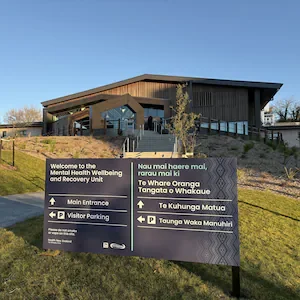
The new mental health and addiction facility Te Whare Oranga Tangata o Whakaue has officially opened at Rotorua Hospital. Photo / Megan Wilson
Rotorua Hospital’s new mental health and addictions inpatient unit has opened.
The purpose-built facility, Te Whare Oranga Tangata o Whakaue, officially opened today with its first patients admitted from next Tuesday.
The $50 million project has been beset by delays and cost increases since it was announcedin 2020.
Covid-19 delayed the start of construction until 2022 and the physical build also took longer than initially estimated.
Impacts such as inflation, rising construction material costs through Covid-19, and supply chain challenges contributed to rising expenses, with the budget increasing from $33m to $50m.
A Health New Zealand Te Whatu Ora statement today said the mental health wellbeing and recovery unit replaced the previous inpatient unit, which was more than 45 years old and no longer suitable for modern clinical practice.
The unit will provide acute mental health and addictions inpatient assessment, treatment, and care for adults in the Lakes district.
Features of the building include individual bedrooms, therapy and activity spaces, internal courtyards, family areas, and a “pod-based layout” that supports more personalised care, including quieter, low-stimulus environments, as well as areas for vulnerable patients and older people.
Health NZ Lakes operations group director Alan Wilson said the opening marked a significant day for mental health services across the district.
“The new unit provides a modern environment better suited to delivering contemporary mental health and addiction care and supporting the needs of patients, whānau and staff.”
Wilson said the new building provided a “therapeutic environment to support recovery, wellbeing, connection and dignity”.
Mental Health Minister Matt Doocey said the previous unit no longer provided the right environment for people to get well.
“People go into these facilities to get the support they need to get better, and they deserve a place that helps them do that.”
Doocey said the increased capacity would mean more people in the Lakes district could access support.
“It also matters for our frontline workers. Mental health staff do an incredibly important job supporting people through some of the most difficult moments in their lives, and they need the right facilities to do that job.”
Doocey said the $50m investment in the facility was part of Health NZ’s mental health infrastructure programme, which included 18 projects to improve mental health facilities around the country.