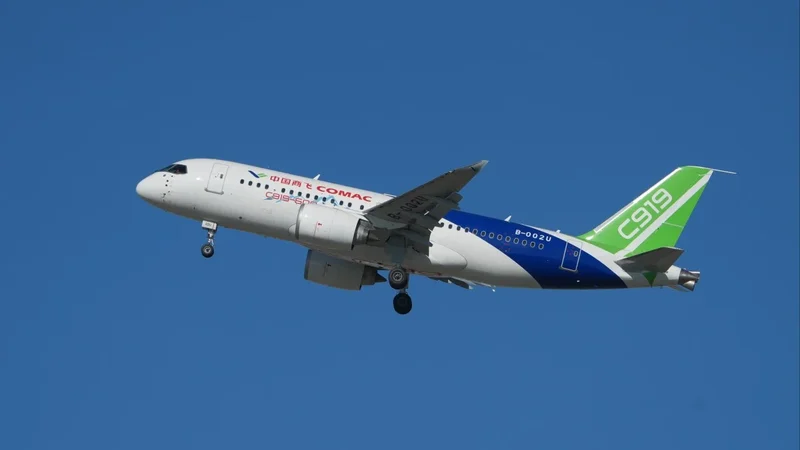
China’s C919 supply chain: inside the push to replace Western aerospace parts
The localisation strategy remains a long-term challenge and is not expected to derail the aircraft’s bid for EU safety approval, industry insider says
China is stepping up efforts to source local components for its passenger aircraft, particularly the C919 narrowbody airliner, with the focus expanding from home-grown engines to progressively replacing imported sealants, paints, bolts and other materials, according to a prominent aircraft engineer.
The push means the C919, as well as future Chinese models and engines, could increasingly incorporate parts from domestic suppliers as Beijing seeks to lessen exposure to supply chain and geopolitical headwinds.
Entering commercial service in May 2023, the C919 is central to the aerospace ambitions of the world’s second-largest aviation market as it attempts to break the Boeing-Airbus duopoly and carve out a stake in the lucrative aircraft manufacturing market. By July, Comac had delivered 42 C919s to domestic clients.
But despite progress in the localisation drive, the industry insider conceded that reducing dependence on Western suppliers remained a complex, long-term challenge.
“Other than the engine, we are also looking at sealants, rubber, paints, bolts and even cleaning agents from the West that could be replaced,” Zhang Xiaoyan, a chief engineer at the Aero Engine Corporation of China (AECC)’s Beijing Institute of Aeronautical Materials, told an aviation forum in Guangzhou last week.