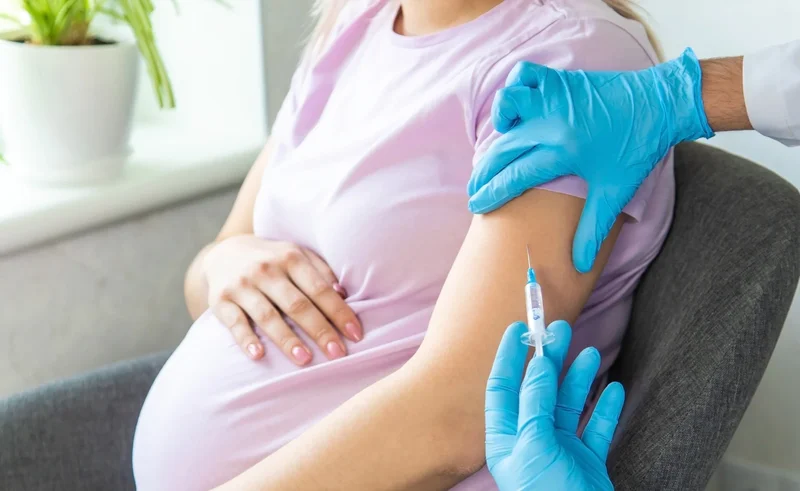
Nearly two decades of German health records reveal how maternal vaccination patterns shifted following new national recommendations, with striking differences across vaccine types and stages of pregnancy.
Study: Vaccinations during pregnancy in Germany between 2004 and 2022: a claims data analysis. Image Credit: Anuta23 / Shutterstock
In a recent study published in the journal Scientific Reports, researchers in Germany examined vaccination during pregnancy over a 19-year period, from 2004 to 2022. The study found that despite increases in the uptake of influenza and pertussis vaccines, uptake of recommended vaccines during pregnancy remained suboptimal.
Background
Selected vaccines are recommended during pregnancy because they can protect against vaccine-preventable diseases and their complications in the pregnant woman, the fetus, and infants.
Most women in countries with well-developed healthcare systems have received all age-recommended vaccinations before they become pregnant. However, the WHO and the US ACIP advocate maternal immunization against influenza, diphtheria, pertussis, tetanus, and COVID-19 during pregnancy.
Live vaccines, such as those against measles, mumps, rubella, and varicella, are contraindicated during pregnancy. The influenza and pertussis vaccinations in pregnancy were recommended by German public health authorities in 2010 and 2020, respectively.
However, no previous study in Germany had systematically examined the proportion of pregnancies exposed to any vaccination and the different types of vaccines administered, motivating the current study.
*Proportion of pregnancies with at least one vaccination stratified by federal state in the period 2004 to 2022 (Please note that differences between federal states, e.g. regarding age at pregnancy onset, are not considered here. GePaRD does not cover the same proportion of pregnancies in each federal state, i.e., the numbers are not representative.) Map created using QGIS Geographic Information System version 3.42.0 (QGIS Development Team, Open Source Geospatial Foundation; https://qgis.org). *
Study characteristics
The researchers used the GePaRD, comprising claims data from four statutory insurance providers covering about 25 million people insured in 2004 or later. It represents all of German territory and provides data on about 20% of the general population each year.
The study included 2,801,552 pregnancies among women aged 13-49 years, occurring between 2004 and 2022, in which the woman was insured throughout and living in Germany when the pregnancy began.
Overall vaccine exposure
The results showed that approximately 15% of pregnancies, and 17.4% of pregnancies resulting in live births, had one or more vaccine exposures during the study period.
This percentage was highest among women aged 30-39 years, at about 17%, but as low as about 10% among those under 24 years old.
Vaccine exposure by year
When stratified by year, vaccine exposure was very low, at 3.6%, in cohorts beginning between 2004 and 2009, but increased to 43.6% in pregnancies beginning between 2020 and 2022. The proportion also increased with educational status, to about 18%, compared with about 11% among those with basic or secondary education.
The variation between federal states was modest, with 19.3% of pregnancies exposed in Saxony-Anhalt, 18.5% in Berlin, and 16.5% in both North Rhine-Westphalia and Saxony. However, regional comparisons should be interpreted cautiously because GePaRD did not cover the same proportion of pregnancies across all federal states.
Influenza, pertussis, and other vaccines
About 37% of pregnancies were exposed to vaccines against diphtheria, pertussis, and tetanus (mostly given together) between 2020 and 2022, compared with only 3% between 2015 and 2019.
Similarly, only 2% of pregnancies received the influenza vaccine in the 2004-2009 period, rising to 19.4% during 2020-2022.
These increases may reflect the recommendations for influenza and pertussis vaccines in pregnancy introduced in 2010 and 2020, respectively. Influenza uptake still falls far short of the EU Council's recommended 75% coverage target, although the study may underestimate coverage among pregnancies actually eligible for influenza vaccination during the influenza season.
The authors note that in countries with higher influenza vaccine coverage, such as Spain with nearly 62% coverage in 2020-2021, broader campaigns have been conducted beyond simply recommending and reimbursing influenza vaccination in pregnancy. These include ensuring that healthcare providers are on board, monitoring vaccine uptake, and implementing reminder and recall systems.
The authors also point out that, compared to pregnant women, influenza vaccine uptake has been higher in other target groups, such as the elderly (approximately 43%) and those with comorbidities (about 35%), even though these rates remain below the target coverage of 75%. Pertussis vaccine uptake among adults (taken within the preceding decade) also remained low, at about 50%.
The authors reported no major overall differences in the proportion of pregnancies with one or more vaccinations across regions, age groups, or socioeconomic status groups, although descriptive differences included higher uptake among women with higher education.
Contraindicated vaccines
Overall, 6,872 pregnancies, or 0.2% of pregnancies, were exposed to at least one contraindicated vaccine between 2004 and 2022. These include vaccines containing live attenuated viruses that are contraindicated because of theoretical fetal risk.
In the most recent time period (2020-2022), mumps, measles, and rubella vaccine exposures occurred in 0.3% of pregnancies. Varicella vaccine exposure occurred in 0.04% of pregnancies during this period.
Because GePaRD covers approximately 20% of the German population, the authors estimated that around 34,400 pregnancies nationwide may have been exposed to at least one contraindicated vaccine over the entire 2004-2022 period.
The claims data could not establish why these vaccinations occurred. The authors could not rule out misclassification of pregnancy onset, meaning that some vaccinations may actually have occurred before pregnancy.
The authors emphasize that, based on current knowledge, the actual fetal risk following inadvertent exposure to live attenuated vaccines is generally considered low, although it cannot be completely ruled out.
First-trimester vaccinations
The timing of vaccination shifted markedly toward later pregnancy over the study period.
Among pregnancies exposed to at least one vaccination, about 56% had first-trimester vaccinations in 2004-2009, compared to approximately 29% in 2010-2014 and only about 10% in 2020-2022.
Similarly, 34% and 32% of vaccinated pregnancies had second-trimester vaccinations in 2004-2009 and 2020-2022, respectively, with exposure peaking at about 52% in 2010-2019.
Finally, third-trimester vaccine exposure occurred in about 18% of these pregnancies in 2004-2009, but rose steeply to about 80% in 2020-2022. The authors note that the 2020 recommendation for third-trimester pertussis vaccination contributed to this shift.
Limitations
The study was based on a large database with objective reporting, and the analytic tools used minimized misclassification error. However, the 2008 introduction of nationwide standardized EBM billing codes may have led to an underestimation of vaccine-exposed pregnancies prior to that year.
The data did not capture employer-provided influenza vaccines, though this is expected to be uncommon. COVID-19 vaccinations were not captured because they were funded by the German government rather than health insurance during the study period. Seasonality of uptake variation was not assessed. Using all pregnancies as the denominator may also underestimate influenza coverage among women actually eligible for vaccination according to seasonal and trimester-specific recommendations.
Although GePaRD covers about 20% of the German population, findings among pregnant women may be less generalizable, particularly for regional comparisons, because coverage differed between federal states.
The findings showed that vaccination during pregnancy remained relatively uncommon overall, although uptake of recommended influenza and pertussis vaccines increased substantially following changes in vaccination recommendations.
Conclusions
The study indicates a rising proportion of pregnancies exposed to vaccinations over the past decades in Germany, particularly after recommendations for influenza and pertussis vaccination were introduced.
However, fewer than half of pregnancies had any recorded vaccination between 2020 and 2022, while uptake of the specifically recommended influenza and pertussis vaccines reached only about 19% and 37%, respectively. Future studies should explore the reasons for low uptake, including whether it reflects informed decisions or a lack of knowledge, as well as potential provider-level factors. They should also examine whether the number of prior childbirths makes any difference to the uptake. Other barriers to antenatal vaccinations also need to be identified.