Overcrowded units, short stays: Suspected illegal accommodation cases on the rise in Singapore
URA investigated more suspected unauthorised dormitories and short-term accommodation cases last year, while property managers say such arrangements are becoming harder to detect.
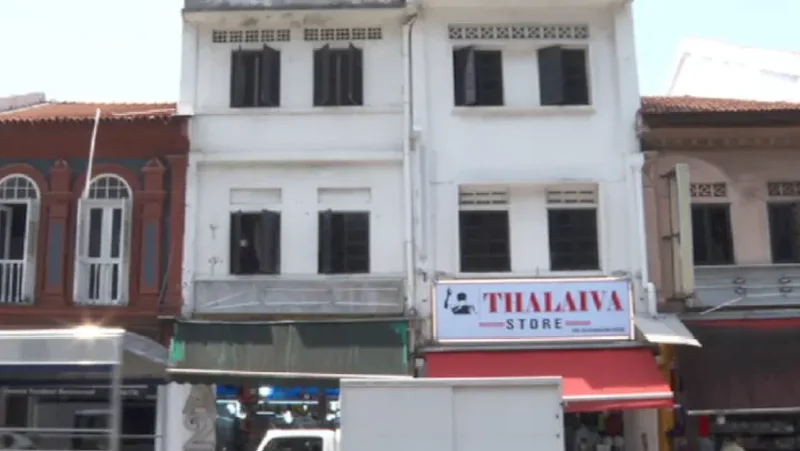
SINGAPORE: From the outside, a white shophouse along Serangoon Road looks like any other in the bustling Little India area.
But behind its facade, its second and third floors had been converted into an illegal dormitory.
When authorities conducted a surprise inspection in 2024, they found 10 rooms containing 36 bed spaces, with 37 people living across the two floors.
People working in the area told CNA that they had noticed people frequently entering and leaving the building, typically heading out early in the morning and returning at night.
There were signs that those behind the operation had tried not to attract attention.
Court documents showed that bedframes and washing machines were brought into the property through a rear entrance to avoid detection.
The offender was fined S$90,000 (US$70,500) for converting the shophouse unit into what the Urban Redevelopment Authority (URA) classifies as unauthorised dormitory accommodation.
Such suspected cases rose to 544 last year from 534 in 2024. In the first five months of this year, URA investigated 278 suspected cases.
Separately, suspected short-term accommodation cases also rose from 200 in 2024 to 219 last year. From January to May this year, 58 such cases were investigated.
MOVING AWAY FROM TRADITIONAL PLATFORMS
Yet, illegal accommodation offers continue to surface online.
CNA found listings on e-commerce platform Carousell offering stays in residential properties for periods as short as one month – below the minimum three-month stay required for private residential properties in Singapore.
Such arrangements are becoming harder to spot as those involved have changed how they advertise them, said one property and facilities management firm.
Previously, property managers would log into accommodation-related platforms such as Airbnb to see if there were posts regarding the estate, said Mr Frank Ng, managing director of property and facilities management firm Unity FM.
“But nowadays you seldom see that. The vendors are going for social media and some even post on social media not commonly used in Singapore,” he said.
Carousell said it investigates listings when it receives a report or identifies a possible unlawful transaction. It takes action when necessary, including removing listings.
SPOTTING ILLEGAL STAYS
Detection can become more difficult once occupants are already living in a residential development.
People staying in a unit may have access cards just like legitimate residents, while surveillance cameras alone may not be enough to establish if someone is living there illegally.
Property managers therefore keep a lookout for patterns of unusual behaviour, said Mr Ng.
“Some will appear to be a bit confused … they don't know where to go. They ask for directions, so I would say all these are tell-tale signs,” he said.
But tackling illegal accommodation requires cooperation among various parties, said Professor Sing Tien Foo, provost's chair professor of real estate at the National University of Singapore’s (NUS) Business School.
“On one hand, regulators need to impose stricter enforcement. On the other hand, you also need somebody on the ground to actually be able to identify and to report to some of these cases,” he said.
WHAT COUNTS AS AN ILLEGAL SHORT-TERM RENTAL
Private residential properties in Singapore, including condominiums, apartments and landed homes, cannot be rented out for stays of less than three consecutive months.
For HDB flats, the minimum subletting period is six months.
Authorities say residential properties are intended for long-term residence and that frequent turnover of short-term visitors could affect the safety, privacy and security of residents, and change the character of neighbourhoods.
Allowing such stays could encourage more properties to be used as short-term rentals, said Prof Sing.
“I think there will be some possible speculative kind of activity (that could) push up some of the prices in some of these popular locations,” he added.
SHORT-TERM STAYS PREVIOUSLY EXPLORED
In 2018, URA explored whether short-term stays in private homes could be allowed under a new regulatory framework.
Among the ideas considered were requiring approval from 80 per cent of owners in a condominium and capping short-term rentals at 90 days a year.
Citing an “impasse” over the proposed rules between home-sharing platform operators and private homeowners who raised concerns when surveyed by the authorities, URA said in 2019 that it would not proceed with the regulations.
Singapore is not alone in restricting short-term rentals.
In Hong Kong, accommodation for periods shorter than 28 consecutive days generally requires a hotel or a guesthouse licence.
Japan allows private lodging under its minpaku – or private lodging services – framework but generally limits such accommodation to 180 days a year.
Barcelona has taken a more restrictive approach, announcing plans not to renew the licences of more than 10,000 tourist apartments after they expire in 2028. The move is aimed at curbing rising housing costs and improving access to housing for residents.