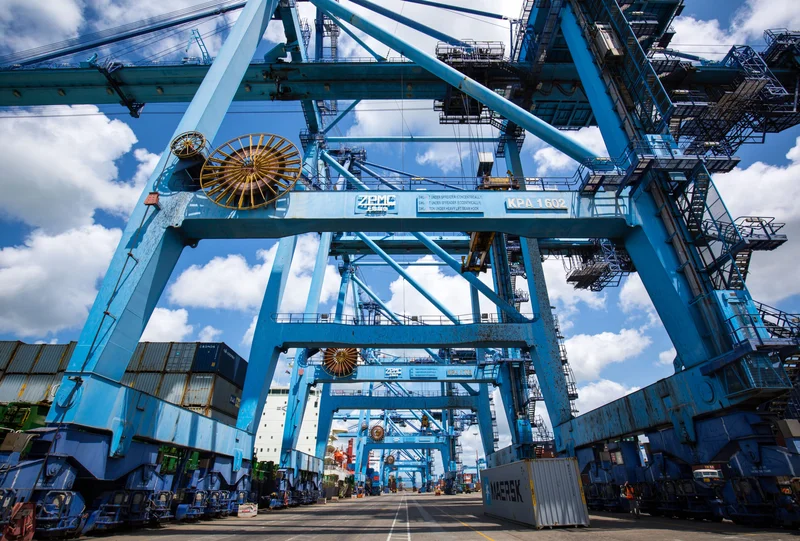
Payment Failures at Ghana’s Ports Are Driving Up Import Costs
Ghana · TRADE
Key Facts
- Weekly demurrageThe Ghana Institute of Freight Forwarders estimates GH¢30 million in weekly demurrage paid to shipping lines at Ghana’s ports.
- ECG container caseAn investigative report found 2,500 containers procured by the Electricity Company of Ghana left uncleared at Tema accumulated demurrage estimated at over GH¢1.0 billion.
- Fuel import relianceAround 80% of Ghana’s national fuel imports are discharged at a single-point mooring facility offshore.
- Fuel demurrage costBulk oil distribution companies incurred over US$44 million in demurrage in the first half of one recent year, adding GH¢0.47 to GH¢0.60 per litre at the pump.
- Discharge monopolyOne private operator holds exclusive discharge rights at the single-point mooring, charging about US$8 per metric tonne versus a regional average of US$5 per tonne.
- 24-hour reformA new policy mandates fuel terminals to operate around the clock, aiming to shrink the discharge window from 72 hours to 48 hours.
The digital promise collides with banking reality
Ghana.gov is the official digital portal for government services and payments, designed as a single window for citizens and businesses to pay taxes, fees, licences and permits online. It plugs into the broader e-payments ecosystem overseen by the Bank of Ghana, including bank transfers, mobile money and payment service providers.
The Bank of Ghana’s 2024 payment systems oversight report describes Ghana’s payment landscape as buoyant and robust in 2024, crediting fintech and regulatory initiatives in digital finance. Yet government agencies have experienced technical challenges with external payment service providers, leading to delays in acknowledging payments and processing services.
A 2024 notice from the Lands Commission explicitly flagged technical challenges with its external payment service provider, interrupting issuance of electronic receipts before being resolved. The same underlying risk applies across the system: digitisation efforts depend on third-party payment gateways and stable connectivity, and outages can freeze the bureaucracy even when customers have paid.
Banking bottlenecks at Tema Port
Even before the recent wave of digital reforms, banks were a chokepoint at Ghana’s ports. At Tema Port, freight forwarders publicly protested in 2020 when banks that collect duties, including GCB Bank and Ecobank, closed satellite branches and operated with limited staff.
This forced importers into long queues at the remaining branches in the long room, slowing duty payments and undermining social distancing. Customs officials labelled the situation unfortunate and said they were seeking solutions so revenue mobilisation would not suffer.
The brick-and-mortar constraint matters because Ghana.gov and other portals often end at a bank counter. If the bank is understaffed, offline or refusing certain payment modes, the theoretical efficiency of the digital system evaporates.
System outages and foreign exchange games
The Integrated Customs Management System, known as ICUMS, is central to customs and logistics but suffers frequent outages that can bring operations to a standstill. When ICUMS or connected systems go down, cargo transfers between terminals stall and clearance documents cannot be processed, generating demurrage and storage charges.
The Ghana Revenue Authority has had to reimburse entities wrongfully charged the electronic transfer levy after internet connectivity interruptions disrupted real-time routing of transactions. Beyond operational glitches, shipping lines have been applying their own foreign exchange rates instead of the official Bank of Ghana rate, creating hidden costs and making accurate budgeting nearly impossible.
Business leaders in Tema describe this as highway robbery in slow motion. Importers are penalised not just by state taxes and bank charges but by discretionary foreign exchange mark-ups in the logistics chain.
Demurrage losses and the fuel supply risk
The Ghana Institute of Freight Forwarders estimates GH¢30 million in weekly demurrage paid to shipping lines at Ghana’s ports. Documents can sit for weeks at regulatory agencies like the Environmental Protection Agency or Ghana Standards Authority while importers accumulate demurrage and port rent.
Over a full year, GH¢30 million per week implies well over GH¢1.5 billion in annual demurrage, most of it ultimately passed into consumer prices. One high-profile case illustrates the scale: an investigative report into the Electricity Company of Ghana found that 2,500 containers of materials procured by the utility and left uncleared at Tema had accumulated demurrage estimated at over GH¢1.0 billion.
Demurrage is even more sensitive in Ghana’s fuel supply chain. Ghana relies heavily on imports of refined petroleum products, with around 80% of national fuel imports discharged at a single-point mooring facility offshore.
Bulk oil distribution companies incurred over US$44 million in demurrage in the first half of one recent year alone, translating into an extra GH¢0.47 to GH¢0.60 per litre at the pump. The exclusive discharge rights of one private operator at the single-point mooring have created a monopoly, enabling discharge fees of about US$8 per metric tonne compared to a regional average of US$5 per tonne.
Reform attempts and the 24-hour economy push
Government and industry actors are not blind to these problems. The presidency has introduced a more transparent, rules-based system for allocating laycan and scheduling fuel vessel discharges at the single-point mooring, replacing discretionary practices that created bottlenecks and disputes.
Changes to vessel schedules now require approval by a Cabinet sub-committee on energy security, limiting unilateral decisions by regulators or ministry officials. Under a broader 24-hour economy policy, fuel terminals are mandated to operate around the clock; previously, discharge operations ceased after 2 pm, forcing bulk oil distribution companies to pay overtime to depot and regulatory staff.
The new framework aims to shrink the discharge window from 72 hours to 48 hours, improving vessel turnaround and reducing demurrage. The Ghana Institute of Freight Forwarders explicitly calls a true 24-hour regime the surest way to reduce demurrage that has become a major bane for importers.
Who controls Ghana’s gateways to global trade
Several Ghanaian actors hold leverage in this ecosystem. Regulatory agencies including Customs, the Environmental Protection Agency, the Ghana Standards Authority, the National Petroleum Authority and the Ministry of Energy control the clearance and discharge permissions that determine whether demurrage accrues.
Banks and payment service providers mediate access to Ghana.gov and customs systems, and their staffing decisions, connectivity and risk policies can slow or accelerate transactions. Port operators and private terminal owners exercise pricing power via exclusive rights and control over physical infrastructure.
Shipping lines and logistics multinationals set foreign exchange conversion practices, demurrage rules and contractual terms, often from a position of global leverage. In practice, delays often stem from regulatory bottlenecks and system outages, while the financial penalties flow to shipping lines and infrastructure operators.
Ghana’s port and fuel story is embedded in a wider geopolitical context. Demurrage costs are denominated largely in US dollars, tying Ghana’s logistics performance directly to its foreign exchange reserves and the international financial system, a dynamic explored in Africa: The New Scramble.
Where the demurrage figure comes from
The GH¢909 million demurrage figure widely quoted this week comes from an investigative article rather than from an audited public account.
The same piece reports that 2,491 containers of electrical equipment were logged as arriving, while a physical recount found 1,134.
We could not find a Ghana Ports and Harbours Authority circular, an Auditor-General report or a utility financial statement carrying that number.
Treat it as a serious allegation under investigation, not as a settled figure.
Frequently Asked Questions
How much demurrage do Ghanaian importers pay each week?
The Ghana Institute of Freight Forwarders estimates GH¢30 million in weekly demurrage paid to shipping lines at Ghana’s ports.
Why does Ghana.gov contribute to port delays?
Ghana.gov depends on third-party payment gateways and stable connectivity, and outages or glitches can freeze the bureaucracy even when customers have paid, feeding port congestion and demurrage.
How does demurrage affect fuel prices in Ghana?
Bulk oil distribution companies incurred over US$44 million in demurrage in the first half of one recent year, translating into an extra GH¢0.47 to GH¢0.60 per litre at the pump.
Sources
This article was produced by The Rio Times’ automated newsroom system. How we use AI · Report an error
LatAm Markets: Live Signals → — real-time movers, turnover leaders and FX across Latin America.