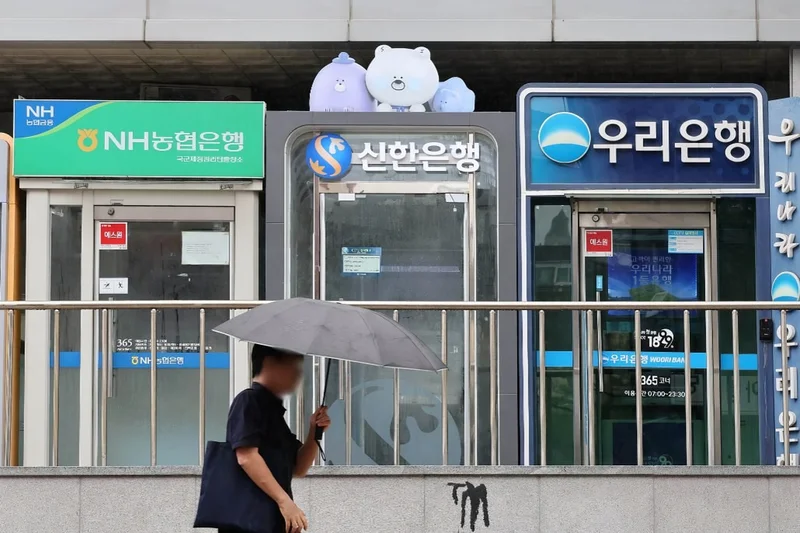
Financial companies are pushing back against plans to raise deposit insurance fees, warning that a steep increase could put an excessive burden on the industry and ultimately be passed on to customers, industry officials said Thursday.
The Korea Deposit Insurance Corporation (KDIC) is currently considering higher deposit insurance rates across financial sectors, which would mark the first increase since 2009.
The move follows the government’s decision last September to double the deposit protection limit from 50 million won ($36,000) to 100 million won.
The KDIC, which collects fees from financial companies to build a fund used to reimburse depositors when institutions fail, says the industry should shoulder more of the cost as the number of failed financial companies — including dozens of savings banks and MG Non-Life Insurance — has grown over the years.
The scale of the proposed increase, however, has become a sticking point.
A recent study commissioned by the KDIC estimated that the deposit insurance rate for banks should rise to 0.13 percent of eligible deposit balance from the current 0.08 percent. Based on the roughly 1.46 trillion won banks paid last year, the higher rate would add about 912 billion won to their annual bill.
The country’s five largest banks — KB Kookmin, Shinhan, Hana, Woori and NH NongHyup — account for about 70 percent of the sector’s total payments. On a simple calculation, that would mean roughly 120 billion won in additional annual costs for each bank.
“Representatives from the banking industry met with the KDIC on Aug. 11 and conveyed their view that the rates proposed in the study were quite high,” an official at one of the five major banks said. “Once a final proposal is drawn up and the specific rates and direction are set, we will begin considering practical measures.”
Insurers are facing even steeper increases.
Non-life and life insurers currently pay the same 0.15 percent rate. Under the proposal, that would rise to 0.5 percent for non-life insurers and 0.4 percent for life insurers — more than tripling the rate for non-life insurers.
The increase could also weigh on insurers’ future earnings, as reflected in their contractual service margin (CSM). Applying the proposed rates to last year’s figures would cut the industry’s CSM by more than 30 trillion won, according to industry estimates.
“The rates have not been finalized, but the industry views the proposed increases as excessive and hopes they can be adjusted to a reasonable level,” an official at a major non-life insurer said.
Industry officials are also concerned that higher fees could ultimately come at consumers’ expense. Banks could seek to offset the additional costs by scaling back preferential interest rates or fee waivers, while insurers could raise premiums.
Financial authorities and the KDIC stressed that the rates currently under discussion are not final. They plan to consult with each sector before drawing up a final proposal by the end of the year, with the new rates scheduled to take effect in 2028.
Explore More
- Q.
- Q.
- Q.