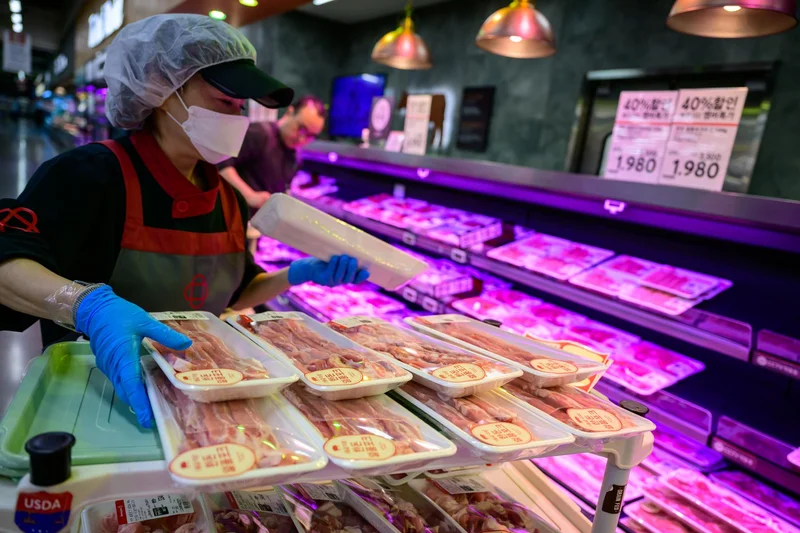
Homeplus still faces additional financing needs to service its massive debt obligations and sustain its long-term rehabilitation after resuming normal operations last week with a 200 billion won ($143 million) emergency credit line, industry officials said Thursday.
According to the company’s second revised rehabilitation plan, the retailer, which was pushed to the brink of bankruptcy, plans to raise a total of 1.42 trillion won by selling 23 company-owned stores by 2028. However, even liquidating a large portion of its store portfolio will not be enough to cover its funding needs throughout the rehabilitation period.
The firm faces a key test in February 2030, when 812 billion won in administrative claims will come due, including 398 billion won in supplier payments and 100 billion won in unpaid rent.
Homeplus plans to cover the shortfall by taking out 592 billion won in new loans collateralized by its remaining property assets.
To secure bank financing, Homeplus must engineer a dramatic financial turnaround. The company projects an operating loss of 10.3 billion won on revenue of 3.38 trillion won for the fiscal year ending February 2028. In contrast, it projects revenue to grow 22 percent to 4.12 trillion won the following year, with operating profit swinging back into the black at 124.2 billion won.
This means Homeplus must boost its annual revenue by about 743.9 billion won and improve its operating result by around 134.5 billion won within a single year.
The funding pressure will not end there. Homeplus is set to face another major financing requirement toward the end of its rehabilitation program, with repayments of ordinary rehabilitation claims, including card-related claims and trade receivables, scheduled to begin in 2032.
In 2037, the final year of the plan, the retailer expects to refinance 914.3 billion won to cover its remaining debt repayments and other obligations.
It believes the borrowing plan is viable, projecting operating profit of 218.2 billion won in 2037. It has applied a threefold interest coverage ratio, assuming that interest payments will not exceed one-third of operating profit, along with an assumed interest rate of 7 percent. Under these assumptions, the retailer estimates that it could raise up to 1.04 trillion won in additional financing.
“With losses expected to persist through 2028, the critical challenge for Homeplus is whether it can rapidly expand revenue and convince financial institutions to back its long-term refinancing,” an industry source familiar with the matter said.
Homeplus has been under court-led rehabilitation proceedings since March 4 last year.
The Seoul Bankruptcy Court has scheduled a creditors’ meeting for Sept. 2 to review and vote on the retailer’s revised rehabilitation plan, two days before the Sept. 4 deadline for the court to approve the plan.
Initial sales figures following the reopening of the stores brought some short-term relief.
Homeplus reported total sales of 43.7 billion won during the first five days of its reopening, from Aug. 13-17, up 191 percent from the five-day period preceding its temporary operational halt in early July. Average daily foot traffic rose 74 percent to nearly 240,000 visitors.
“The increase in sales and steady customer foot traffic following the reopening provide positive signs of normalization,” a Homeplus official said.
Explore More
- Q.
- Q.
- Q.