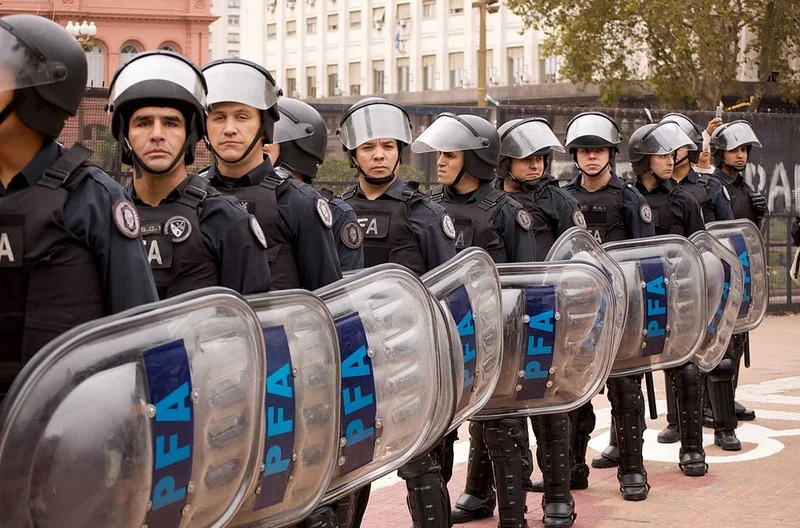
Argentina’s Security Minister Says Suicides in the Forces Rose 30%, and Blames Debt
Argentina · Society
Key Facts
- The figureSuicides in Argentina’s federal security forces rose 30% in 2025 compared with 2024.
- Who said itAlejandra Monteoliva, the national security minister, on Radio Mitre in Buenos Aires on Wednesday 19 August.
- Which forcesThe federal services under her ministry: the police, the gendarmerie and the naval prefecture.
- The reasons she gaveMental health difficulties combined with indebtedness.
- The wider contextReporting around her remarks pointed to household debt, low salaries and delayed pay as aggravating factors.
- Why it landed hardA serving minister linking deaths in her own forces to their pay is unusual, and the remarks drew immediate controversy.
- What is missingNo published breakdown by force, rank or region has accompanied the figure.
A government minister put a number on something the forces had discussed quietly for years, and then named the reason.
Alejandra Monteoliva was on the radio in Buenos Aires on Wednesday morning when she said something ministers do not usually say out loud. Argentina security forces suicides rose by 30% last year against the year before — and part of the reason, she said, is that the people in those uniforms are in debt.
What the minister said about Argentina security forces suicides
Monteoliva, Argentina’s national security minister, gave the figure in an interview on Radio Mitre on Wednesday 19 August. The 30% increase covers 2025 against 2024, and applies to the federal forces under her ministry: the Policía Federal, the Gendarmería and the Prefectura Naval.
She attributed the rise to a combination of mental health difficulties and indebtedness. Coverage of the remarks placed that alongside low salaries and delayed payment of income — conditions that have been raised repeatedly by police associations over the past two years.
The remarks generated immediate controversy, which is worth understanding precisely. The dispute was not really about whether the number is accurate. It was about a minister describing the economic condition of her own personnel as a contributing cause of their deaths, in a government whose central project is fiscal compression.
What we do not know
A percentage without a base is difficult to read. No breakdown accompanied the statement: not by force, not by rank, not by region, and no absolute figures. A 30% rise on a small base and a 30% rise on a large one are very different problems, and only one of them can be managed with a helpline.
Nor is there published detail on what the ministry intends to do. Argentina’s security forces have occupational health provision, but the scale and reach of it varies sharply between the federal services and the provincial police, who are not covered by this figure at all.
That gap matters, because the provincial forces are much larger in aggregate. Whatever is happening federally is unlikely to stop at a jurisdictional boundary.
The economics behind it
The debt point is the part that connects to everything else in Argentine life right now. Household indebtedness has risen sharply as real wages have lagged, and consumer credit has filled the gap between what people earn and what they need. That is true of a gendarme in the same way it is true of a teacher or a bus driver.
For state employees there is a specific twist: pay is set administratively and adjusted late. When inflation moves faster than the adjustment, the shortfall is bridged with credit, and the credit is expensive. Argentina’s private investment has fallen for eight consecutive months on one widely followed index, and salaried households have been absorbing the difference.
None of that makes an economic explanation a complete one. Suicide is never reducible to a single cause, and researchers are consistently cautious about attributing it to any one factor. But a minister naming financial precarity as a contributor to deaths inside her own institution is a data point about the state of the Argentine public payroll, and it was heard that way.
Why this matters if you live in Argentina
The practical read for residents is about capacity. Forces under this kind of internal strain do not perform at full strength, and Argentina is asking a great deal of its federal services at the moment — on borders, on protest policing, on organised crime in Rosario.
The broader read is about the cost of adjustment. Argentina’s fiscal turnaround is real and has been achieved quickly. Statements like this one are the ledger’s other column, and they are now being read into the record by the government’s own ministers.
This is a difficult subject. If any of it is close to home, support is available in Argentina and in most countries in the region, and it is worth talking to someone you trust or to a professional.
Frequently Asked Questions
What did Argentina’s security minister say about suicides in the forces?
Alejandra Monteoliva said that suicides in Argentina’s federal security forces rose 30% in 2025 compared with 2024. She made the remarks on Radio Mitre in Buenos Aires on Wednesday 19 August 2026, attributing the rise to a combination of mental health difficulties and indebtedness.
Which forces does the figure cover?
The federal services under the national security ministry — the Policía Federal, the Gendarmería Nacional and the Prefectura Naval. Provincial police forces, which are much larger in aggregate, are not included in the figure.
Has the ministry published the underlying numbers?
No. The 30% figure was given without absolute numbers or any breakdown by force, rank or region, and no accompanying plan has been published. That makes the scale of the problem difficult to assess from the outside.
Why were the remarks controversial?
Not principally because the figure was disputed, but because a serving minister publicly linked deaths among her own personnel to their financial condition — debt, low salaries and delayed pay — in a government whose central policy is fiscal compression.
Connected Coverage
Sources: Clarín — the security minister on suicides in the forces; Página/12 — Monteoliva admits suicides rose in the security forces
This article was produced by The Rio Times’ automated newsroom system. How we use AI · Report an error