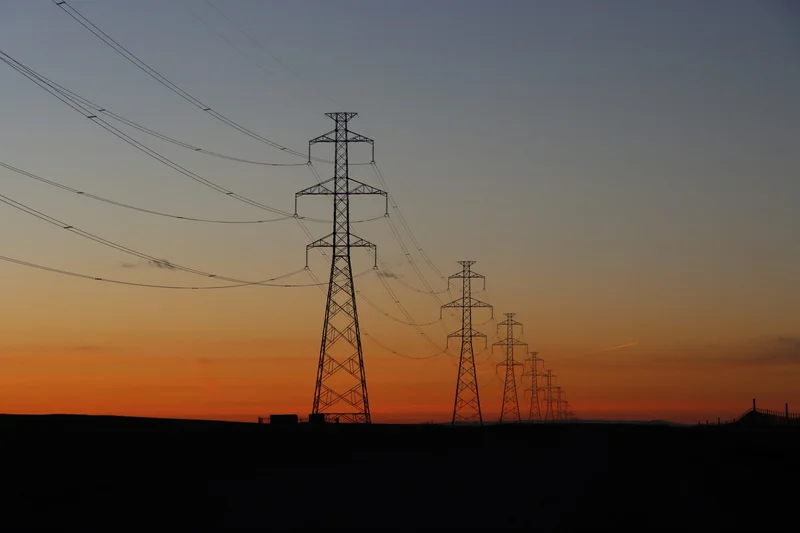
A Critically Endangered Frog Just Stopped a Chile-Argentina Power Line
Chile · Energy
Key Facts
- The decisionMaule’s environmental evaluation commission rejected Enel’s Los Cóndores–Río Diamante line on Tuesday 12 August.
- What it wasA 500-kilovolt link toward the Argentine border: 26.7 kilometres on the Chilean side, 76 towers, about US$36 million.
- The frogAlsodes pehuenche, the Pehuenche spiny-chest frog, listed as critically endangered and found only in cold streams of the Alto Maule.
- The campaignLeonardo DiCaprio publicised the case in early August, and an evaluation session was suspended before the final vote.
- The reasons givenRegulators cited unresolved effects on biodiversity, protected assets, landscape and tourism.
- What it is notThis was one segment, not the whole Chile-Argentina interconnection. The wider project has not been cancelled.
- What happens nowWithout environmental approval the segment cannot be built. Enel has not published a next step.
Twenty-six kilometres of high-voltage cable lost to an amphibian that lives in one Andean valley and nowhere else on earth.
On 12 August a regional commission in central Chile voted down a Chile Argentina power line, and the animal at the centre of the argument weighs about as much as a slice of bread. Alsodes pehuenche lives in a handful of cold Andean streams in the Alto Maule and nowhere else in the world. It is listed as critically endangered. Enel’s transmission line would have run through its valley.
What the Chile Argentina power line was, and what it was not
The project is called Los Cóndores–Río Diamante. On the Chilean side it is 26.7 kilometres of 500-kilovolt line carried on 76 towers, running from the Los Cóndores area toward the Argentine frontier, at a cost of roughly US$36 million.
It is worth being precise about scale, because the headlines have not been. This is a segment. A full Chile-Argentina electricity interconnection is a much larger undertaking involving both governments, and it has not been cancelled — what has been refused is environmental permission for one stretch of line on the Chilean side of the mountains.
The Comisión de Evaluación Ambiental of the Maule region took the decision on Tuesday 12 August. Accounts of the tally differ: regional coverage reported six public services voting against and one in favour, while a television report put it at nine to two. What is not in dispute is the outcome.
The stated reasons were unresolved discrepancies about the project’s effects on biodiversity, on protected assets, on the landscape and on tourism in the Alto Maule.
The frog
Alsodes pehuenche is a microendemic species, which is the technical way of saying it lives in one small place and would vanish if that place changed. Its range is the cold mountain streams of the Pehuenche valley in the high Maule, along the Chile-Argentina border, around Valle de los Cóndores, Campanario and the Laguna del Maule.
The IUCN lists it as critically endangered, the last category before extinct in the wild. There is no second population somewhere else to fall back on.
In early August Leonardo DiCaprio drew international attention to the case, and an evaluation session was suspended in the days that followed. He did not decide the outcome — a regional commission of public services did — but the case went from a local permitting file to a story in the international press in about a week.
The argument on the other side
The case for the line is energy security. Chile and Argentina have complementary power systems: Argentina has gas, Chile has solar and wind, and the two peak at different times. A physical link lets each cover the other’s shortfalls instead of firing up expensive backup generation.
That argument is not frivolous. Chile has spent a decade worrying about how to keep the lights on in a long, thin country with limited interconnection, and cross-border links are one of the few structural answers available.
But the argument arrived, as it usually does, in the form of a specific route through a specific valley. Regulators are not asked whether interconnection is a good idea in principle. They are asked whether this line, in this place, has resolved its environmental questions. The commission decided it had not.
Why this matters if you live in Latin America
Chile’s environmental permitting system, the SEIA, is one of the more consequential institutions in the region for anyone investing here. It is regional, it is technical, and it can stop a project that has political backing at national level. Investors who treat permits as a formality lose money in Chile with some regularity.
The second lesson is about the shape of modern opposition. A critically endangered frog in an Andean valley is not, on its own, a national political force. Attached to an international celebrity and a fortnight of coverage, it became one. Any energy or mining project in the region should expect that its most difficult stakeholder may turn out to be a species most people had never heard of.
And for the wider energy question, nothing is solved. Chile still wants the interconnection. Argentina still has the gas. The route just got harder.
Frequently Asked Questions
What is the Chile Argentina power line that was rejected?
It is the Los Cóndores–Río Diamante project, an Enel transmission line running toward the Argentine border through the Maule region. On the Chilean side it covers 26.7 kilometres at 500 kilovolts, carried on 76 towers, at an investment of about US$36 million. It is one segment of a larger interconnection idea, not the whole thing.
Who rejected it and when?
The Comisión de Evaluación Ambiental of Chile’s Maule region rejected it on Tuesday 12 August 2026. Reported vote counts differ between outlets. The reasons given were unresolved effects on biodiversity, protected assets, landscape and tourism in the Alto Maule.
What is the Pehuenche frog?
Alsodes pehuenche, the Pehuenche spiny-chest frog, is a microendemic amphibian that lives only in cold mountain streams of the Pehuenche valley in the high Maule, on the Chile-Argentina border. The IUCN lists it as critically endangered, the last category before extinct in the wild.
Does this cancel the Chile-Argentina interconnection?
No. What was refused is environmental approval for one stretch of line on the Chilean side. A full interconnection between the two countries is a larger, government-level project that has not been cancelled. Without environmental approval, however, this particular segment cannot be built as proposed.
Connected Coverage
Sources: Diario El Centro — the environmental commission rejects the Alto Maule electricity project; BioBioChile — Maule commission rejects the project denounced by DiCaprio; El País — DiCaprio joins the fight to save an endangered Chilean frog
This article was produced by The Rio Times’ automated newsroom system. How we use AI · Report an error