South Korean Rocket Destroyed Minutes After Leaving Brazil
Brazil · SPACE
Key Facts
- RocketSebit, on its first test flight.
- OperatorInnospace, a South Korean space startup.
- Sitethe Alcântara Space Center, Maranhão state, Brazil.
- Date19 August 2026.
- Outcomeflight terminated after a trajectory deviation; no casualties.
A rocket built by the South Korean company Innospace lifted off from the Alcântara Space Center on 19 August 2026. It strayed from its planned path and was destroyed.
What happened
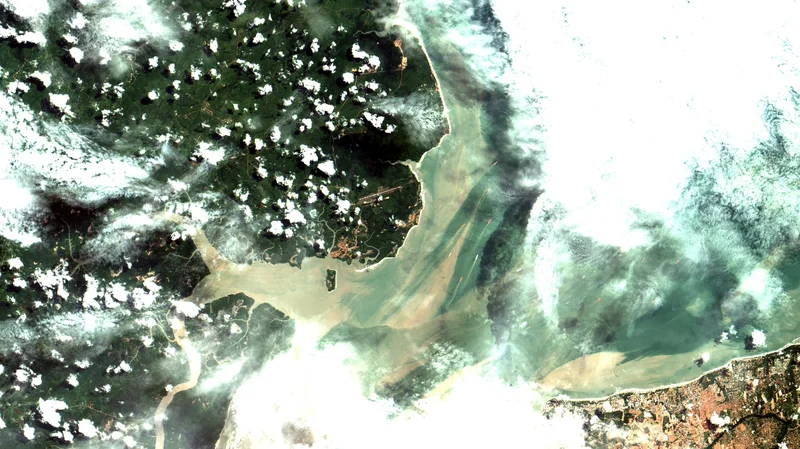
The rocket, named Sebit, lifted off from the Alcântara Space Center on Brazil’s northern coast. It was the vehicle’s first test flight.
Shortly after launch it deviated from its planned trajectory. The Brazilian Air Force terminated the flight.
The rocket fell inside a designated maritime safety zone off the Brazilian coast. No casualties and no damage to facilities were reported.
Several independent outlets described the same sequence and the same date.
Innospace is the clearest attribution in the record for the vehicle itself. The termination decision was the Air Force’s.
Reports of the event were published on 20 August 2026.
The wording matters
Saying the rocket fell into the sea is accurate but incomplete. It fell there because the flight was deliberately ended.
Range safety officers destroy a vehicle that leaves its corridor. That is the system working, not an additional failure.
The maritime safety zone exists precisely for this. It is cleared of shipping before every launch.
Innospace has not published a technical cause for the deviation.
Flight termination systems are built into launch vehicles for exactly this purpose. They are armed before every launch.
A vehicle that leaves its corridor over populated land is a public safety problem. Over water it is a contained one.
Who Innospace is
Innospace is a South Korean space startup founded in the late 2010s. It builds small launch vehicles aimed at the smallsat market.
The company has a longer history with Alcântara than this flight suggests. It has been working towards a Brazilian launch campaign for several years.
A first flight failing is common in this industry. Most small launch companies lose their first vehicle.
What matters commercially is how quickly Innospace can fly again.
The company is one of several South Korean firms pursuing commercial launch. South Korea has been building a private space sector for about a decade.
Innospace has not commented publicly on what a second attempt would cost.
Why Brazil, and why Alcântara
Alcântara sits at about two degrees south of the equator, in Maranhão state. That is closer to the equator than almost any other launch site on earth.
A rocket launched near the equator gets extra speed from the planet’s rotation. That translates directly into payload.
For a small launcher, the difference can be the whole business case. It is why foreign operators want access.
The site is run by the Brazilian Air Force, which is why the Air Force terminated the flight.
Kourou in French Guiana holds a similar advantage and has used it for decades. Alcântara has never converted its geography into steady traffic.
The Air Force operates the range, controls access and makes safety calls. Innospace is a tenant, not an operator.
What Brazil gets out of it
Brazil has spent decades trying to turn Alcântara into a commercial spaceport. Progress has been slow and politically complicated.
Hosting foreign launches brings fees, jobs in Maranhão and technical exposure. It does not by itself make Brazil a space power.
The country’s own launcher programme has had a difficult history, including a fatal accident at the site in 2003. Commercial hosting has always been the more realistic path.
This failure is a setback for Innospace rather than for Brazil.
Brazil signed a technological safeguards agreement with the United States in 2019. That opened the site to vehicles containing American components.
Since then a handful of foreign campaigns have been announced. Few have flown.
What we do not know
There is no published technical cause. Innospace has not said whether the problem was in guidance, propulsion or structure.
There is no announced date for a second attempt. Nor has any cost figure been made public.
The Brazilian Air Force has not issued a detailed incident report. That would normally follow within weeks.
We will update this piece when either party publishes findings.
We asked no one and are not pretending otherwise. This account rests on published reports from 20 August 2026.
An Innospace statement would be the first useful new source.
Environmental questions
Debris that lands in a maritime safety zone is not usually recovered. The area is deep water well offshore.
Neither the operator nor the Brazilian authorities have commented on residual propellant. Small launchers generally carry a few tonnes of it.
Local communities around Alcântara have long-standing land disputes with the base. Those are unrelated to this flight but they shape how it is received.
No environmental agency statement had been issued at the time of writing.
Launch failures over water are routine in the industry. That does not make the debris disappear.
The safety zone is charted and notified to mariners in advance.
Why this is worth following
If Innospace returns and succeeds, Alcântara becomes a working commercial spaceport with a repeat customer. That changes the economics of the site.
If it does not return, Brazil is back to looking for anchor tenants. It has been in that position before.
For residents of Maranhão, one of Brazil’s poorest states, the difference is measured in jobs. For everyone else it is a question of whether the country can host an industry.
The next launch attempt is the thing to watch.
Small launch is a crowded and unforgiving market. Companies that lose a vehicle and cannot fly again within a year rarely recover.
Innospace has not said which it will be.
Frequently Asked Questions
What was the rocket called?
Sebit, built by the South Korean startup Innospace. It was on its first test flight.
Was anyone hurt?
No. The rocket fell within a designated maritime safety zone, and no casualties or facility damage were reported.
Why was it destroyed?
It deviated from its planned trajectory after launch, and the Brazilian Air Force terminated the flight. That is standard range safety practice.
Where is Alcântara?
In Maranhão state on Brazil’s northern coast, about two degrees south of the equator. The proximity to the equator gives launches a performance advantage.
Will Innospace try again?
No date has been announced, and no technical cause has been published.
Sources
This article was produced by The Rio Times’ automated newsroom system. How we use AI · Report an error