Meta under fire for 'delayed' takedown of Zamboanga school shooting videos
MANILA, Philippines — Cybercrime officials alerted Meta within five minutes of the live-streamed school shooting in Zamboanga City on Tuesday, but Facebook allowed the video to broadcast for nearly ten more minutes before taking it down.
This is according to Cybercrime Investigation and Coordinating Center (CICC) Executive Director Renato Paraiso, who said at a Senate hearing Thursday, August 20, that neither the CICC nor any government agency can immediately compel a platform to remove content.
"That's the problem. First is the jurisdiction. We don't have jurisdiction over these platforms," Paraiso said at a hearing by the Senate women and children committee on the incident.
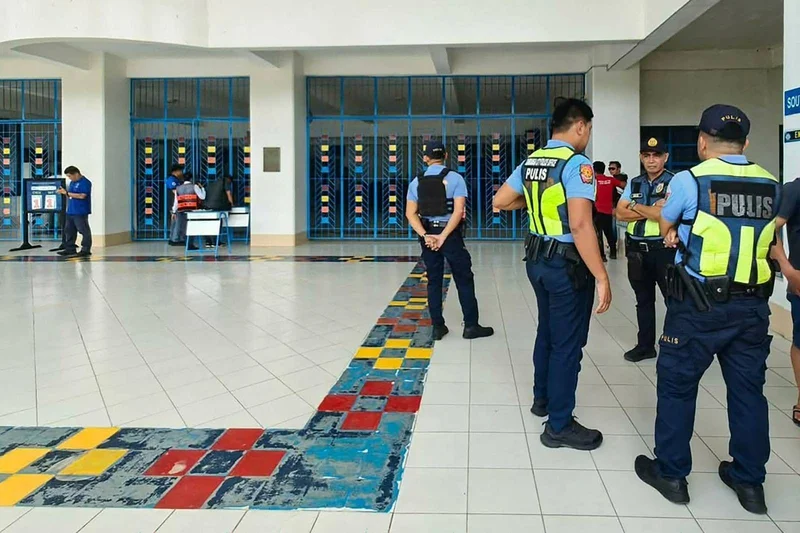
A Grade 8 student opened fire at his schoolmates at the Ateneo de Zamboanga University junior high school campus on Monday, killing at least one student, before turning the gun on himself.
Police said he wore a body camera and streamed the attack on Facebook.
It was the country's second fatal school shooting in two months after the deadly shooting at San Jose National High School in Tacloban City in June. Both incidents saw the student gunmen using service firearms swiped from police relatives or a parent in law enforcement.
"We heard the shooting was live-streamed for 14 minutes before it was taken down. Doesn't CICC have the capacity to immediately flag that kind of content at the moment it was live streamed? To take it down within seconds or even minutes?" Sen. Risa Hontiveros, who chairs the committee, asked Paraiso.
"To be fair at the CICC, and to law enforcement [agencies], once we had visibility on the video we reported it to Meta," Paraiso said in mixed English and Filipino.
Paraiso said the CICC reported the livestream to Meta "around five minutes" from its posting, but could not itself automatically compel the removal of the content.
How CICC found out
Hontiveros asked Paraiso whether a member of the public had reported the livestream to the CICC's hotline.
"No, ma'am. It landed in our threat monitoring center because it really went viral," Paraiso said.
This alarmed Hontiveros, who said: "We need to figure out how to stop it from spreading before it goes viral ... It's not just the actual violent incident. It's the harm created because that kind of content spread."
Meta's automated systems would not have caught the stream either, Paraiso said. He explained that the company's AI-supported detection tools sweep its platforms for content matching certain parameters, which are often a "hit or miss."
In this case, Paraiso believes Meta has no accurate parameters that would automatically detect a live-streamed attack at a school.
"AI cannot analyze a video in real time with regard to context," he said. "A video comes out and it won't know that it is actually a school shooting video."
He said the system can be over-restrictive in other areas. For instance, the government's campaign against illegal online gambling has led to the removal of non-gambling content.
In requesting Meta's takedown of the video, Paraiso said CICC invoked the platform's own rules and community standards against sensitive material given the country's lack of jurisdiction over Facebook and other platforms.
"I'd like to be honest here ... This might be one of the gaps in our laws and in our legislation," Paraiso said, which Hontiveros agreed the Senate committee would try to correct.
Besides Facebook, Paraiso shared that the incident was also streamed on a different website created for the purpose of sharing violent incidents. Philstar.com is withholding the name of the website, which Paraiso mentioned at the public hearing.
The CICC has recommended blocking the website in the Philippines. But this action would only have a limited effect, he explained.
"The website's following is not really on the website. That is only where the videos are streamed," Paraiso said. "But their following usually talks, discusses, maybe radicalizes on separate messaging platforms."
He asked senators to extend the CICC's jurisdiction to those messaging services, naming Telegram and Discord, platforms also flagged for hosting dangerous content at the committee's earlier hearing on nihilistic violent extremism.
Users of such platforms register without SIM verification and use aliases, he said, leaving investigators no way to link an account to a person.
"If we have jurisdiction over these platforms, we can probably get some attribution," Paraiso said. "If it is a citizen here in the Philippines, we can prosecute. And in most cases, they are foreigners — so maybe we can strengthen our partnerships and our mutual legal assistance treaties with other countries."
Despite the takedown, footage was recorded by another individual.
Removing the shooter's stream did not remove the footage from circulation, according to the CICC.
Paraiso said another individual inside the building filmed the livestream on a separate device and uploaded that recording. Because the file was connected to the shooter's account, the takedown did not include it.
"They probably knew that once you take down the original video, all those shares disappear and the link is gone," Paraiso said. "So what they did was record that particular video and upload it as if it were the original."
Upon Hontiveros' questioning, Paraiso confirmed this has been reported to the Philippine National Police's Anti-Cybercrime Group.
Still online
Midway through the hearing, Hontiveros said her staff had found footage of the shooting still live on the platform.
"Usec, we just checked and we found video still on Meta," she said.
Paraiso asked the committee to send the links to the CICC hotline, 1326, so his office could relay them to Meta and push for its removal. He appealed to the public to do the same.
"Even with the most advanced tools, we will miss things," Paraiso said. "It should be a concerted effort by everyone to keep our internet safe."
Hontiveros said, however, the burden of flagging the content was falling on the wrong party given Meta is "profiting" from such videos on its platform.
"The CICC should not be the one cleaning up Meta's mess," Hontiveros said in mixed English and Filipino. "Meta itself has to do better. They profit enormously from that platform. Clean up your rubbish. Don't leave it all to the CICC."
- Latest
- Trending