Rio’s Former Assembly Speaker Goes on Trial Over a Tipped-Off Police Raid
Brazil · Justice
Key Facts
- WhoRodrigo Bacellar, former president of Rio de Janeiro’s state assembly, the Alerj.
- What happenedThe Supreme Federal Court’s First Chamber accepted the charges in mid-August, making him a defendant.
- The chargeObstruction of a federal investigation into the Comando Vermelho. Not membership of it.
- The alleged chainA federal appeals judge, Macário Ramos Júdice Neto, is accused of leaking details of Operation Zargum.
- Where it wentProsecutors say the information reached Bacellar, who warned the former state deputy known as TH Joias.
- The consequence allegedEvidence removed and the target evading the operation before police moved.
- The political noteBacellar is described in Brazilian coverage as an ally of Senator Flávio Bolsonaro.
The allegation is not that he belonged to a gang. It is that a warning travelled from a courthouse to a target before the police arrived.
The Rodrigo Bacellar trial is about something narrower than the headlines suggest, and more troubling. Nobody is alleging that Rio de Janeiro’s former assembly speaker joined a criminal faction. The allegation is that a confidential police operation against the Comando Vermelho leaked out of a courthouse, travelled through him, and reached its target in time.
What the Rodrigo Bacellar trial is about
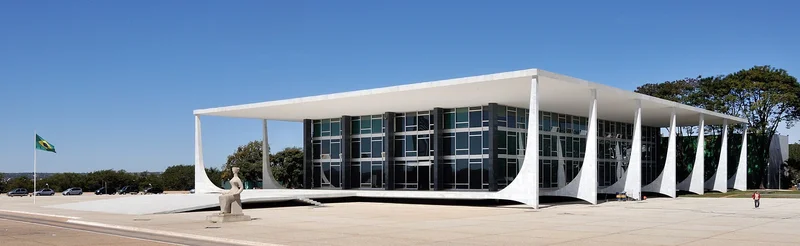
The First Chamber of Brazil’s Supreme Federal Court accepted the prosecution’s complaint in mid-August, which converts Bacellar from an investigated person into a defendant. The charge is obstruction of a criminal investigation.
According to the complaint filed by the prosecutor-general’s office, a federal appeals judge, Macário Ramos Júdice Neto, leaked confidential information about Operation Zargum — a federal operation targeting Comando Vermelho structures in Rio de Janeiro.
Prosecutors allege that information passed to Bacellar, then president of the Alerj, and from him to the former state deputy known as TH Joias, who was able to remove evidence and avoid the operation.
If that account is proved, the offence is not corruption in the ordinary sense. It is the transmission of state secrets through the political system to the people the state was moving against.
Why the distinction matters
Rio’s political scandals usually involve militias — the paramilitary groups, often built from serving and former police, that control territory and extract payments. Coverage of any Rio case tends to reach for that frame.
This is a different shape. The Comando Vermelho is a drug-trafficking faction, not a militia, and the accusation here is about a leak rather than membership or protection payments.
That matters legally, because obstruction and criminal association carry different penalties and different proof requirements. It also matters journalistically, because a case described loosely as “gang ties” is a different allegation from the one actually before the court.
The institutional problem underneath
The most serious element is the alleged first link in the chain. A leak from a legislature is a political failure. A leak from a federal appeals judge is a failure of the institution that is supposed to authorise and supervise operations of this kind.
Federal police operations against factions in Rio depend on judicial confidentiality holding for the days between authorisation and execution. If it does not hold, the operations do not work, and everyone involved knows it.
Bacellar is entitled to the presumption of innocence, and acceptance of a complaint is a decision that there is enough to hold a trial — not a finding of guilt.
Why this matters if you live in Rio
Anyone living in Rio has watched police operations in the city’s favelas produce casualties and headlines with limited durable effect on who controls what. This case offers one explanation that is rarely visible: some of those operations may have been compromised before they began.
It also lands in an election year, and Bacellar’s description in Brazilian coverage as an ally of Senator Flávio Bolsonaro guarantees the case will be read politically by everybody, whatever the evidence turns out to show.
The practical read for residents is narrower and more useful. Watch what happens to Operation Zargum’s underlying targets. That, rather than the political noise, is the measure of what the alleged leak cost.
Frequently Asked Questions
What is the Rodrigo Bacellar trial about?
Brazil’s Supreme Federal Court accepted a prosecution complaint in mid-August 2026 making Rodrigo Bacellar, the former president of Rio de Janeiro’s state assembly, a defendant on a charge of obstructing a federal investigation into the Comando Vermelho criminal faction.
Is he accused of belonging to a criminal organisation?
No. The charge is obstruction of a criminal investigation. Prosecutors allege that confidential details of Operation Zargum were leaked and reached a target in time for evidence to be removed. That is a different offence from membership of, or association with, a criminal organisation.
Who else is named?
The complaint alleges that a federal appeals judge, Macário Ramos Júdice Neto, leaked the operational information, that it passed to Bacellar, and that Bacellar warned the former state deputy known as TH Joias.
Does accepting the complaint mean he has been convicted?
No. Accepting a complaint means the court considers there is sufficient basis to proceed to trial. Bacellar retains the presumption of innocence and the case has not been decided.
Connected Coverage
Sources: Procuradoria-Geral da República case coverage via Brazilian outlets
This article was produced by The Rio Times’ automated newsroom system. How we use AI · Report an error