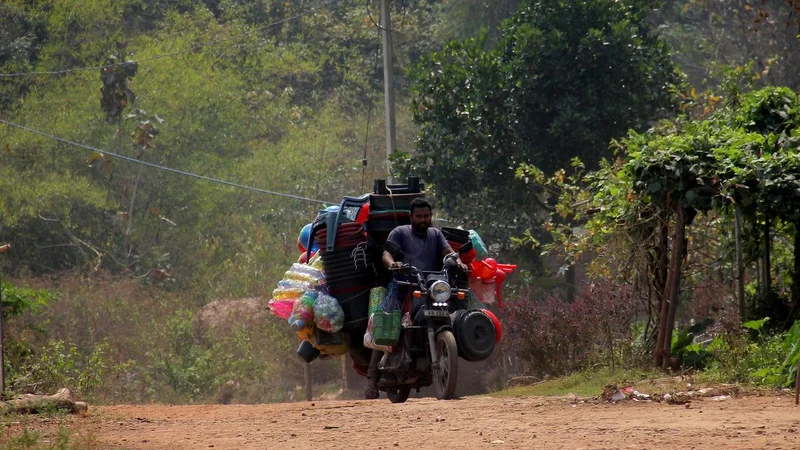
Odisha government has constituted a high-level inquiry committee to examine the relocation of villages from the Satkosia Tiger Reserve (STR), following allegations by residents that they were forcibly evicted from their ancestral villages despite having coexisted harmoniously with wildlife for decades.
The committee headed by Revenue and Disaster Management Secretary would examine the entire village-wise relocation process relating to STR, except Raiguda, which was first village to be relocated with following up of proper procedures. The notification regarding formation of committee was issued on August 17, 2026.
The committee has been mandated to examine and verify compliance with the applicable statutory provisions, including the Wildlife (Protection) Act 1972, the Forest Rights Act, 2006, and the applicable guidelines of the National Tiger Conservation Authority (NTCA).
Beneificiary identification would also be scrutinised in order to find out if villagers were wrongfully excluded or included in the relocation process. Assessment of compensation and rehabilitation provided to the affected families will also be examined.
The committee has been directed to recommend appropriate corrective measures, including payment of differential compensation, restoration of rights and livelihood support.
The government has particularly asked the committee to identify the officers responsible for any procedural irregularities or violations and recommend appropriate departmental and criminal action.
The committee was constituted following direction of Odisha Human Rights Commission (OHRC) to constitute a high-level inquiry committee to examine the entire village relocation process linked to STR.
Troubled history of tiger conservation in Satkosia
The STR has a troubled history of tiger conservation. The State’s 2007 census recorded 12 tigers, but by 2018-19, just one remained. The 2022 tiger census recorded none, leaving the reasons behind the population’s disappearance unresolved.
In a bid to revive the population, India’s first inter-state tiger relocation programme was launched in 2018 by bringing a male tiger from Kanha Tiger Reserve and a tigress from Bandhavgarh Tiger Reserve, both in Madhya Pradesh. One tiger was killed in a poacher’s trap, while the other strayed into human settlements, triggering resistance from villagers. The tigress was eventually sent back to Madhya Pradesh.
Presence of large number of human habitations (four villages in core), 131 villages in the buffer and 234 villages in surrounding impact zone of tiger reserve was said to be prime reason behind reported “ineffectiveness” of tiger conservation. One of the 15 preconditions set by National Tiger Conservation Authority was to make forest areas within the reserve inviolate. The relocation of villagers carried out subsequently was riddled with controversies with villagers alleging that their consent was manufactured and huge money changed hands.
As many as villagers had moved State Human Rights Commission. Prasanna Behera, an environmental lawyer who fought case on behalf many villagers, said, “one of the observations of OHRC was that Gram Sabha meetings were either not held at all or conducted without proper notice, without ensuring the required quorum and in hurried manner. Many eligible adult residents were absent.”
Moreover, enumeration of beneficiaries were carried out in a non-transparent manner, said Mr. Behera.
Published - August 20, 2026 02:28 pm IST